
How to visit Cuba as an American in 2026

When I first decided to go to Cuba, I was surprised to learn how many people did not know they could visit this beautiful country.
The unfortunate truth about the media lately has been such that many people are under the impression that if you hold an American passport, you are not allowed to travel to Cuba.
And while there is an embargo imposed by the United Sates against the Cuban government, and tourism in its traditional sense is prohibited, you can still visit Cuba as an American safely and legally in 2026.
Here are the steps you’ll need to take to explore Cuba independently.
Getting a Cuban visa
Let’s start with the visa process. You will need a visa, traditionally known as a tourist card or entry permit. The visa is valid for 90 days from your arrival date and can be renewed locally for another 90 days.
The price is $50 plus another $35 or so for a processing fee if you to choose to get an e-visa. If you don’t mind the extra hassle, you can send a money order to the closest Cuban consulate, and they will issue you a visa by mail. Check with the consulate first to make sure they accept mail-in applications. This way you’ll save on the processing fee.
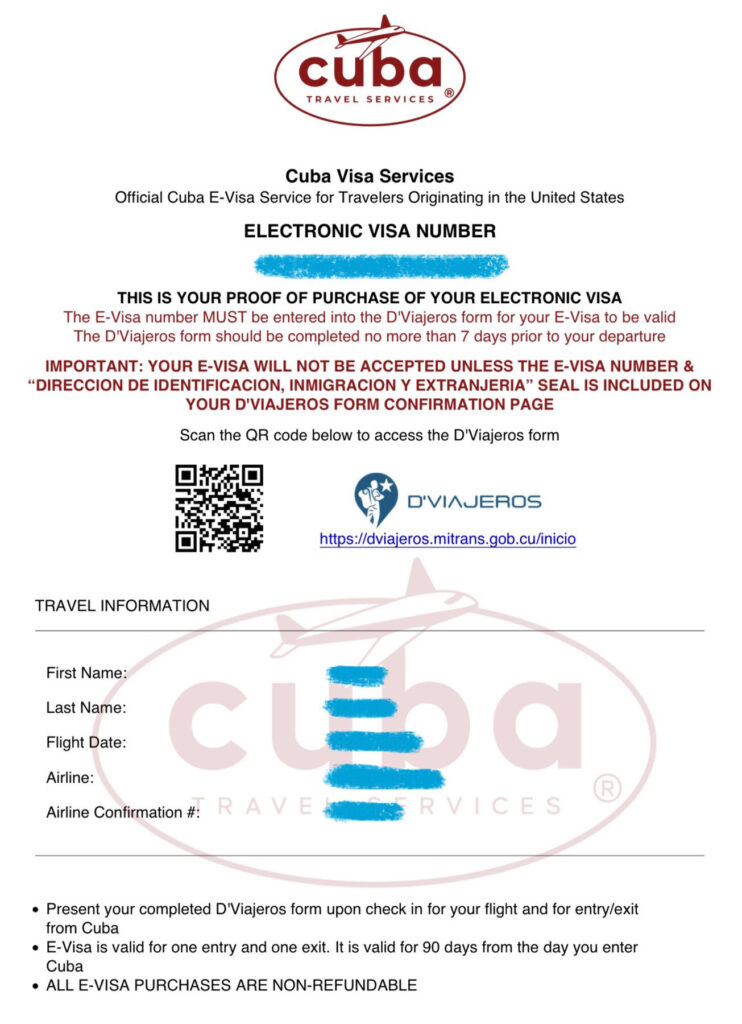
American visitors used to get paper tourist cards right at the gate before their departure to Cuba, but these cards are being slowly phased out. It’s still possible to get one, but it’s now more of a last-minute offer for those who didn’t plan ahead or didn’t know about the visa requirement.
The Cuban visa is required for all non-Cuban born Americans. As of July 1, 2024, all Cuban-born Americans must have a Cuban Passport to enter the country.
The Twelve Categories of the Cuban Visa
Since traditional tourism is no longer an option, you must pick one of the following categories on your visa application. Most people choose “support for the Cuban people.” The other categories are still valid but are reserved for people who truly fall under one of those categories.
In other words, do not pick “journalistic activity” if you are not a journalist with proper documentation, authorizations and proof of work in an established publishing company. And, no, being a blogger does not qualify you for the “journalistic activity” category.

The twelve categories are: family visits, official government business, journalistic activity, professional research, professional meetings, educational activities, religious activities, public performances, humanitarian projects, athletic competitions, people-to-people exchanges, and support for the Cuban people.
Complete the D’Viajeros form
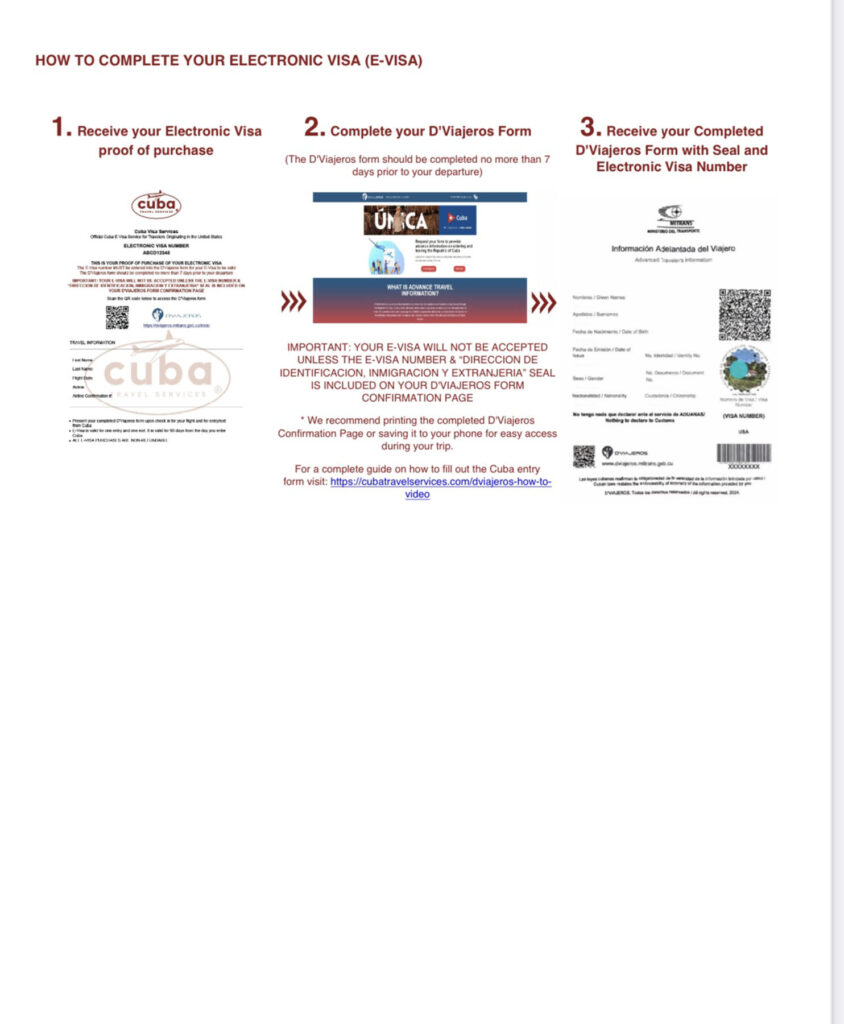
Once you receive your visa or e-visa, you’ll need to fill out the D’Viajeros customs and immigration form. The form can be completed within 7 days prior to your arrival to Cuba. Once completed, you will receive your completed D’Viajeros form with seal and electronic visa number.
Pro tip: when filling out the form, put “tourism” as the reason for your visit. This might seem counter-intuitive given the U.S. does not allow tourism to Cuba in its traditional sense. However, this form is for the Cuban officials only and they do not recognize “Support for the Cuban people” as a valid reason.
Health Insurance
Health Insurance is another mandatory requirement to visit Cuba. Check with your airline if health insurance is included in the price of your ticket. Most airlines that fly directly from the U.S. to Cuba have it included.
You can also call the insurance company that you get through your employer to see if they have coverage in Cuba and request a letter stating they do. You’ll need to show this letter to the customs officials once you arrive in Cuba.
A third option, and the one I opted for since I wasn’t flying to Cuba directly from the U.S. on my first visit, is to get health insurance through a Cuban company called Solways. It costs a whopping $1-$2 per day and covers major incidentals and emergency doctor visits. I ended up needing to go to a doctor while in Trinidad and can say this insurance works seamlessly.
Money and credit cards
Now that I’ve covered the logistics of how to legally enter Cuba as an American, let’s talk about the important things you need to know once you are there.
Number one is money. Credit or debit cards issued by an American bank will not work in Cuba. You won’t be able to use them anywhere, including withdrawing money from ATMs. You will have to bring enough cash with you for the entirety of your trip.
Currency Exchange
The proper way of exchanging money is either on the street or with your Airbnb host. And when I say proper, what I really mean, is to get a good rate you’ll need to go outside of the official money exchange places, aka Cuban banks.
The official rate you get at a bank is about a third of what you can get exchanging money on the street or with your host. The Cuban peso fluctuates a lot, so the best way to get the most accurate rate is to check the eltoque.com website. It gets updated on a daily basis.
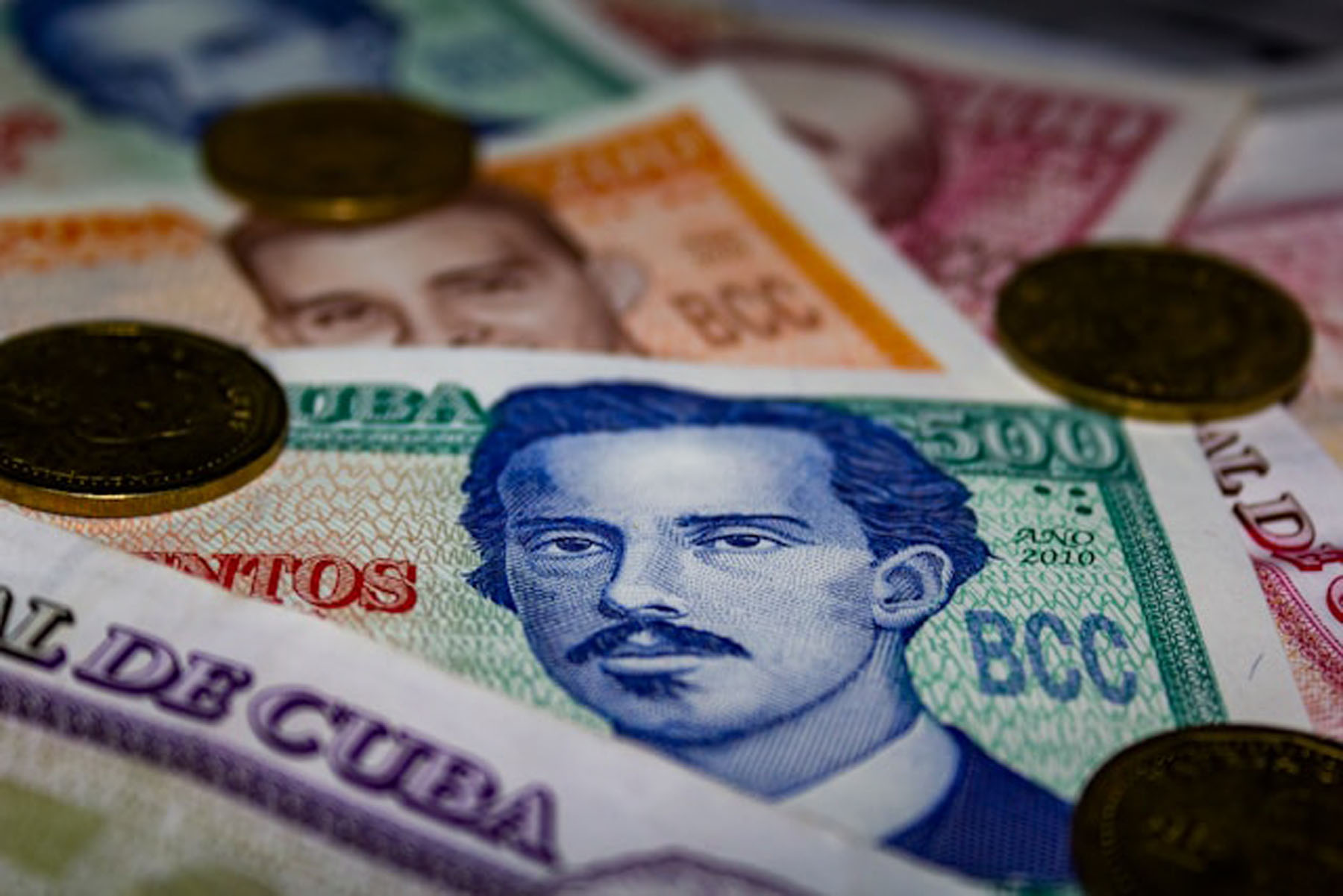
Don’t expect to be able to exchange your money at that exact rate though. If the rate is 1 USD to 300 CUP, for instance, expect to get between 280-290 CUP.
Ten percent tax
There is a lot of information online about having to pay an additional 10% tax when exchanging USD to Cuban pesos. Multiple blog posts and Facebook groups will encourage you to exchange your USD to either Canadian dollars or euros before travelling to Cuba, but that information is not necessarily correct. At least that wasn’t my experience.
If you exchange your hard-earned American dollars on the street or with your Airbnb host, all you have to worry about is getting a good rate. I’ve been to Cuba multiple times, and no one ever tried to charge me an additional 10% tax.
Accommodation
To satisfy the “Support for the Cuban people” category of your visa, you must stay at a local house, called casa particular. You cannot stay at a government-run hotel. Even if you wanted to, you can’t, because they don’t accept cash payments at government-run establishments. And, obviously, you also don’t want to break the U.S. law.
The easiest way to satisfy the “Support for the Cuban people” requirement is to book your accommodation at a privately owned house through Airbnb.
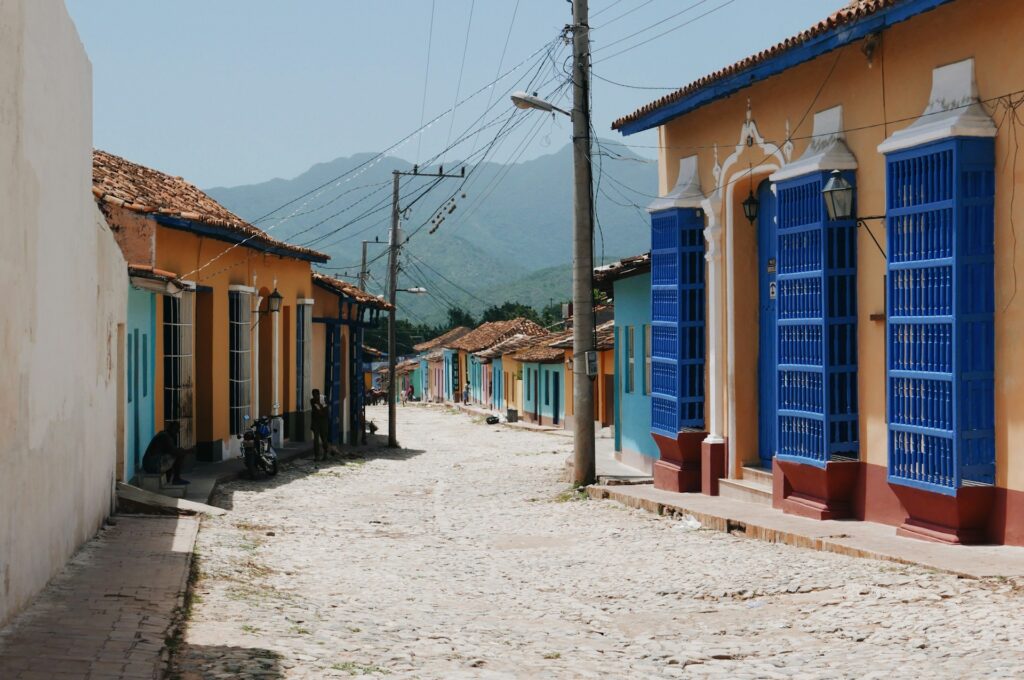
Having stayed at so many of these casas, I can honestly say that it’s so much better than staying in a hotel. You get to experience how Cuban people live on a day-to-day basis and if you are lucky, they’ll include you in their daily activities. I got to spend New Year’s Eve with the family whose house I was staying in, and I’ll cherish that experience forever.
Internet and VPN
The easiest way to stay connected in Cuba is to buy a local SIM card. You can either get an e-sim in advance of your trip or purchase a physical one from Etecsa once you are in Cuba. They sell them at the airport and in many stores throughout the country.
If you plan on accessing certain apps or websites that have an affiliation with the U.S., like your banking app, for instance, you will need to get a good VPN.
Budget
The most important thing about the budget is to bring more money than you think you’ll need. If you run out of money, you are out of luck, because your American credit cards won’t work.
Having said that, your daily budget will vary greatly depending on your personal preferences.
Not including accommodation, because most likely you will pay for that in advance of your trip, a good rule of thumb is $100 per day. Can you live on $50? Absolutely. Can you find ways to spend $200 a day? Very hard to do, but yes.
Even if you hire a personal driver to take you between cities, go to the most expensive restaurants 2-3 times a day, hire a personal guide and maybe even a photographer, and tip generously, you’ll still spend about $150 a day.


Safety
Because so little is known about traveling to Cuba, many people incorrectly assume that Cuba is dangerous. But that couldn’t be further from the truth.
Cuban people are extremely kind and helpful. Despite all the hardships they face in life, they remain friendly and joyful, which can be seen not only through their dance, music, and art, but also through their treatment of other people and animals.
Before I dive into some of the common dos and don’ts, it’s important to remember that this advice is good not just for Cuba, but many other countries. At the end of the day, Cuban people are one of the kindest people I’ve ever met during my travels, and I felt very safe in Cuba.

Dos and don’ts
I’ve put together a list of some of the more common scams to get you better prepared for your trip, but don’t let that deter you from visiting this magnificent country.
- You meet the “director” of a tobacco plantation trying to sell you cigars on the street. Now this one is a classic, the “director” part at least. Politely say no and walk away. Experienced cigar smokers will tell you that these cigars are fake. Now, unless you are a cigar connoisseur, honestly, you won’t really be able to tell the difference. No, they are not made from the finest ingredients, but if you are just buying one to try, they are not bad. And they are still Cuban. Do expect to be overcharged though.
Tip: buy the cigars directly at a tobacco plantation
Remember!
You cannot legally bring Cuban cigars and rum back to the United States!

- Similarly, someone approaches you on the street and tells you today is the last day to buy whatever product they are selling, usually cigars or bottles of rum, at a discount, because today is the last day of whatever festival they tell you is going on in the city. Don’t fall for that.
- Exchanging money on the street – I know I said that you’ll get the best rates exchanging money on the street, but you still need to be careful. Count the Cuban pesos before you hand over your foreign currency, especially if the pesos are tied with a rubber band. They’ll put the larger bills on the outside and smaller ones on the inside.
- When going to restaurants, do not, and I repeat do not, order anything if you do not see the prices listed on the menu. In fact, to be on the safe side, take a picture of the menu with prices before ordering and compare that with your bill at the end of the meal.
- The bill in a restaurant, or elsewhere for that matter, will usually have two amounts, one in pesos and one in a foreign currency. If you choose to pay in a currency other than Cuban pesos, make sure the currency conversion was done at a reasonable rate. If not, pay in pesos.

- People on the street recommending a restaurant or bar. They key here is to remember that if they approached you, and not the other way around, it’s a scam. They’ll tell you it’s the best Cuban food in town; they’ll even walk you there. At best, the food will be mediocre. At worst, you’ll pay New York City prices for average food and drinks.
- Taxi fares… similarly to restaurants – make sure you agree on the price and currency before you get into a taxi.
Cuba is a fascinating country. I won’t lie; it’s not for everyone. If you can’t bear the thought of seeing extreme poverty and hardship, or if your preferred way of traveling is to stay at luxury all-inclusive hotels, then maybe Cuba is not for you. But I do urge you to reconsider, as this place is truly unique and will change your perspective on so many things. It will for sure be one of your most memorable trips.