How to Visit Iguazu Falls
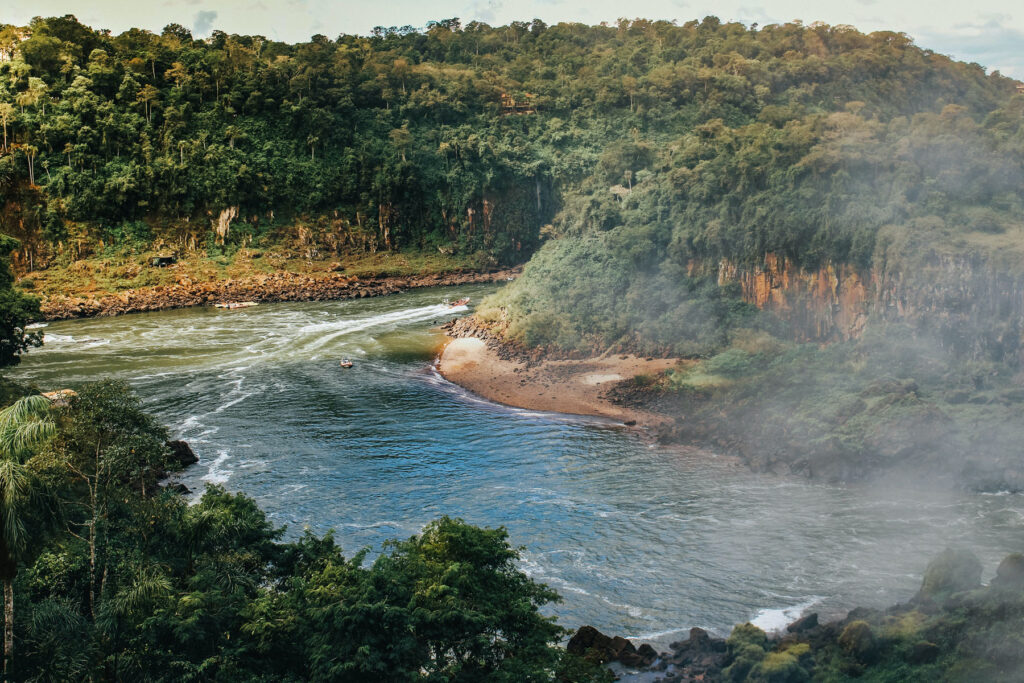
When Eleanor Roosevelt saw the Iguazu Falls, she exclaimed, “Poor Niagara!”. Taller than Niagara Falls and wider than Victoria Falls, Iguazu Falls is truly a magnificent site. It’s a force of nature and no photographs or stories can convey its grandeur. You must see it in real life!
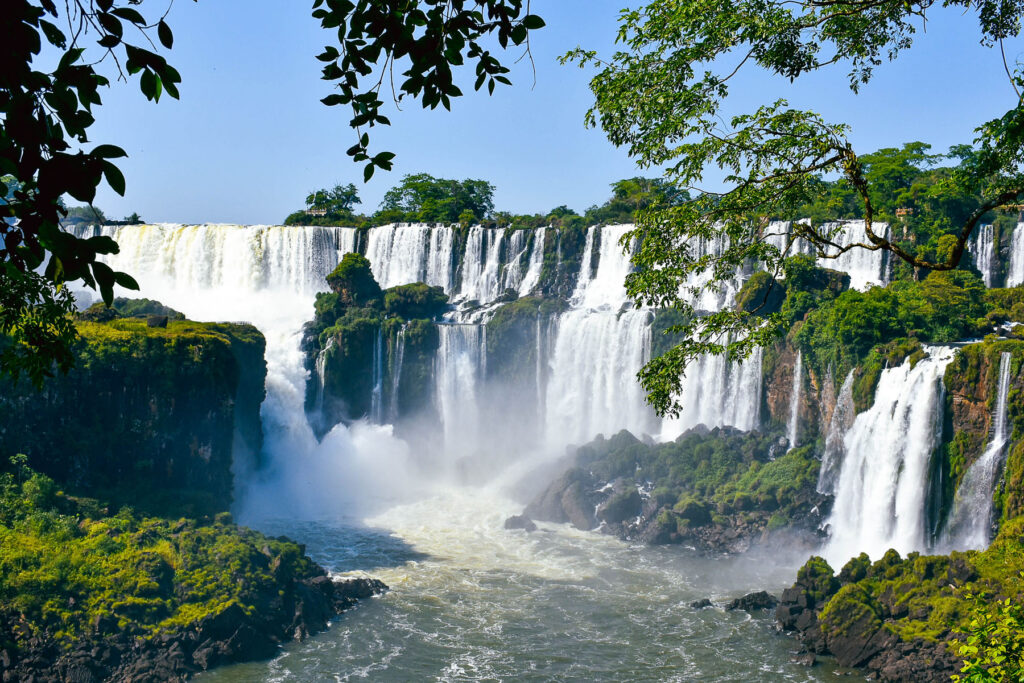
The Iguazu Falls are split into 275 individual waterfalls, are almost 9,000 ft (2,700 m) wide and the height of all individual falls ranges between 64 meters and 82 meters (210 – 269 feet).
The origin of the name Iguazu comes from the Guarani indigenous people, meaning “big water”. The legend says that a god wanted to marry a beautiful woman named Naipi, but she refused and fled with her mortal lover in a canoe. Enraged by her actions, the deity sliced the river, thus creating the waterfalls and dooming the lovers to an eternity of falling.
The first mention of the waterfalls was by the Spanish conquistador Alvar Nuñez Cabeza de Vaca in 1541. Later the Jesuit missions arrived and occupied the entire province of Misiones until they were expelled from the area by the Spanish Crown in 1768. After that, the waterfalls were somewhat forgotten until late in the 19thcentury.
In 1897 a Brazilian army officer, Edmundo de Barros, proposed the creation of a national park near the falls, and so the two separate parks, Iguazú National Park in Argentina, and Iguaçu National Park in Brazil, were established in 1934 and 1939.
UNESCO has declared the Iguazu Falls as the World Heritage site in 1984 and in 2011 the New Seven Wonders Foundation deemed it a “New Wonder of the World”.
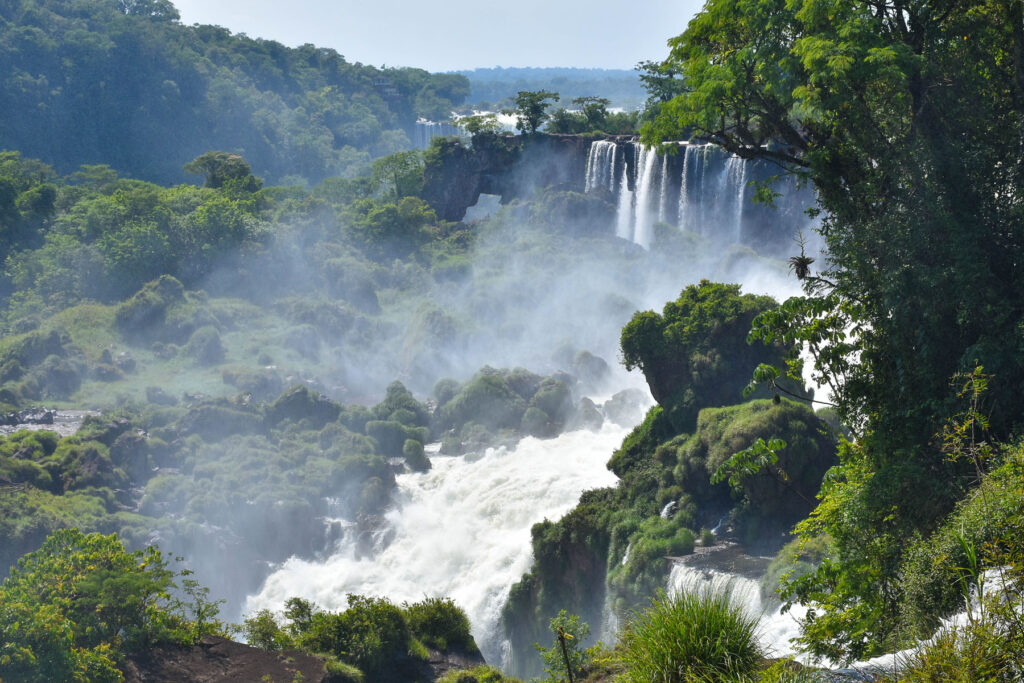

Iguazu Essentials
Best time to visit
The seasons at Iguazu Falls are separated into wet and dry.
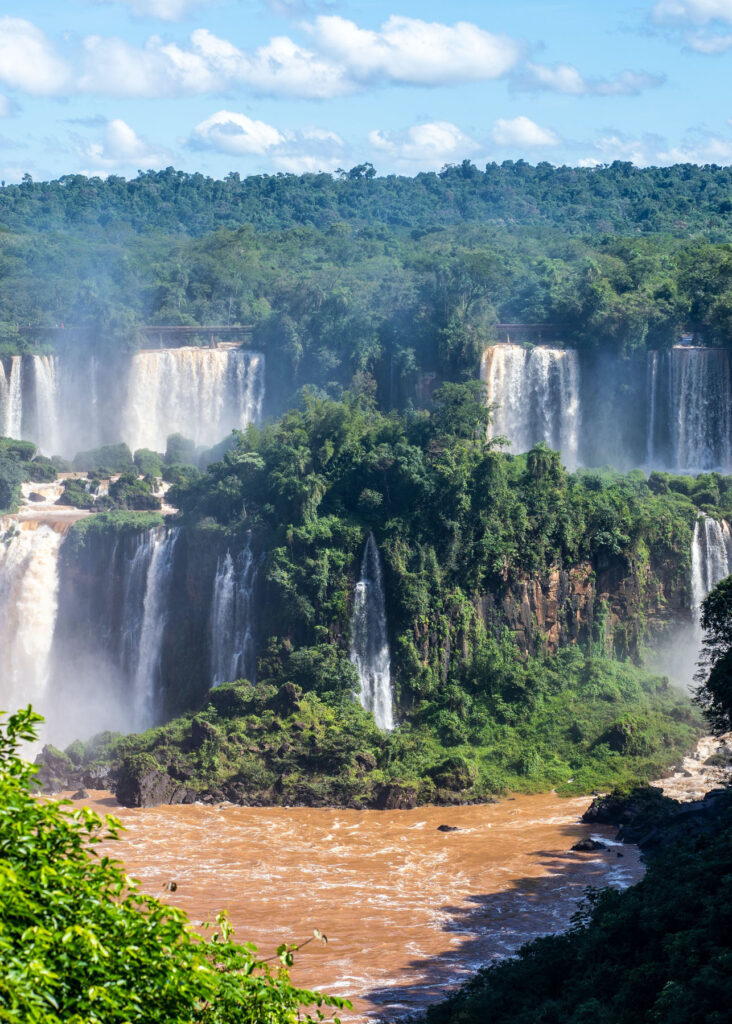
Summer (December – February) is considered the wet season. It is usually very hot and humid with lots of rain. It’s also the busiest time to visit the waterfalls. The Iguazu River is fast-flowing and powerful, which means mud-colored waterfalls. The wet season is when the boat rides are more likely to be cancelled.
Spring (September – November) is warm, humid, and occasionally rainy. October is the wettest month of the year.
Winter (June – August) is the dry season with shorter daylight hours and fewer visitors. The falls are not at their fullest, but they are still majestic.
Fall (March – May) is probably the best time to visit the waterfalls. It’s considered to be the dry season with mild weather and sunny days. Apart from the Easter holiday, you’ll have fewer crowds and more reasonably priced accommodations.
Getting there
Since the Iguazu Falls are shared by both Argentina and Brazil, there are two main airports to choose from that are located near the falls – Puerto Iguazu (airport code IGR) in Argentina and Foz do Iguaçu (airport code IGU) in Brazil.
From Buenos Aires
If you are flying from Buenos Aires, or other cities in Argentina, you will need to fly into Puerto Iguazu (airport code IGR). There are several direct flights per day from Buenos Aires’s Aeroparque (AEP) airport. There are also direct flights from the Ezeiza International Airport (EZE), which are convenient if you’re arriving from an international destination and want to continue directly to Puerto Iguazu.
The flight duration is about 2 hours and once you reach Puerto Iguazu airport, the falls are about 15-20 minutes away by car.
From São Paolo
If visiting the waterfalls on the Brazilian side, you will need to fly into Foz do Iguazu airport (IGU).
The flight duration is about 1.5 hours and once you reach Foz do Iguaçu airport, the waterfalls are about 5 minutes away by car.
Where to stay
It all depends on which country you are flying into, your budget and if you want to be close to restaurants and shops.
Argentina
If staying on the Argentine side, my recommendation is to stay in Puerto Iguazu city center. You have plenty of affordable accommodations due to a high influx of tourists wanting to see the waterfalls. It’s a small and quiet city with some options for restaurants and shops.
There isn’t much to do here, but it is conveniently located next to the falls. You can take a taxi straight to the park or for a more budget friendly option, opt for a public bus that takes you directly from Puerto Iguazu bus terminal to the park.
If you want a more relaxing stay, check out the hotels in Iryapú jungle. The landscape is beautiful, and most hotels have outdoor pools, but keep in mind it will take longer to get to the waterfalls from this area.
Brazil
If you are staying on the Brazilian side, the best area to do so is in Foz do Iguaçu downtown. In this area you have restaurants, shops, and transportation options.
If you are looking for a more unique and immersive experience, and if budget is not an issue, then you can stay inside the Iguazu National Parks on both sides. There is only one hotel on each side.
Staying in the Iguazu National Park
Gran Melia Iguazu is the only hotel within the Iguazu National Park in Argentina. You can see the waterfalls from your window while enjoying all the comforts and excellent service Melia hotels are known for.
Belmond Hotel das Cataratas on the Brazilian side is a beautiful historic hotel that also offers panoramic views of the falls from the room.
The best thing about staying in one of the two hotels within the park is that you will have the waterfalls virtually all to yourself before the park opens and a mob of tourists rushes in.
Things to do
Aside from exploring the National Parks by foot via a myriad of wooden pathways, there are a few other activities you can book to make the experience even more memorable.
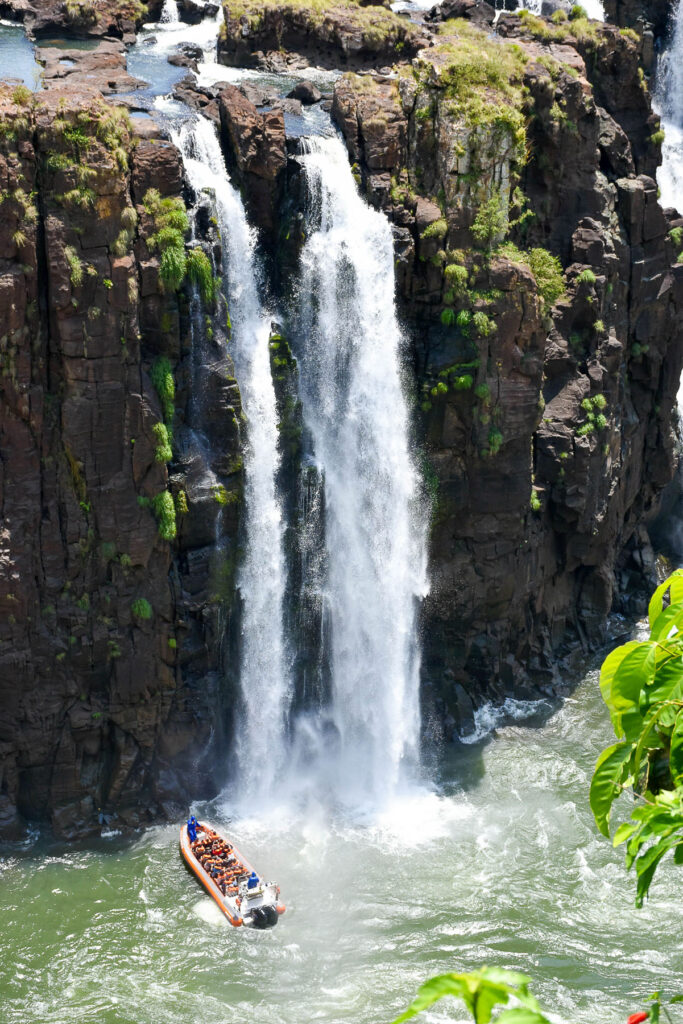
- Get drenched in a boat: Arguably the most popular activity in the Iguazu National Park is riding in a boat at the base of the falls. You can book this activity directly in the park, but I recommend doing so ahead of time, as there are limited departures per day, and it gets sold out quickly. If you have expensive electronics, bring a dry bag with you.
- Get a sky-high view: If you’d rather get an aerial view of the waterfalls, you can book a helicopter ride. These last about 10-15 minutes but give you a unique perspective of the falls.
- The full moon walk: Another unique tour is to visit the waterfall at nighttime under the full moon. This tour is only available for 5 nights per month and must be booked in advance at this official website. The tour lasts about 2.5 hours and there are three different departure times: 7:45pm, 8:30pm and 9:15pm.
- Zipline through the forest: Now you won’t be ziplining over the waterfalls themselves, but it’s still a fun activity to do if you are looking for some adventure.
Pick a side, or don’t
The debate of which side to visit, Argentine or Brazilian, is almost as old as the waterfalls themselves. The two sides are very different and the obvious answer to ‘which side should you visit?’ is… both! But if you are short on time, and must choose a side, then here are a few things to consider.
First, a quick note on the border crossing. If you are visiting the waterfalls by yourself and not as part of an organized tour, don’t worry, the border crossing is easy. In fact, it’s as easy as getting a taxi at the airport (either IGU or IGR), driving to the border, getting your passport stamped and getting into the same or different taxi on the other side. Just don’t forget your passport and your Brazilian tourist visa. If you are lucky, there will be no lines and the crossing will take about 10 minutes.
Now pick a side! Or don’t.
Brazilian Side
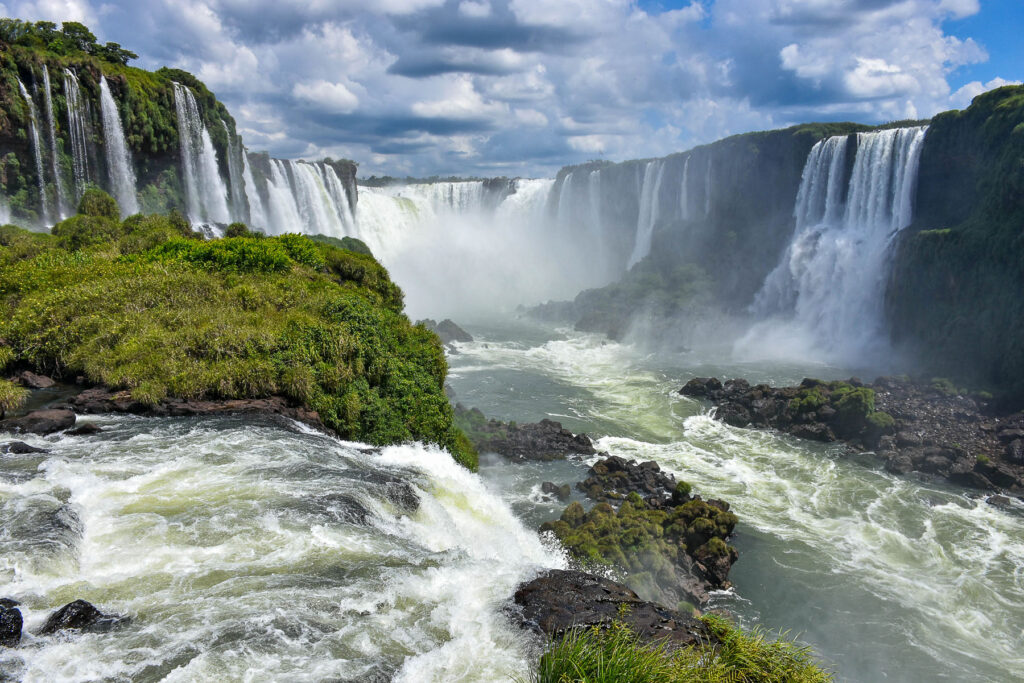
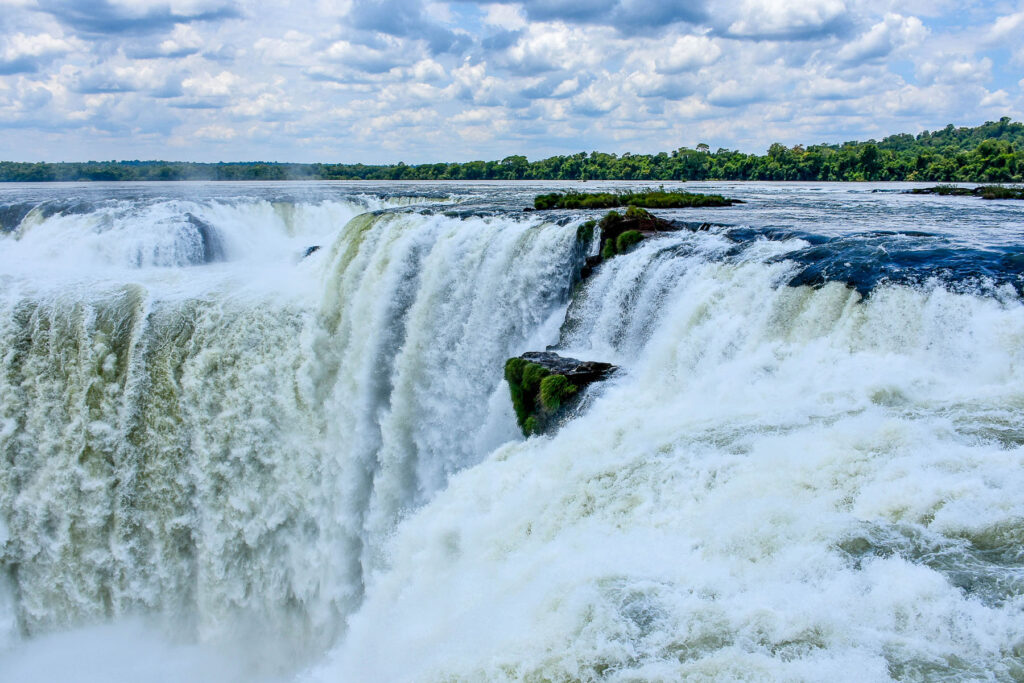
The Brazilian side has the iconic view of the Iguazu Falls. Here you will be treated to the unparalleled panoramic view of the 275 individual waterfalls crashing over a 262 ft (80 m) cliff, and while it is spectacular, don’t get me wrong, there isn’t much else to do.
The park has only one circuit, about 1 mile in length and the circuit takes about 2 hours to complete (it’s an easy walk, but you’ll be stopping a lot to take pictures). To get to the circuit, you will get on a bus right after the entrance gate and once you have your park ticket in hand (the park ticket includes the bus ride). The busses come every 20-30 minutes but be prepared for long lines.
The bus makes 3 stops. The first one is at the Macuco safari. The second stop is at the beginning of the circuit and the last stop is at the end of the circuit. Once you get to the end, you’ll get on the elevator to reach the platform for the best views of the falls.
If you have mobility issues or are using a wheelchair, you should get off at the last stop, since the path between the second and third stops has a few stairs.

Argentine Side
The Argentine side on the other hand will keep you busy for a whole day. I personally found it less crowded than the Brazilian side, even though there are more things to do here.
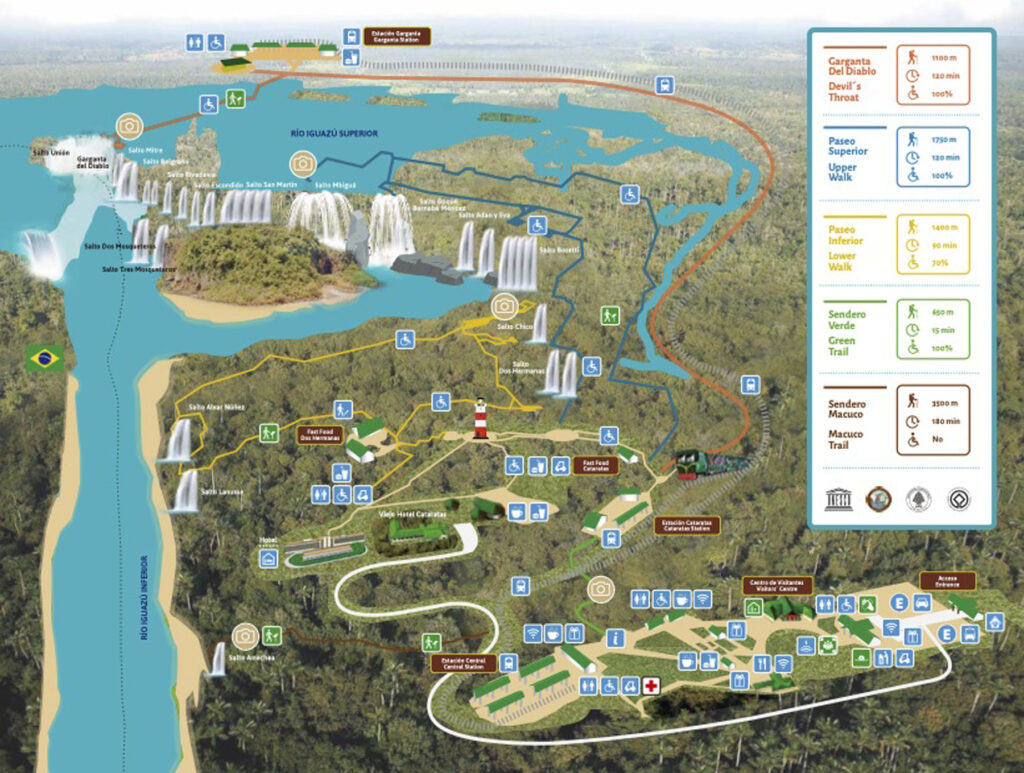
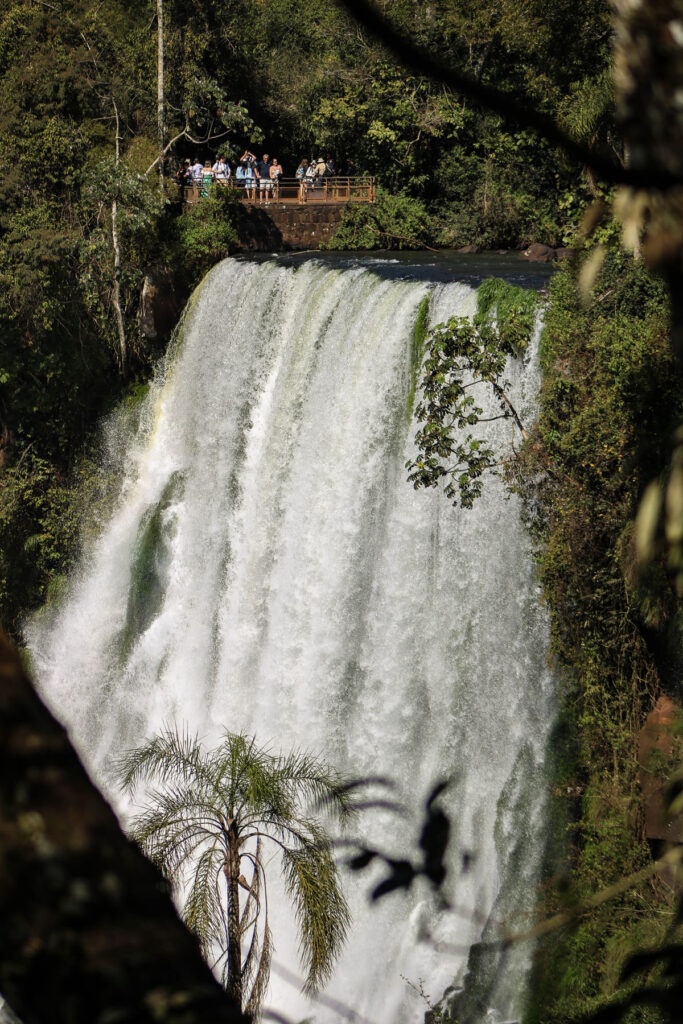
To start, the Argentine side will get you up close to the waterfalls. You’ll be able to spend the day wandering around on numerous well-constructed wooden and metal walkways. The park has 6 different circuits with a variety of activities.
The Superior Circuit provides an impressive panoramic view of the Iguazu Falls from the upper walkways. At the end of the road, you’ll get on a train that will take you to the highlight of the park, the Devil’s Throat.
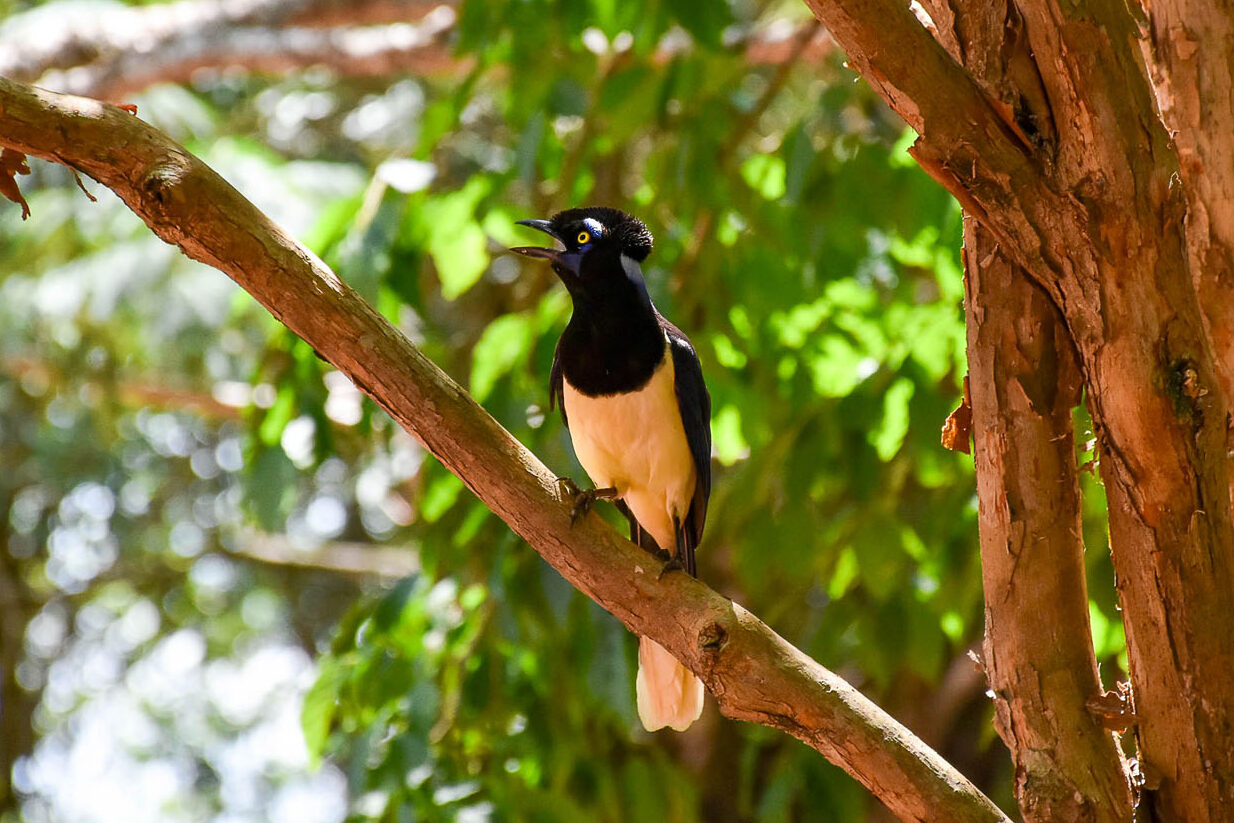
The Lower Circuit allows you to walk through the jungle where you will see the flora and fauna characteristic of the area.
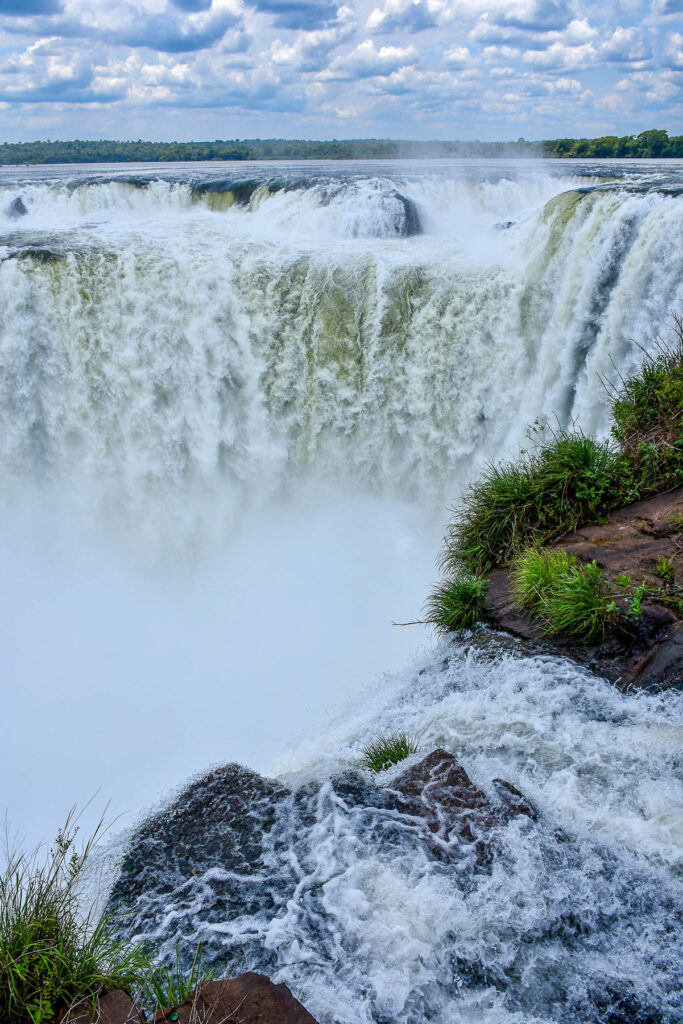
The Devil’s Throat is arguably the main attraction of the falls. It allows you to be mere feet away from the most impressive fall and see it from above. To get to the Devil’s Throat you need to get on the Train of the Jungle, which will take you through the park.
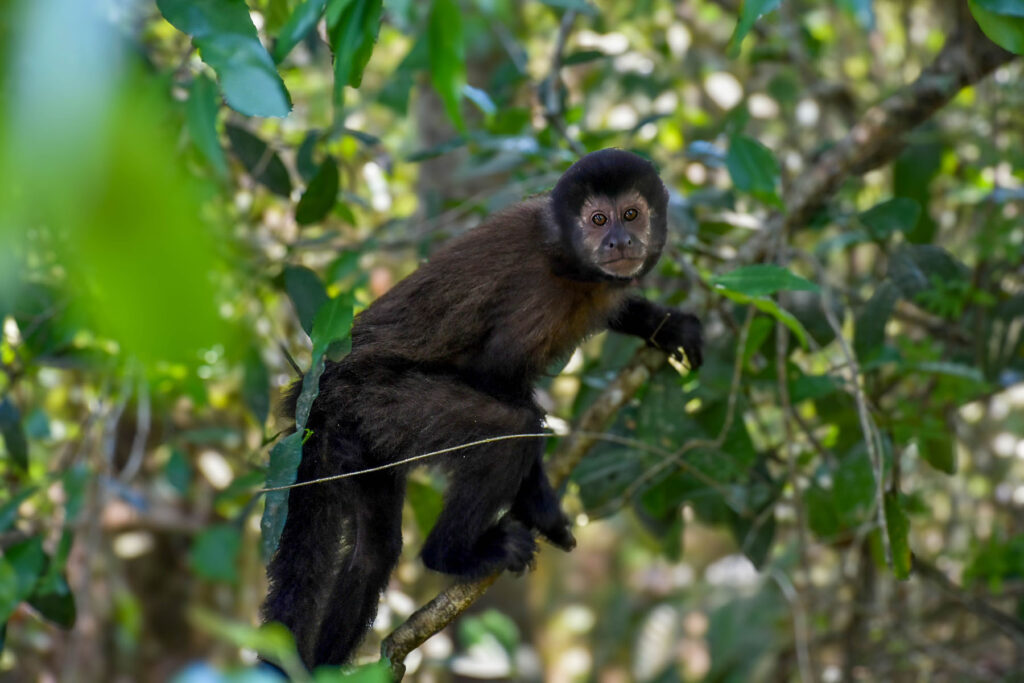
The Macuco Trail is just under 5 miles roundtrip and takes you through the jungle on a path that has no human intervention. The path is clearly marked, and you’ll be able to see a variety of plants, birds, and animals that you will not see anywhere else in the park. With a bit of luck, you’ll see wild monkeys playing in the trees.

The Rainforest ecological train is meant for transporting people throughout the park. It’s an ecological train that doesn’t emit any smoke and is environmentally friendly. It has 3 stops – the visitor center, the middle of the park next to the lighthouse, and close to the Devil’s Throat.
The Green Trail is a short trail that connects the visitor station to the Cataratas train station. Here you are likely to see the adorable coatis, who will try to steal your food.