How to visit Meteora, Greece
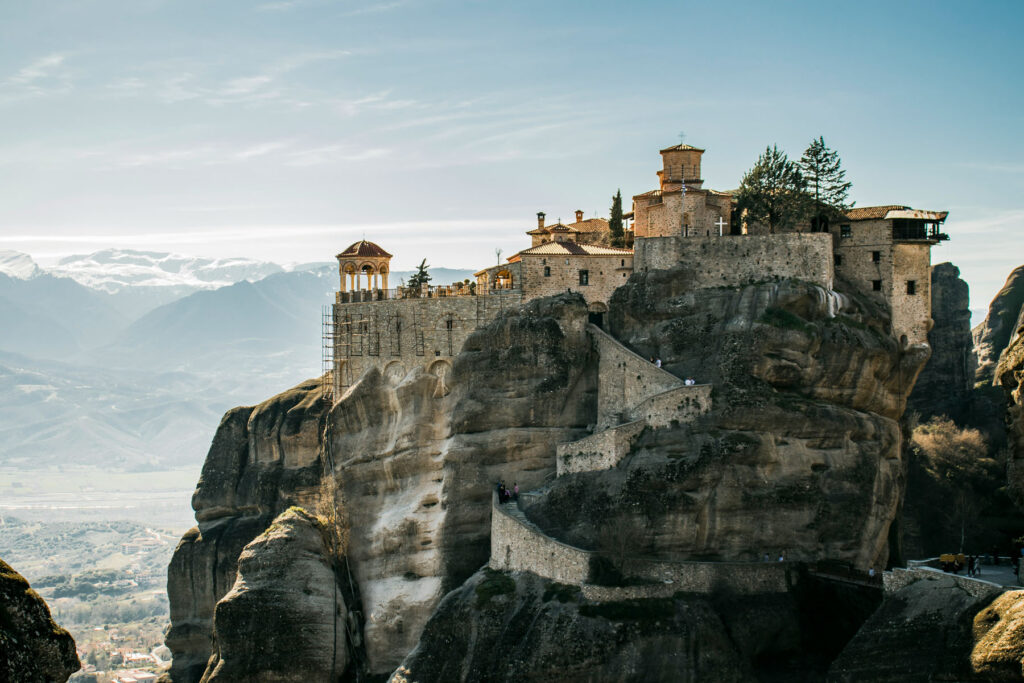
While most people flock to the beautiful islands of the Aegean Sea and history buffs spend their time exploring the ancient ruins of Athens, the Meteora Monasteries oftentimes get overlooked. But the place surely deserves a spot on any traveler’s bucket list.
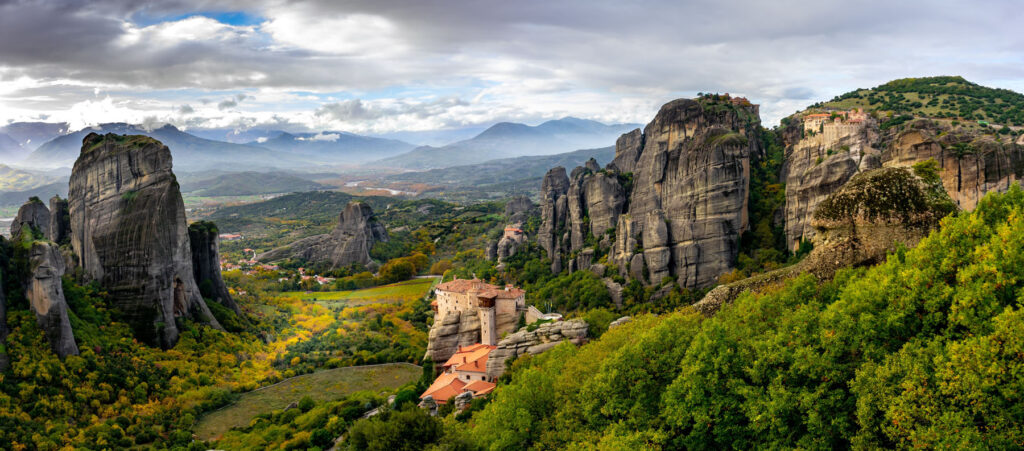
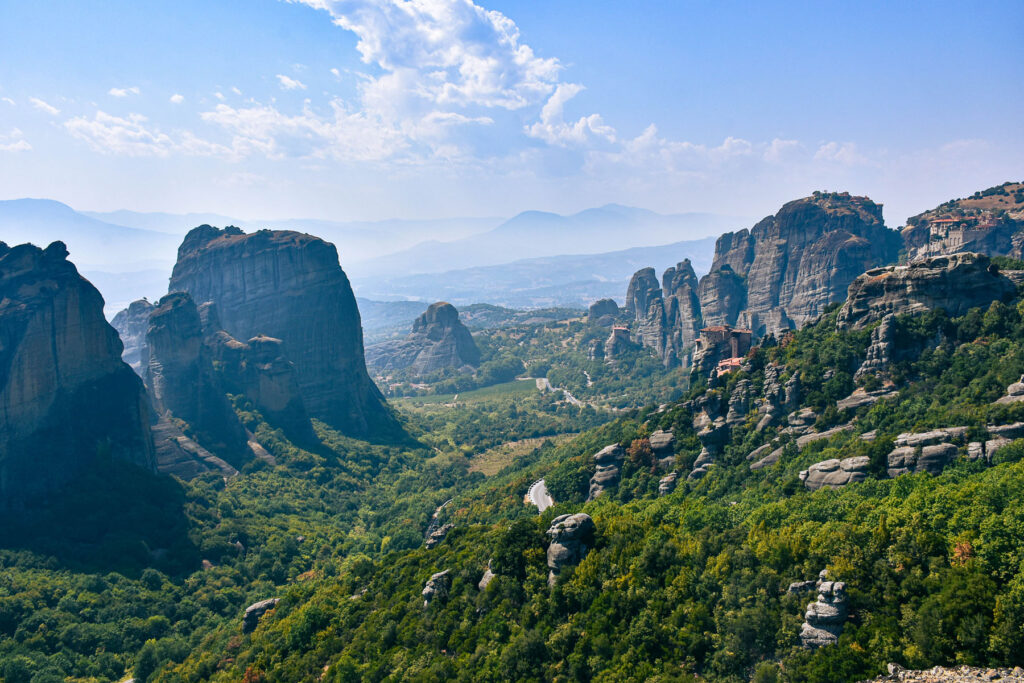
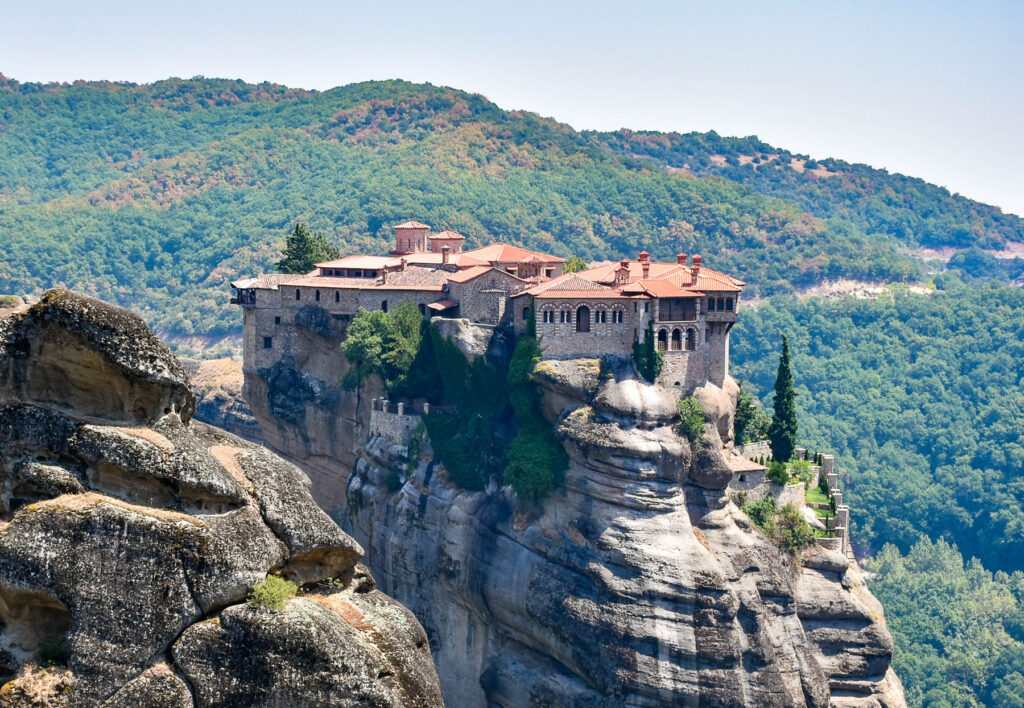
The most fascinating thing about Meteora is the seamless blend of mind-blowing architecture and nature’s creativity. The monasteries are built on top of almost inaccessible sandstone rock pillars that emerge in the middle of a lusciously green valley. According to scientists, these rock pillars were formed about 60 million years ago.
The monks arrived in the region in the 11th century and started settling on the column-like peaks for solitude and seclusion. After centuries of hard work, 24 monasteries were constructed atop the colossal peaks. Now only six remain active for people to visit.
In this guide I’ll share everything you need to know before visiting the Meteora Monasteries – how to get there, where to stay, opening hours and cost, best sunset spots and hiking trails, and information about each monastery.

Meteora Essentials
How to get to Meteora (Kalambaka)
The town of Kalambaka is the gateway to Meteora. You can reach it via train, bus, or rental car, or visit Meteora as part of an organized tour.
To Meteora from Athens
By train: There is an express train leaving every morning from the central station in Athens (Larissa Station) to Kalambaka. The direct train leaves at 8:28 in the morning and takes a little over 4 hours to get to Kalambaka. The return train leaves Kalambaka at 5:35 in the evening. There are also non-direct trains leaving later in the day.
By bus: There are several scheduled bus trips throughout the day from the Liossion Bus Station in Athens with stops in Trikala and Lamia. The trip duration is about 5 hours.
By car: The drive from Athens is easy on mostly flat roads. It takes about 4.5 hours to get from central Athens to Kalambaka.
If you are from the United States, consider getting an international driver’s license prior to your visit, as many places in Greece will not rent a car to you without it (happened to me in Crete). The license is easy to get, costs about $20 USD and lasts an entire year.
To Meteora from Thessaloniki
By train: There are multiple trips throughout the day, all with a stop in the middle. The train departs from the New Railway station (Neos Sidirodromikos Stathmos) in the center of Thessaloniki and takes about 3 hours to reach Kalambaka.
By bus: There are no direct buses from Thessaloniki. You will have to switch busses in Trikala. It takes about 3.5 hours to reach Kalambaka from Thessaloniki.
By car: The drive is pretty easy, except for the last 40 or so minute part that has a lot of turns. The entire trip takes about 2.5 hours.
How to get around the monasteries
Most people join organized tours from either Athens or Thessaloniki. You’ll get on a train in either city and a tour bus or van will meet you at the train station in Kalambaka. They will then take you to lunch and drive you between monasteries. Depending on a tour you sign up for, you might not be able to see all 6 monasteries.
Another popular way of getting around the area is to rent a car in Kalambaka or drive one directly from either Athens or Thessaloniki. If you don’t want the hassle of parking, you can also take a taxi between monasteries, which is a more expensive and, in my opinion, more cumbersome option.
A more fun way to travel between the monasteries is on a scooter. You can rent one for the day in Kalambaka for about €20.
The more adventurous type of traveler can opt for biking or hiking the area.
Opening hours
Summer (April 1st – October 31st)
Winter Schedule (November 1st – March 31st)
Pro Tip: Check online before your trip for the latest changes in operating hours
| Monastery | Summer hours | Winter hours | Closed on |
| Great Meteoron | 09:00-15:00 | 09:30-14:00 | Tuesdays |
| Holy Trinity | 10:00-16:00 | 10:00-16:00 | Thursdays |
| Varlaam | 09:00-16:00 | 09:00-15:00 | Fridays |
| Roussanou | 09:00-16:30 | 09:30-14:00 | Wednesdays |
| St. Stephen’s Nunnery | 09:00-13:30 15:30-17:30 | 9:30-13:00 15:00-17:00 | Mondays |
| St. Nicholas Anapafsas | 09:00-17:00 | 09:00-16:00 Sundays: 9:30 – 16:00 | Open every day |
Where to stay
There are only two choices near Meteora: the town of Kalambaka and the smaller village of Kastraki.
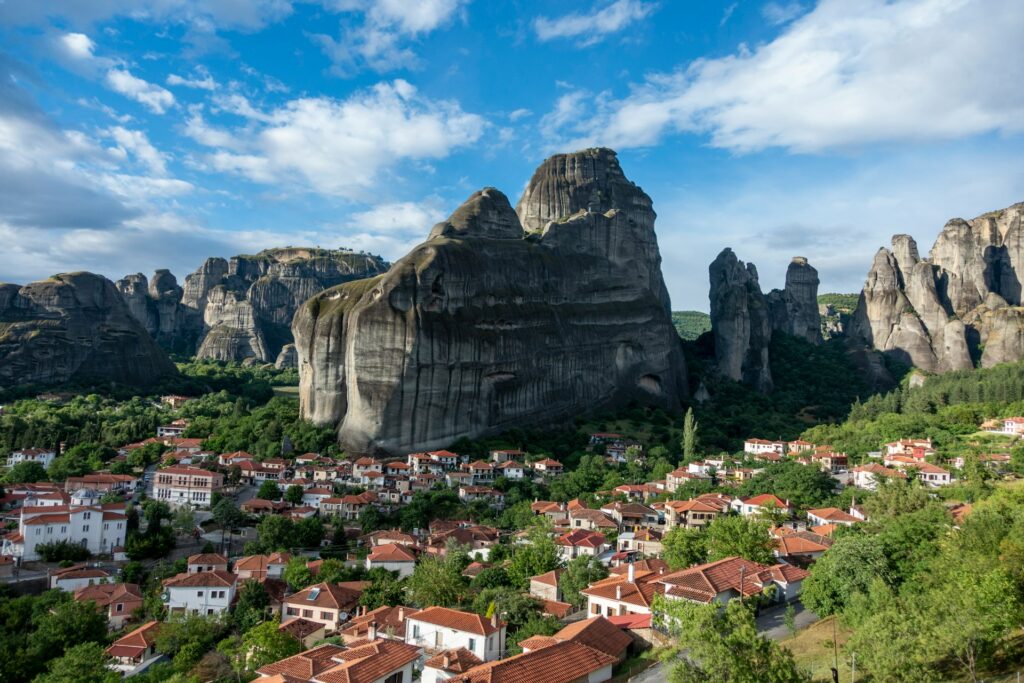
Kalambaka: The town of Kalambaka offers a variety of accommodations for every budget. It’s a convenient option since it has both a train and a bus station for trips back to either Athens or Thessaloniki.
There are lots of restaurants and cafes with traditional Greek food along with a wonderful natural history and mushroom museum. The town is located within a 10-minute drive from the monasteries.
Kastraki: The village of Kastraki offers a more peaceful stay. It still has plenty of cafes and taverns serving authentic Greek food and several accommodations to choose from. It has an ideal location right at the foot of the rock pillars where most of the hiking trails begin.
The six Meteora monasteries
The first monastery was built in the 14th century, but before then, hermit monks came to the area as early as the 9th century. As hermits, they lived the life of isolation and solitude. They climbed the soaring peaks to settle in the caves and would only come down on Sunday for the mass held at Doupiani.
In the 14th century, with the rule of the Byzantine Empire coming to an end, three monks came to the area and settled on the rock called Stylos (the Pillar). Later, one of the monks founded a small monastery in 1344 that you could access only via a ladder that the monks would remove when they felt threatened.
As the Turkish Empire was expanding into Thessaly and hermit monks were looking for a refuge, they decided to settle on the inaccessible rocks of Meteora.
The Great Meteoron Monastery
The monastery that gave the name to the entire area is also known as the Holy Monastery of the Transfiguration of Christ. It is the largest, tallest, and oldest monastery in Meteora.
Inside the 14th– century monastery, you’ll be presented not only with breathtaking views of the entire valley, but also with beautiful frescos of saints, as well as artwork depicting the struggles of Orthodox Christians against the Ottoman Empire.
There is also a wonderful museum, dedicated to the modern history of Greece from the revolution of 1821 against the Ottoman Empire until WWII.
The monastery also has a library that contains a copy of a 10th-century Byzantine encyclopedia, Suda, which mentions many ancient sites that no longer exist.

The Holy Trinity Monastery
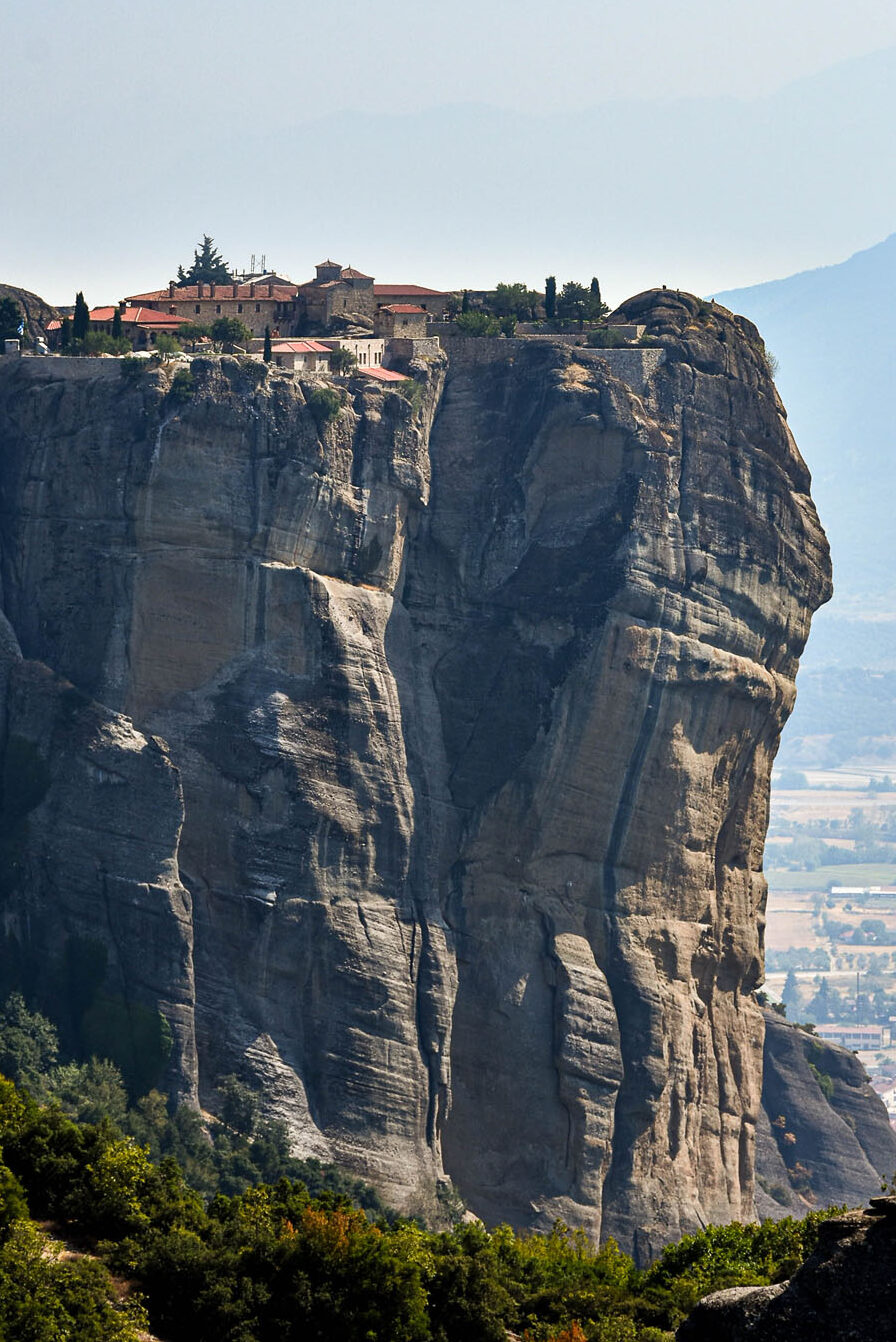
This monastery took monks 70 years to complete and is by far the most difficult monastery to reach. It sits on a very steep boulder and visitors must climb 140 steps to reach the entrance at the top.
Once you do reach the top, you’ll be rewarded with spectacular panoramic views.
This monastery is also known for being featured in the James Bond movie, “For Your Eyes Only.”
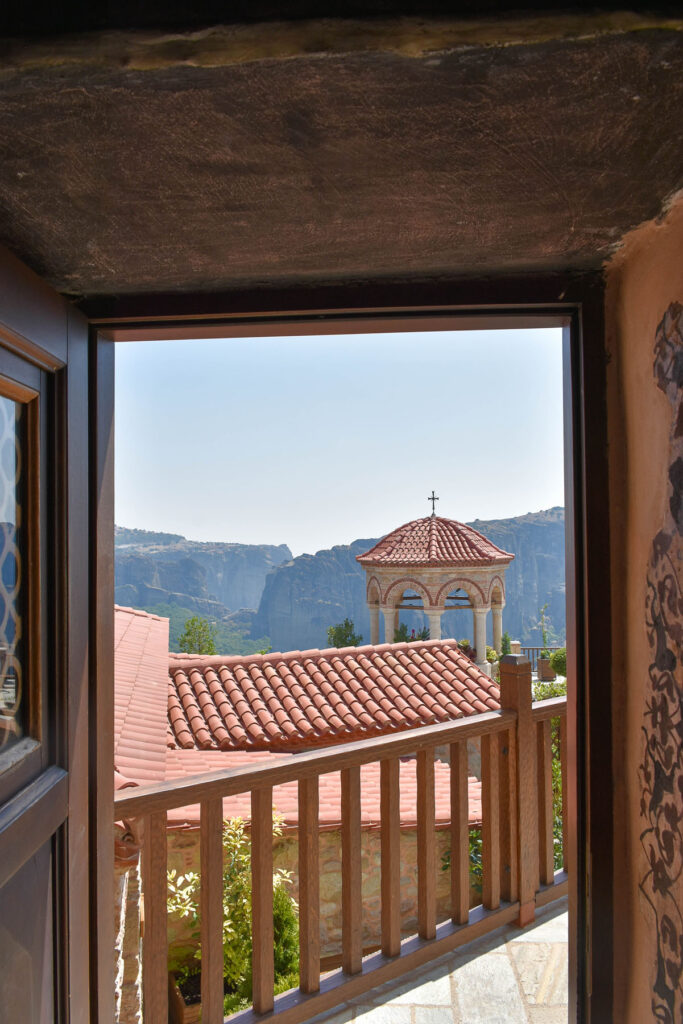
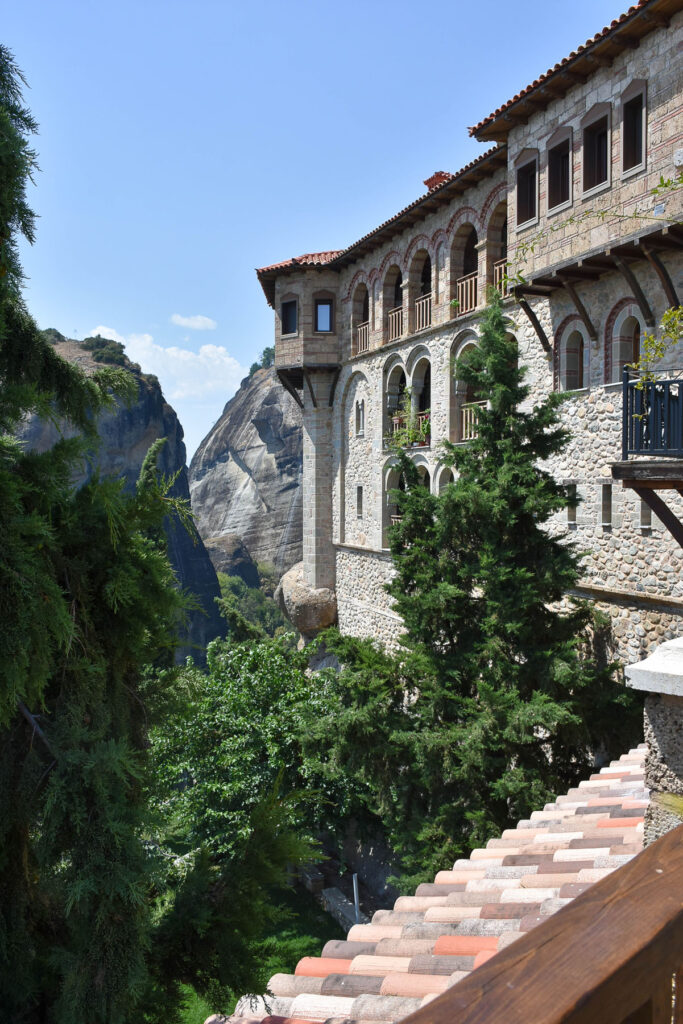
The Varlaam Monastery
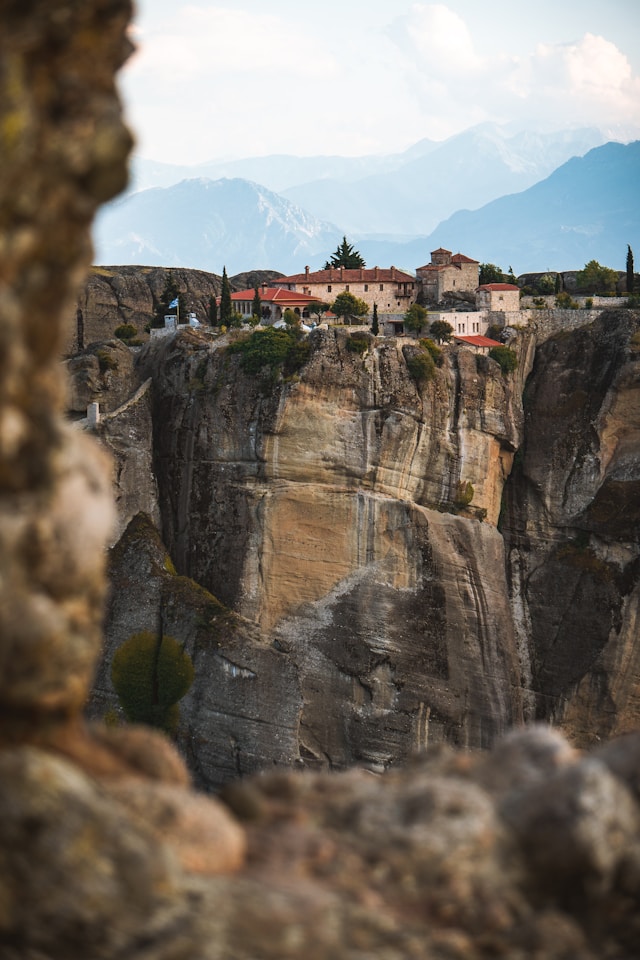
The Varlaam Monastery gets its name from hermit Varlaam, who climbed the pillar in 1350. He built himself a place to sleep and three chapels. After his death, the place was deserted for almost two centuries until 1518 when the chapels were renovated, and the construction of the monastery began.
Today, it is the second largest monastery in Meteora and is considered to be one of the nicest. It houses a small museum about the history of Meteora, has a big terrace overlooking the valley, and the most monks of any of the monasteries.
The St. Nicholas Anapafsas Monastery
The Holy Monastery of Saint Nicholas of Anapafsas is the first monastery of the Meteora loop, right after you leave the village of Kastraki.
Built in the late 14-th century, it is the lowest-lying monastery of the main six. It doesn’t have a garden and the small terrace provides views of only Kastraki and the Monastery of Roussanou.
It does have very elaborate and perhaps the most beautiful frescos of all the monasteries in Meteora.
The Roussanou Monastery
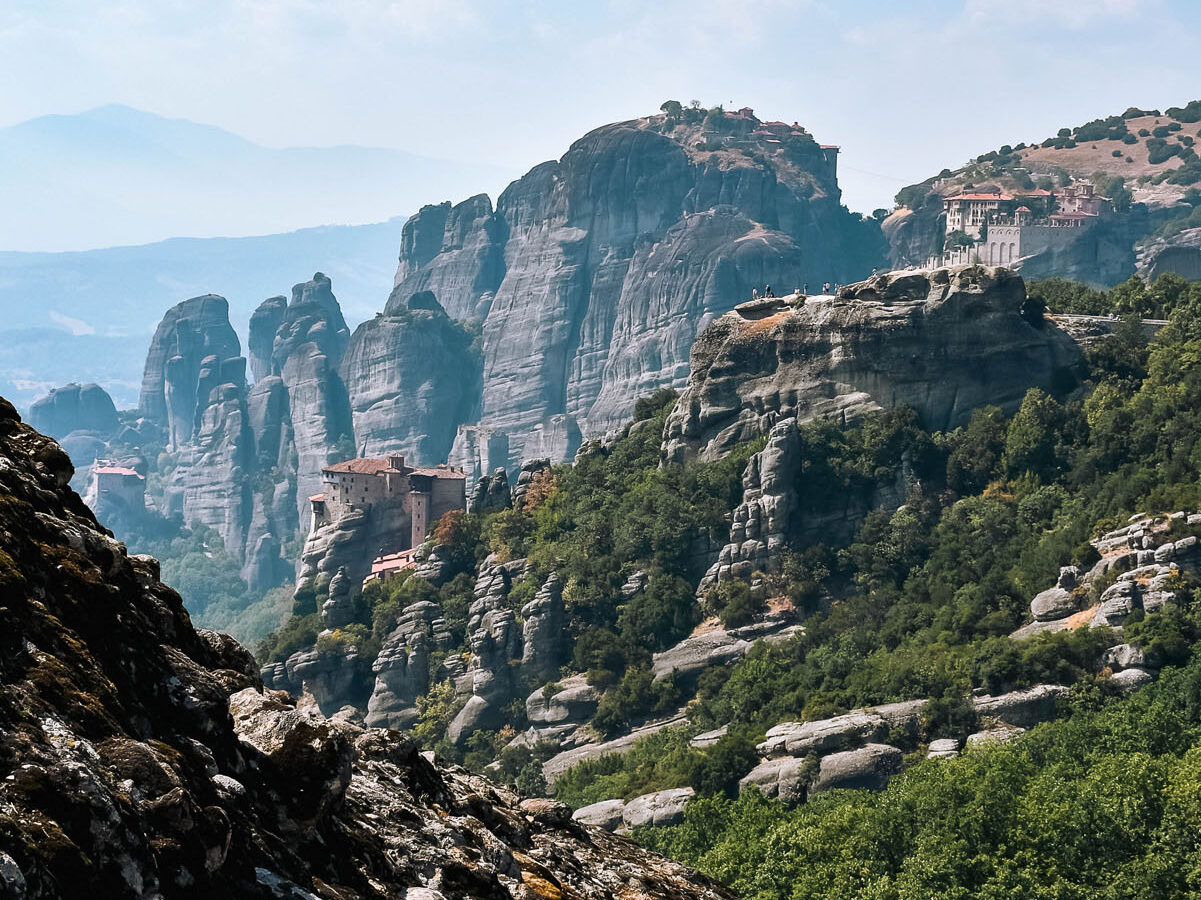
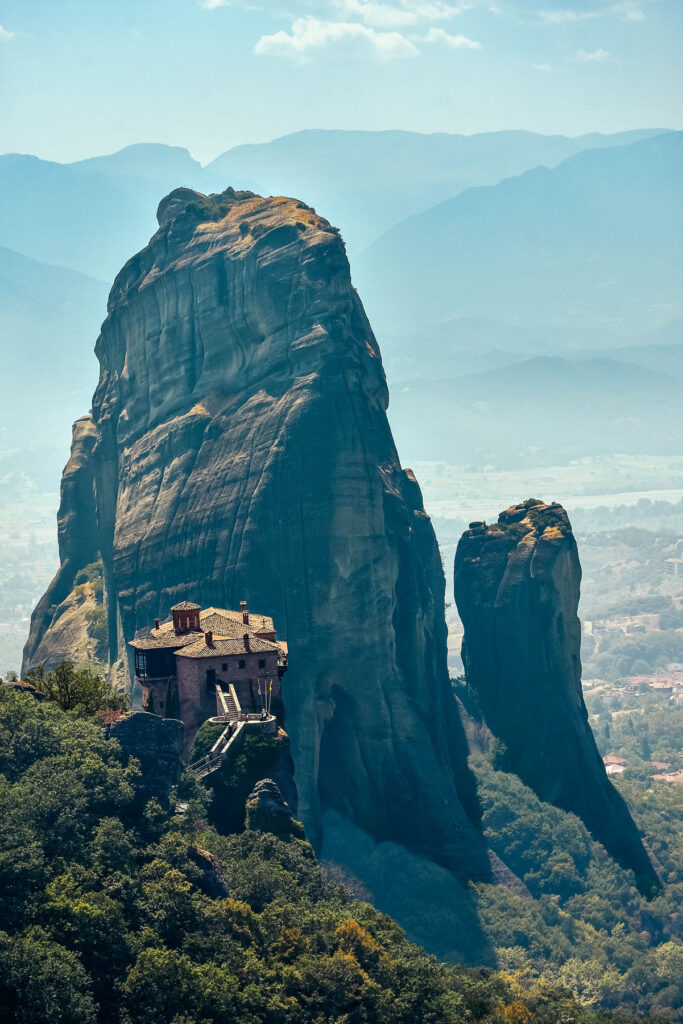
The Roussanou Monastery is probably the most photographed monastery in Meteora. It sits on an impressive pillar surrounded by many boulders.
The monastery is dedicated to Saint Barbara, who devoted her life to Christianity and was eventually beheaded by her father. Today, she is the patron saint of coalminers.
The monastery sustained major damage during WWII but was later rebuilt and now serves as an active nunnery with at least a dozen nuns living their full time.
The St. Stephen’s Nunnery
The St. Stephen’s Monastery, or the Holy Monastery of Agios Stefanos, is the last monastery at the end of the loop just across the valley from the Holy Trinity Monastery. It is the easiest monastery to get to – you don’t need to climb any steps; you just need to cross a small bridge.
Just like Roussanou, it is an active nunnery. The convent offers incredible views of the city of Kalambaka, the valley, and the Pindos Mountain range.
Other things to do apart from visiting monasteries
Best lookout points
There are two main lookout points for the best panoramic views of the valley, the monasteries, and the Meteora rock formations.
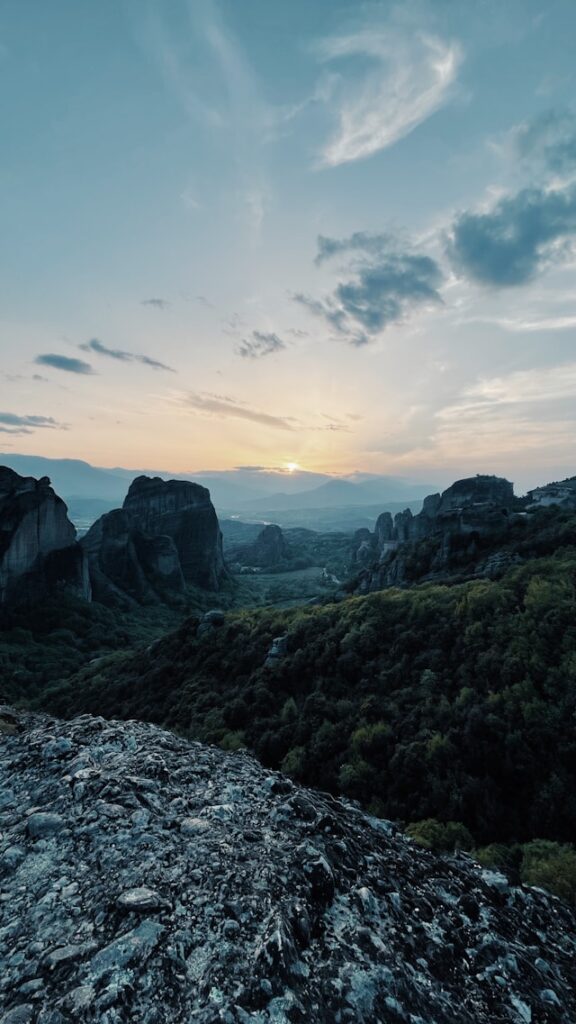
The first is what the locals call the Sunset Rock (Psaropetra viewpoint). It’s located at the top of Meteora in the first parking lot that does not have a monastery. The massive boulders give you an incredible view of Meteora at sunset.
Another popular viewpoint of the Meteora valley is the Main Observation Deck. Unofficially called the Sunrise Rock, it provides a beautiful top-down view of the valley and is equally beautiful at both sunrise and sunset.
Hiking Meteora
If you prefer to hike between monasteries, then head to the northern part of the Kalambaka town to begin the hike. The hike first stops at Agia Triada and continues on through all the monasteries.
The trek is about 16 km (10 miles) and takes at least 4 hours. If you are visiting the monasteries, then allow for more time. The hike itself is considered moderate due to some elevation.
Visit the Monk Jail
One of the coolest things to see in Meteora is the Monk Jail. The rock pillar has 14 levels of cave-live cells that housed disobedient monks. Each monk was fully isolated from other monks and the rest of the community to allow them to repent their sins in solitude.
Overall, Meteora is a truly unique place and while you might be tempted to start your Greek vacation by visiting the picturesque islands of the Aegean Sea, you should consider adding this magnificent place to your itinerary.