Best Things to Do in Lisbon, Portugal
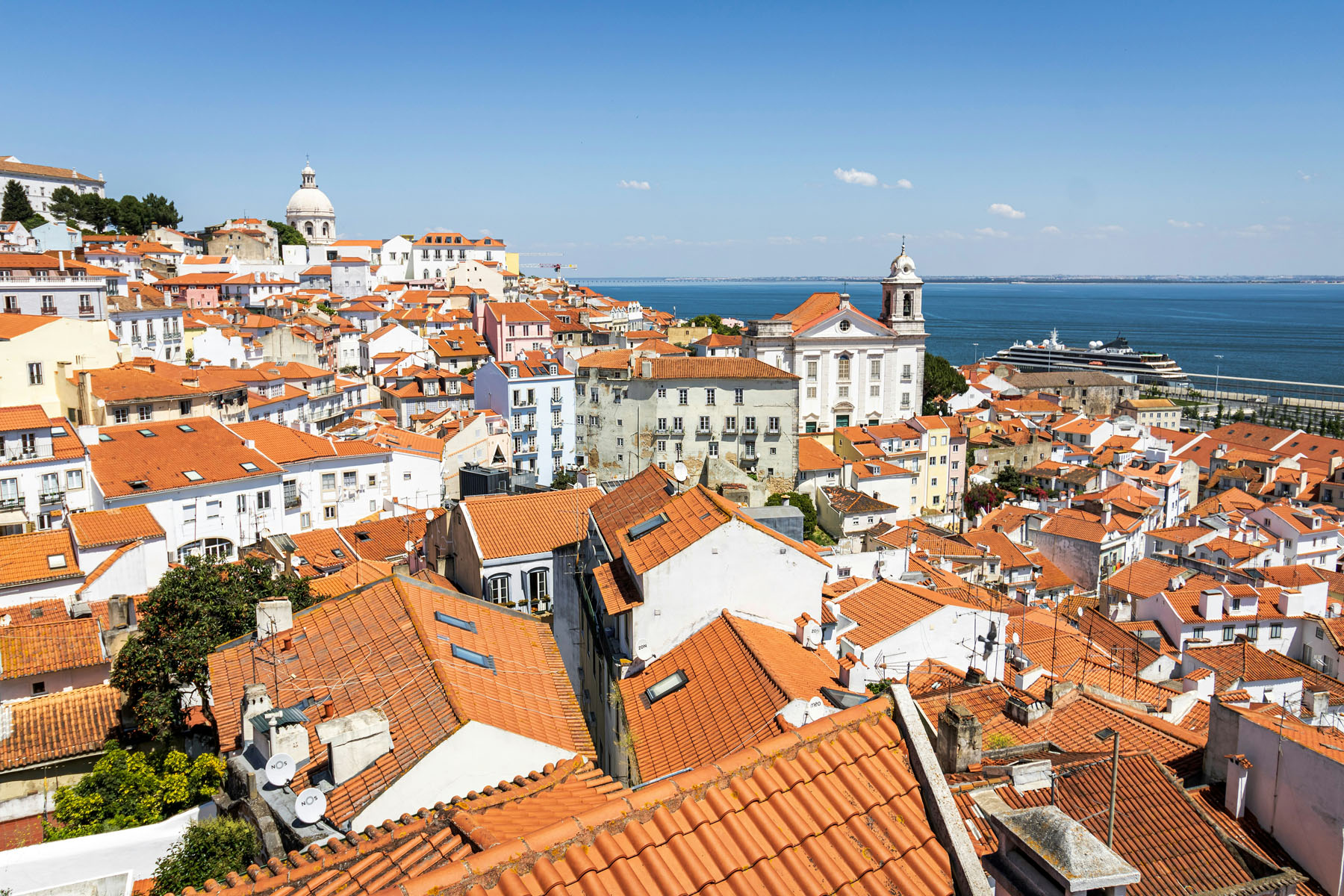
Lisbon has successfully stayed under the radar for the longest time. It’s a dynamic city with rich history, vibrant nightlife, friendly locals and impressive cuisine. Few tourists used to roam the streets of Lisbon as recently as a decade ago.
Now, the city has become one of the most popular destinations in Europe. Whether you are a history buff, a foodie or enjoy romantic strolls on narrow cobblestone streets, this multifaceted city has something to offer to every type of traveler.
After having spent a significant amount of time in Lisbon, I’ve put together a list of the most popular attractions along with my personal favorites, places to eat and drink, and practical tips.

Lisbon Essentials
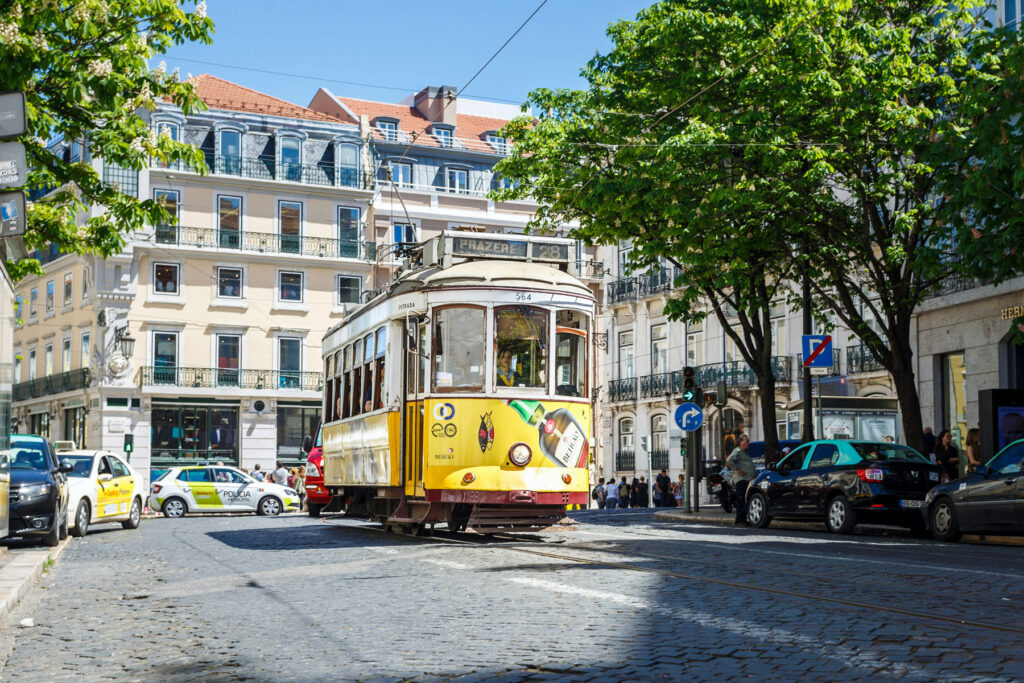
Tram 28
Riding Tram 28 provides a great overview of the city’s major attractions. The iconic line was first launched in 1914 and today the vintage trams are still part of the city’s public transportation network. The trams take visitors on a journey through time via narrow cobblestone streets in locals’ most-beloved neighborhoods.
The route begins in Martim Moniz square and ends in Campo de Ourique neighborhood. These two stops usually have long waiting lines to get on the tram but provide a better chance of getting a seat.
The entire route takes a little less than an hour and has 34 stops, including some of the city’s top attractions – Miradouro da Graça and Miradouro da Senhora do Monte viewpoints, Monastery of St. Vincent, and Sé Cathedral.
São Jorge Castle
St George’s castle stands tall above the streets of the old Alfama district, providing spectacular views of the city walls and the Atlantic Ocean.
The great citadel was first built more than 2,000 years ago by the Romans. Since then, the building has seen many changes in its appearance. The castle has operated as the Royal Palace for the Portuguese monarchy between the 13th and 16th century.
The best time to visit the castle is in the morning. After the visit, follow the narrow winding streets down to the Lisbon Cathedral while soaking up the enchanting atmosphere of the São Jorge and Alfama neighborhoods.
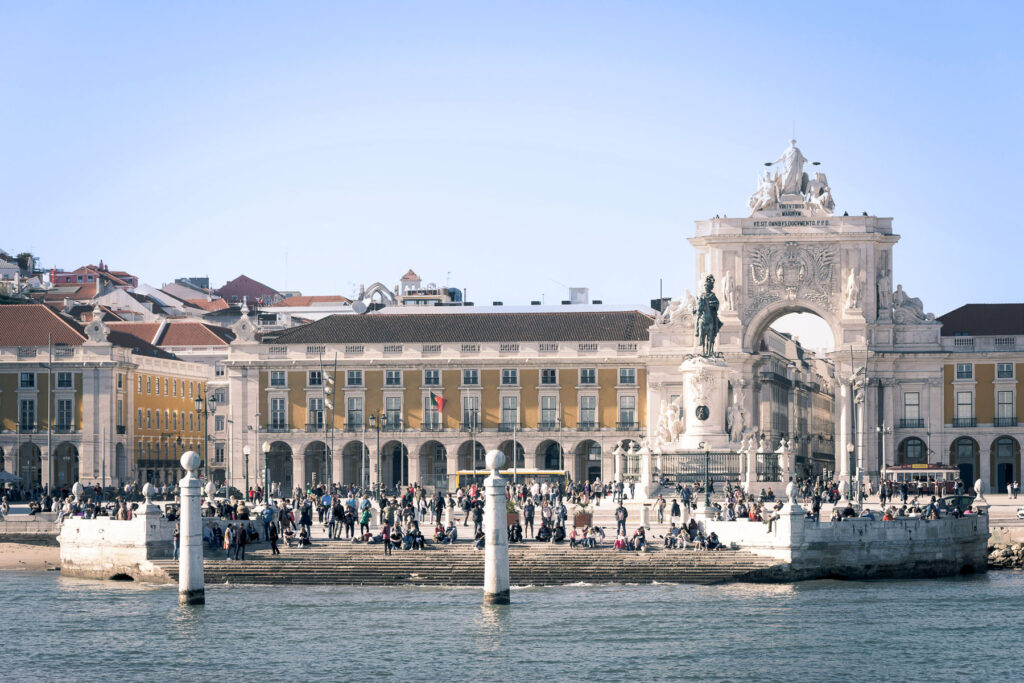
Praça do Comércio
The Praça do Comércio is the most important square in Lisbon. It was built on the site where the old Royal Palace used to be before it got destroyed by the 1755 earthquake and tsunami. The plaza was the main entry point to the city for maritime trade and it was also the location where King Carlos I and his son Luis Felipe were assassinated in 1908, ultimately leading to the fall of the Portuguese monarchy in 1910.
On the southern end, the plaza faces the Tagus River, while on the northern side is the Rua Augusta Arch, that leads into central Lisbon via the most prominent boulevard in Baixa.
Today, the square is filled with shops and restaurants, including the oldest restaurant in Lisbon, the Martinho da Arcada.
Sé de Lisboa (Lisbon Cathedral)
The Lisbon Cathedral, or simply the Sé, is arguably the most important Catholic monument in Lisbon due to its historic and religious heritage. Dedicated to the mother of God, the Cathedral is the oldest church in the city.
Its construction began in 1147 when the city was reclaimed from the North African Moors by Portugal’s first king, D. Afonso Henrique. Interestingly, the Cathedral was constructed on the ruins of an old mosque, which in turn was built on a previous Visigothic Christian temple.
The Cathedral has withstood the great earthquake of 1755 and has been renovated numerous times over the centuries, seamlessly blending different styles, which give this building a rather unique look.
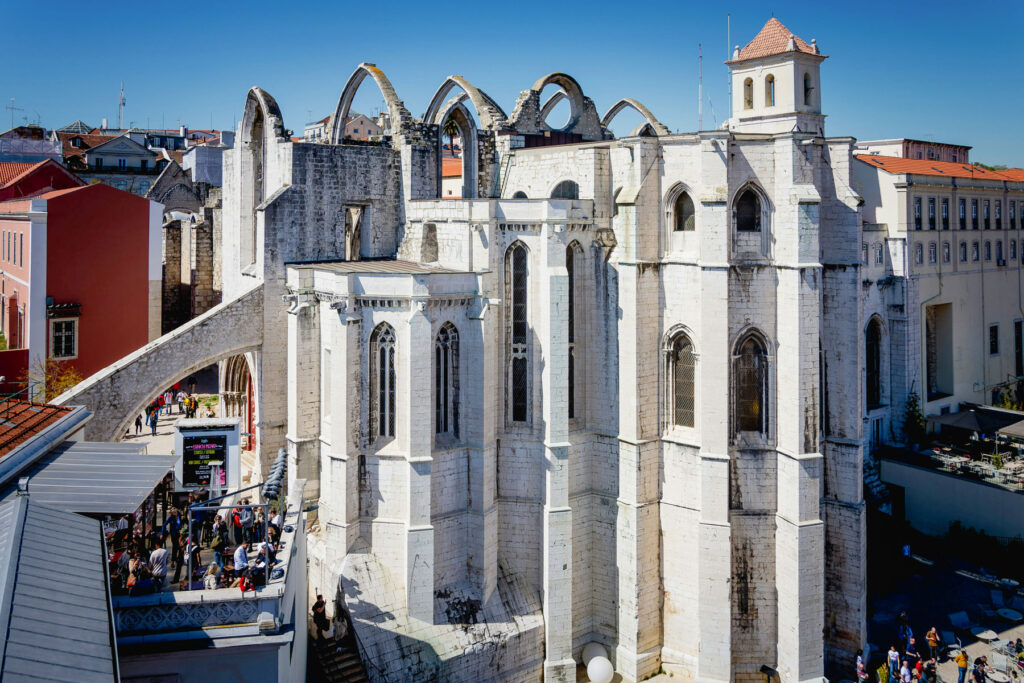
Convento do Carmo (Carmo convent)
The Carmo convent is a hauntingly beautiful reminder of the devastating earthquake of 1755 that destroyed most of the city. Its roof collapsed on the congregation attending Mass and was never rebuilt.
At the time of the earthquake, the Convent was the largest church in Lisbon. Today, the roofless nave is all that remains of the grandiose Gothic arches.
The quirky archeological museum inside the Convent houses an eclectic collection of tombs (the largest one is of King Ferdinand I), Egyptian and South American mummies, and various other artifacts, including a jasper statue of Virgin Mary.
At the entrance of the museum, an engraved stone informs visitors that Pope Clement VII granted 40 days of indulgence to “any faithful Christian” who visits this church.
The museum also offers a 15-minute projection that walks visitors through centuries of the Convent’s history.
The church itself is said to be the burial site of Christopher Columbus’s wife, Filipa Perestrelo.
Belém Tower
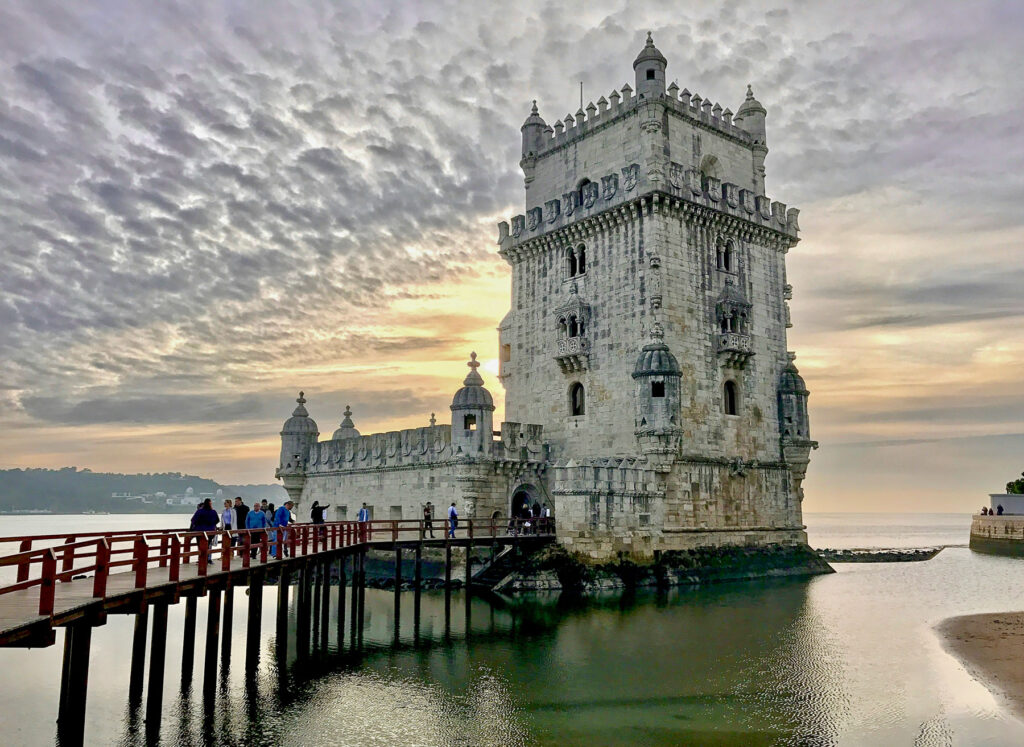
The Belém Tower was built between 1514 and 1520 and in 1983 UNESCO classified it as a World Heritage site. Located on the banks of the Tagus River, the tower was originally used as a fort, defending the city from incoming raids. Later on, it was transformed into a lighthouse and prison.
The building has 5 different floors, leading up to a rooftop terrace. Each floor can be accessed via a narrow spiral staircase.
On the western façade of the Belém Tower, you’ll find a gargoyle in the shape of a rhino. Interestingly, the first rhino came to Portugal in 1513 from India.
The Belém Tower is located next to the Jerónimos Monastery, so it’s recommended to visit the two sites together.
Jerónimos Monastery
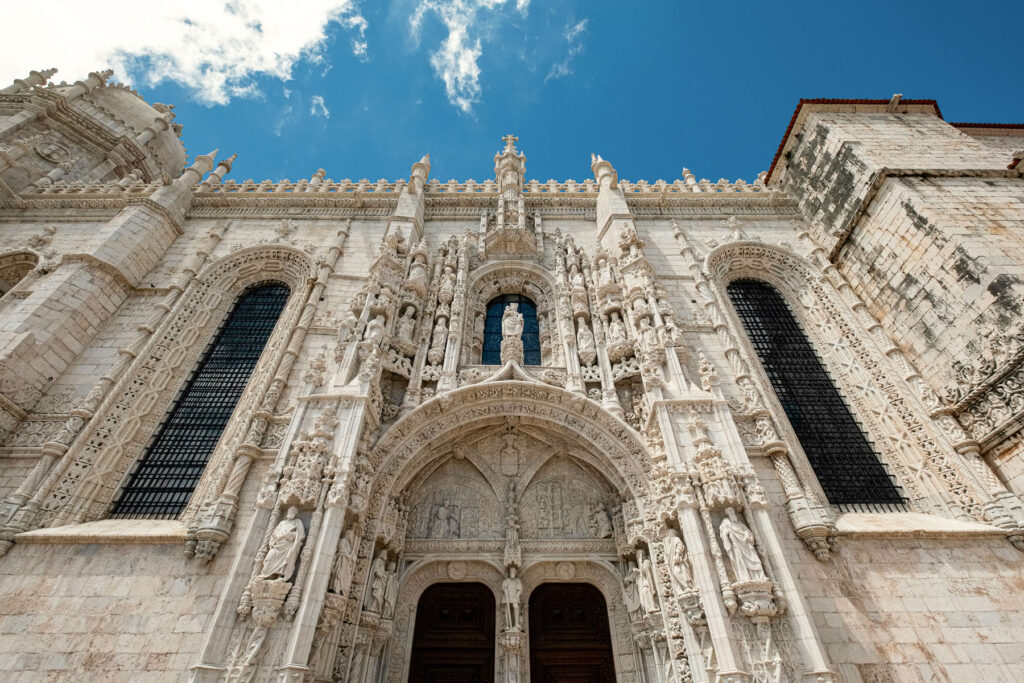
The Jerónimos Monastery is one of the most important tourist attractions in Lisbon. It was built to commemorate the return of explorer Vasco da Gama from India.
Paid for with the profits made in the spice trade with the East, it was home to the monks of the Order of Saint Jerome. These monks were responsible not only for praying for the King, but also for creating the world-renowned Pastéis de Nata recipe.
The construction of the monastery began in 1501 and was completed only in the seventeenth century. Today, the monastery is one of the most prominent examples of the Portuguese Gothic Manueline style of architecture. It is perhaps the greatest symbol of Portuguese power at sea and the country’s role in the Age of Discovery.
The tombs of Vasco da Gama, along with the tomb of Luís de Camões, a famous Portuguese poet and writer, are displayed in the church of Santa Maria.
Alfama Neighborhood
The Alfama neighborhood is the oldest and most charming district in Lisbon. It’s a mix of winding hilly streets, historic landmarks and charming cafes.
Here, you can experience an evening of Fado (Portuguese folk music), shop for trinkets at a flea market, or indulge yourself in one of the numerous restaurants with spectacular city views.
You can easily spend an entire afternoon walking around this enchanting area.
Fado Performance
A fado performance is must-see in Lisbon. Fado, which translates to “fate” in Latin, is a musical symbol of Portuguese culture and history. Traditionally, this melancholic genre of music depicts the life of the poor, with lyrics revealing sorrow, hopelessness and despair.
Fado performances are usually held over meals in pubs or restaurants and should be booked in advance. One of the best places to experience this traditional performance accompanied by classical and Portuguese guitars is in the Alfama neighborhood.
Museo Nacional do Azulejo (Tile Museum)
If you are interested in the history and design of ceramic tiles, this unique museum is worth a visit. Despite its somewhat out-of-the-way location, the museum is uniquely housed in the Madre de Deus Convent, dating back to the 15th century.
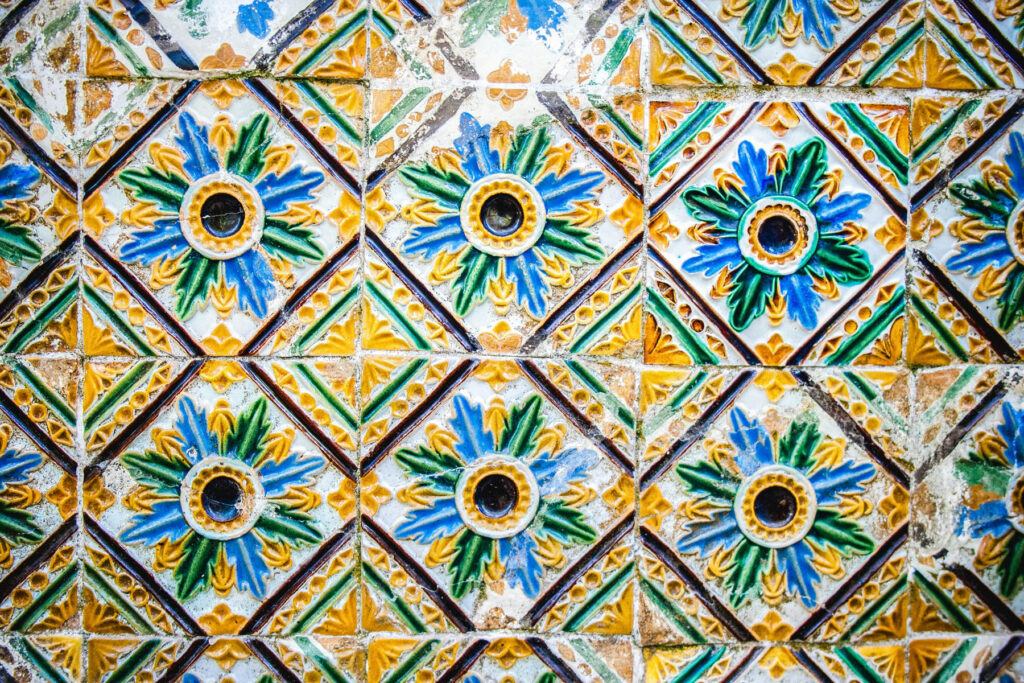
The museum presents a magnificent collection of tiles, or azulejos, featuring pieces going back to the 14thcentury. The highlight of the exhibit is a blue and white composition of 1300 tiles of Lisbon’s cityscape made in 1738, prior to the Great Earthquake. It is said to be the country’s longest tile piece (75ft in length).
Time Out Market
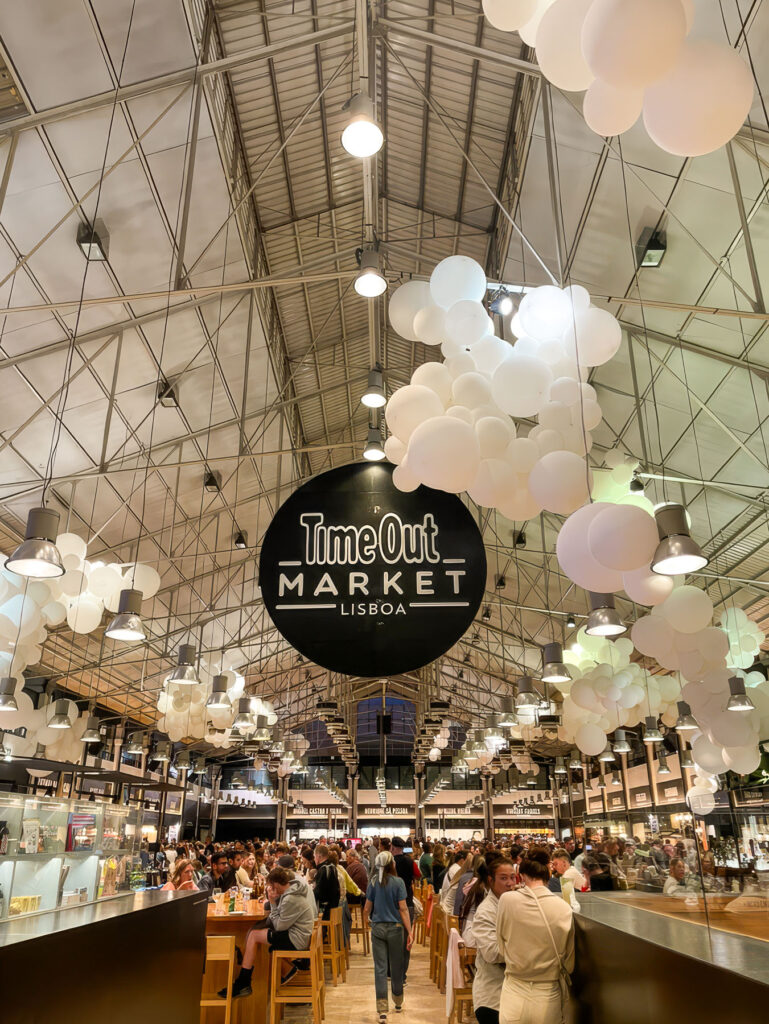
The Time Out Market is located inside Lisbon’s historic Mercado da Ribeira and should be on every foodie’s must-visit list. The market houses over forty shops, bars and restaurants, representing the best food experiences in Lisbon – from small local shops to stalls run by Michelin-starred chefs.
The Time Out Group, a global entertainment company, is known for curating the best experiences in more than 320 cities around the world. In 2014, Time Out Lisbon became the very first food and cultural market in the world.

Café A Brasileira
The Café A Brasileira (the Brazilian café) is one of the oldest and most famous cafes in Lisbon. It was opened by a Brazilian native, Adrian Telles, in 1905 as a shop to import and sell Brazilian coffee.
To promote his product, Adrian Telles offered a free cup of coffee to any shopper who bought a kilogram (about 2lbs) of ground coffee. It was the first shop to sell “bica’, a strong coffee, similar to espresso.
Over time, the space became a meeting point for literary writers, artists, intellectuals and academics. The most prominent figure to frequent the establishment was the Portuguese poet, Fernando Pessoa. He would often be seen sipping absinthe and sweet bica, smoking a cigarette and either writing or reading. Nowadays, his bronze statue is permanently placed outside the café.
Sintra & Cabo da Roca day trip
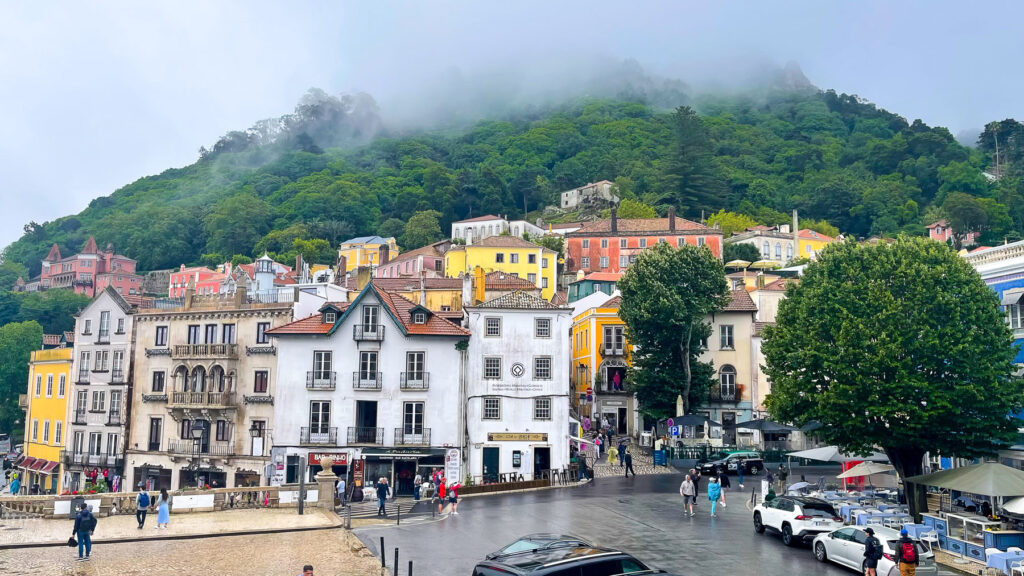
Sintra is a charming little town located just 45 minutes north of Lisbon. This magical place, nestled in the pine forest hills of Serra de Sintra, has been awarded the UNESCO World Heritage status. It contains one of the most recognized palaces in Portugal, the colorful Pena Palace, as well as the summer residence of the Portuguese royal family, the Moorish Castle.
You can spend an entire day walking down the town’s enchanting streets or numerous parks and gardens. The visit to the palaces should be accompanied by a tour guide to learn and appreciate the full history of the life of the Portuguese royal family.
The weather in Sintra can be very unpredictable and tropical rains and fogs are not uncommon. It’s best to bring a rain jacket and a waterproof bag for your electronics.
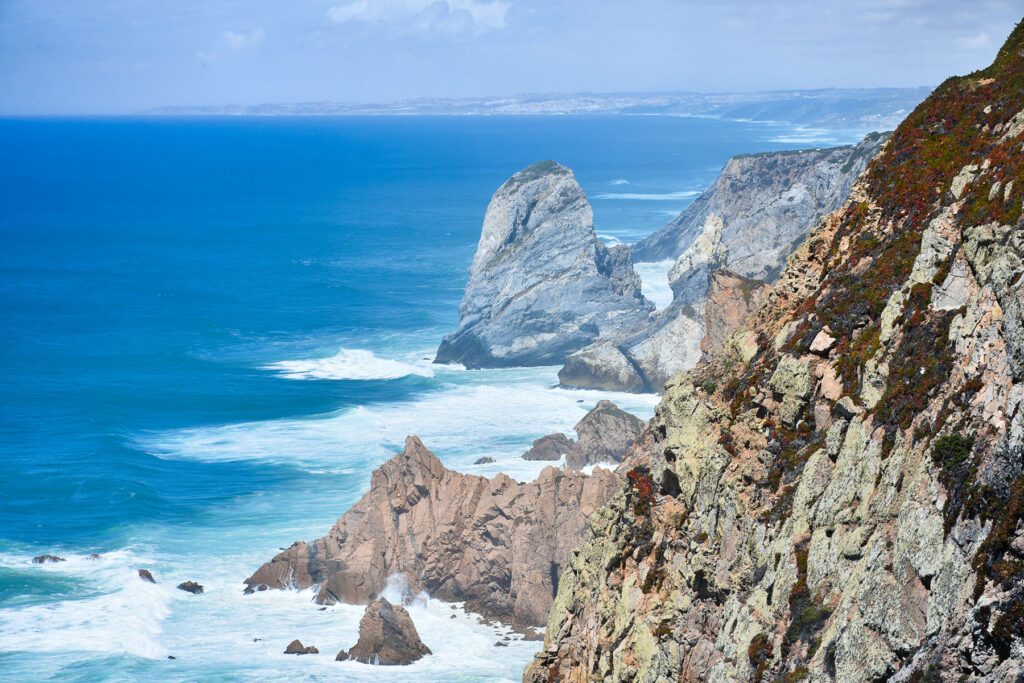
A trip to Sintra should be combined with visiting Cabo da Roca, which is the most Western point of mainland Europe and is a popular destination for its stunning views of the Atlantic Ocean.
Cascais day trip
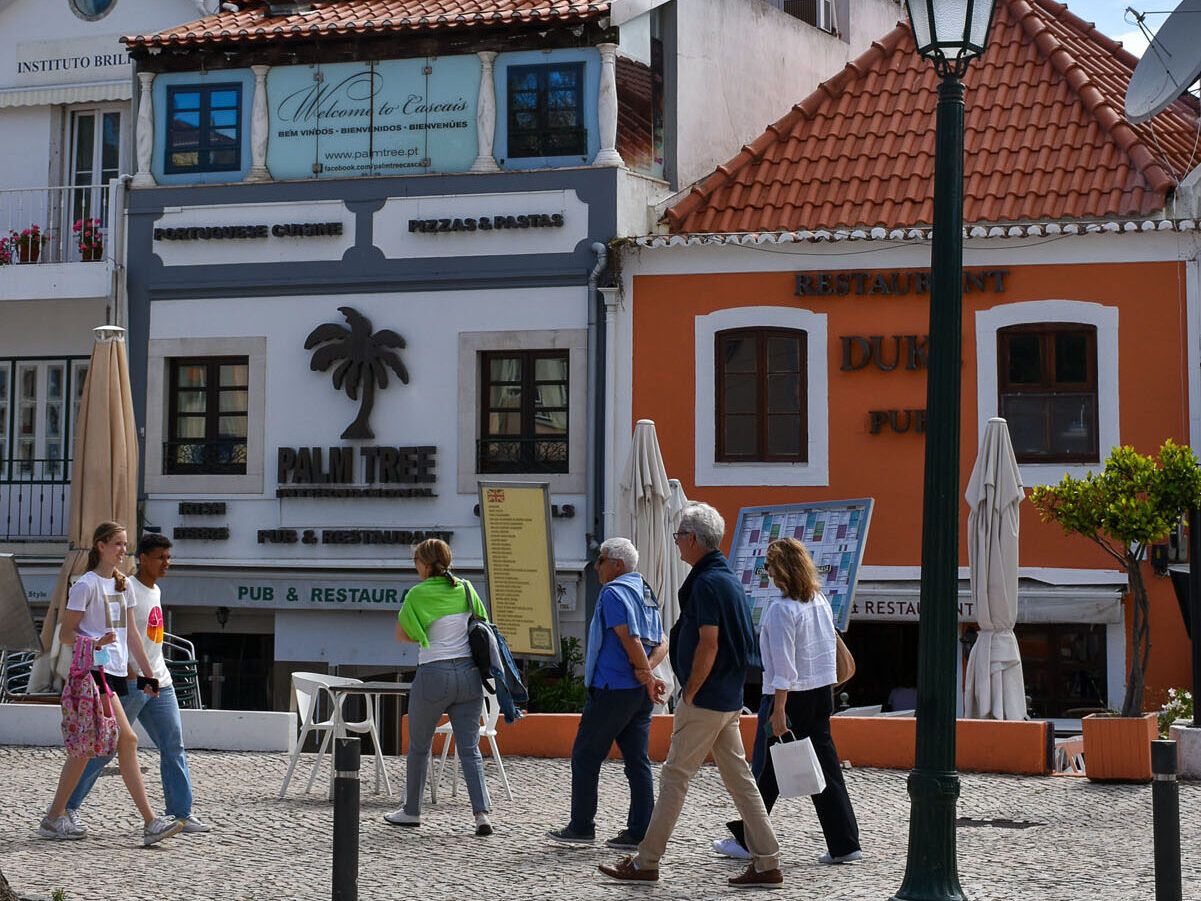
Cascais is a popular vacation spot on the premier Lisbon coastline. Traditionally, a small fishing town, and later a summer retreat for the Portuguese nobility, Cascais has developed into an elegant and modern resort town.
The historic town center is full of buzzing restaurants and bars, lavish villas and fascinating museums. The biggest Cascais attraction though is its pristine beaches. Surrounding the town are the gorgeous beaches of the Portuguese Riviera, and to the north is the untamed Serra de Sintra coastline with its dramatic landscape.
Other Things to Do in Lisbon
- Santa Justa elevator
This beautiful metal structure has become one of the top tourist attractions, as it transports visitors from the lower level of Baixa neighborhood to the Bairro Alto district.
- MAAT (Museum of Art, Architecture and Technology)
Built in 2016 in the heart of historic Lisbon, the museum is an innovative project focusing on three areas – art, architecture and technology. Tickets are free first Sunday of each month.
- Gulbenkian Museum
The museum houses one of the finest private collections in the world, spanning from ancient Egypt to the early twentieth century.
- LX Factory
LX factory is located about 2 miles west of Lisbon’s city center in Alcântara neighborhood. Once an old textile complex, the factory is now home to quirky restaurants, hip bars, start-up businesses and artsy shops. It’s a place for creatives, graffiti artists and foodie aficionados.
- Avenida da Liberdade shopping
Lisbon’s premier shopping spot, the avenue resembles iconic Paris boulevards. Designed in the 19th century, Avenida da Liberdade is now home to the chicest international fashion brands, along with local luxury chains, such as Loja das Meias.
- Traditional Funiculars
A trip to Lisbon would be incomplete without a ride in one of the traditional funiculars. Historically, they ran on water, now on electricity, which makes them the most environmentally friendly way of tackling the city’s hills.
- Rossio Square
Rossio Square is the liveliest place in the city, full of charming restaurants with outdoor seating, offering visitors a lovely place to relax and soak in the atmosphere.
- Pink Street
The Pink Street, officially called Rua Nova do Carvalho, is the nightlife destination in the Cais do Sodre neighborhood and is often used as an open-air art gallery during the day.
- Bairro Alto
Bairro Alto is the nightlife center of Lisbon. Famous for its bars and restaurants, it’s a busy place, especially on the weekends. It’s conveniently located next to a train station and trams 28 and 24.