Islamabad Travel Guide: Pakistan’s Most Underrated Capital City
When most people think of Pakistan, they picture bustling bazaars, ancient Mughal ruins, and sensory overload. Islamabad will throw all of that out the window.
Pakistan’s capital is calm, green, organized, and beautiful — a city nestled at the foot of the Margalla Hills with wide tree-lined boulevards, parks, excellent restaurants, and some genuinely spectacular architecture. It’s the kind of city that surprises every visitor who expected chaos and instead found a cappuccino and a hiking trail.
That’s not to say Islamabad lacks depth — far from it. It’s surrounded by ancient ruins, mountain valleys, and dramatic landscapes, all within a couple hours’ drive. As a base for exploring northern Pakistan, it’s unbeatable. As a destination in its own right, it’s massively underappreciated.
Is Islamabad Safe to Visit?
Islamabad is consistently ranked as one of Pakistan’s safest cities, and for good reason. As the federal capital, it has a heavy security presence, well-maintained infrastructure, and a relatively low crime rate compared to other major South Asian capitals.
The city is home to a large diplomatic community, expats, international journalists, and NGO workers — all of which contributes to a cosmopolitan atmosphere that’s so welcoming to foreign visitors.
As always, apply common sense: avoid wandering unfamiliar areas after dark, keep valuables secure, and check your government’s current travel advisory before booking. Certain regions of Pakistan carry serious travel warnings, but Islamabad and the immediate surrounding areas are generally considered safe for tourists.
Solo female travelers will find Islamabad more relaxed than many Pakistani cities. The presence of universities, embassies, and a large educated middle class makes it noticeably more liberal in day-to-day interactions.
Islamabad almost felt like a quaint European city. Dressing modestly will deter unwanted attention and hiring a guide will add an extra layer of comfort and convenience.
Dress Code for Women (and Everyone Visiting Religious Sites)
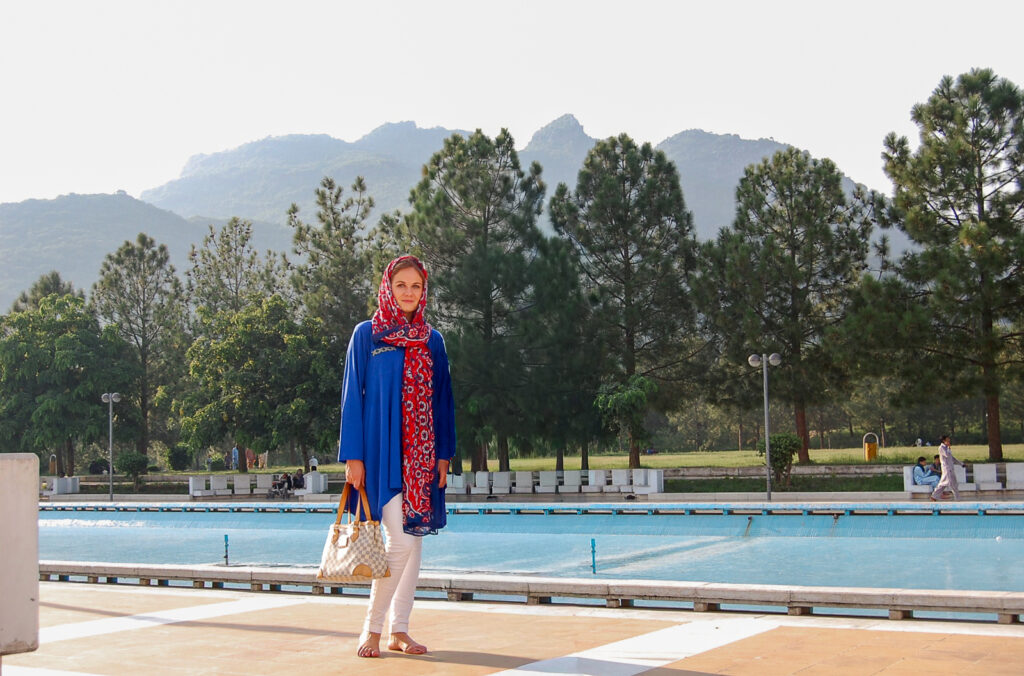
Pakistan is a predominantly Muslim country, and dressing modestly is very much appreciated by the locals. For women, this means covering your shoulders, arms, and legs. Loose pants or a long skirt with a long-sleeved top works well. Bring a lightweight scarf for visiting mosques, where covering your hair is required.
Islamabad is one of the more relaxed Pakistani cities when it comes to dress, and you’ll see local women in a wide range of styles. That said, shorts, sleeveless tops, or form-fitting clothing in public will draw stares and make your experience very uncomfortable. When in doubt, go looser and longer.
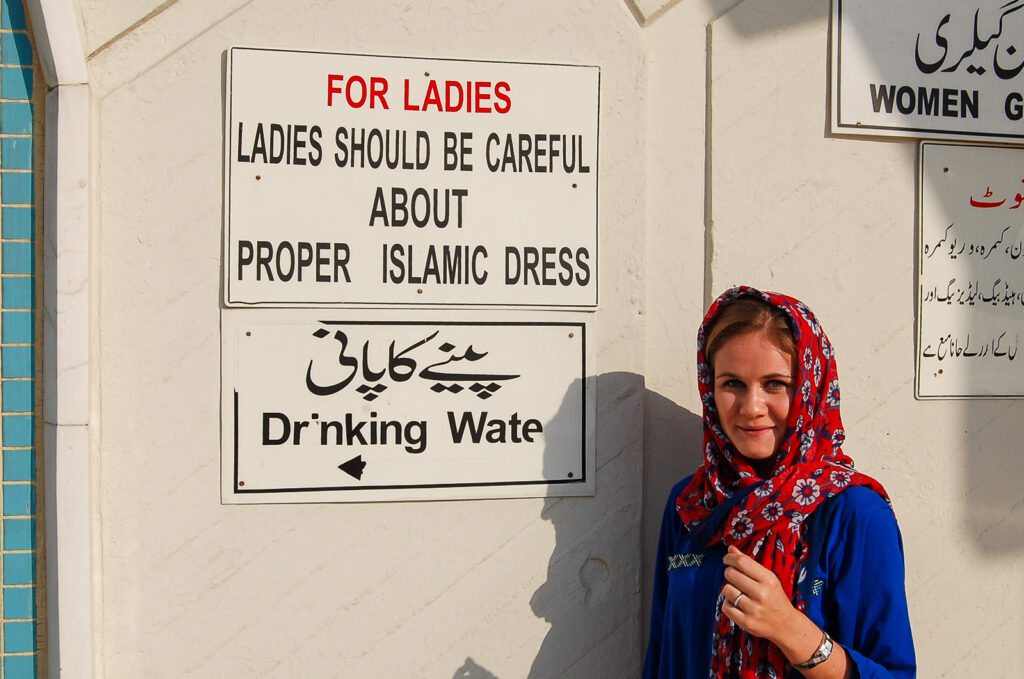
At religious sites, both men and women should dress conservatively. Men should wear full-length pants and avoid sleeveless shirts. Don’t forget to remove your shoes when entering a mosque.
Picking up a shalwar kameez (the traditional Pakistani tunic and pants combo) at a local market is a great idea: it’s comfortable, beautiful, locally appreciated, and incredibly practical in the heat.
The Must-See Landmarks of Islamabad
Faisal Mosque — One of the World’s Most Stunning Mosques
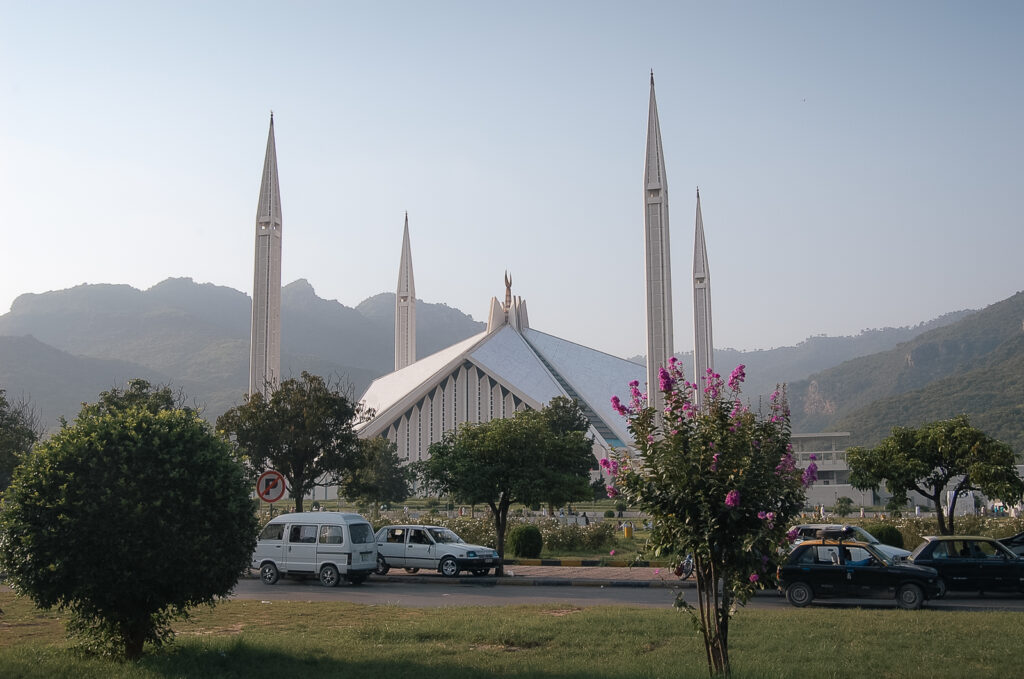
The Faisal Mosque is Islamabad’s defining landmark and one of the most architecturally extraordinary mosques in Pakistan.
Designed by Turkish architect Vedat Dalokay and completed in 1986, it breaks every expectation of what a mosque should look like — no traditional dome, but a massive tent-shaped structure inspired by a Bedouin desert tent, flanked by four soaring 295-foot minarets, set against the dramatic backdrop of the Margalla Hills.
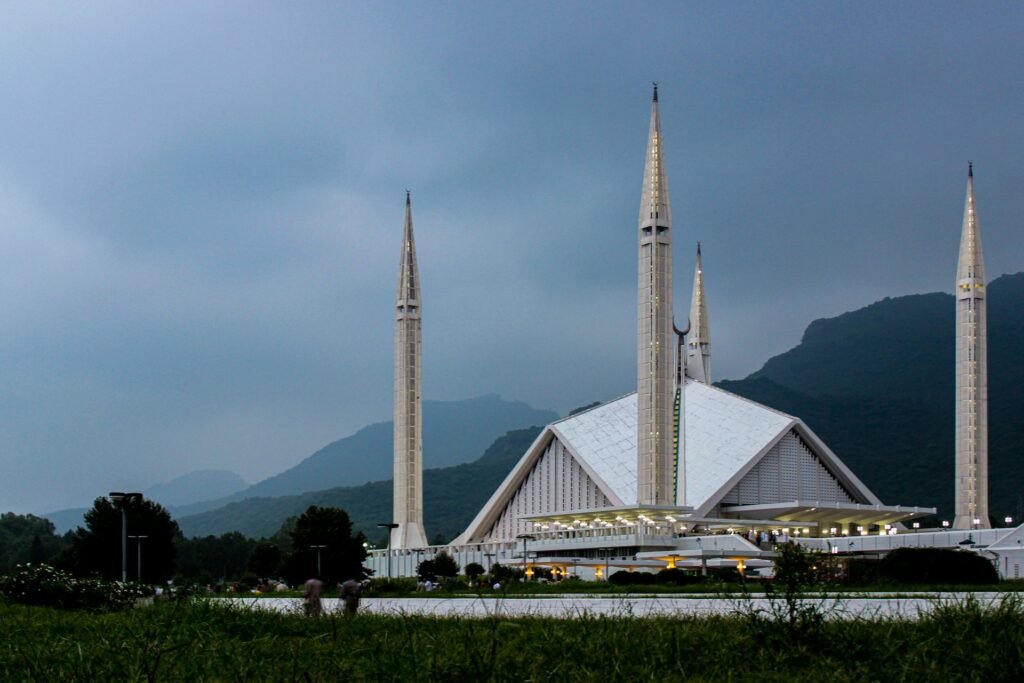
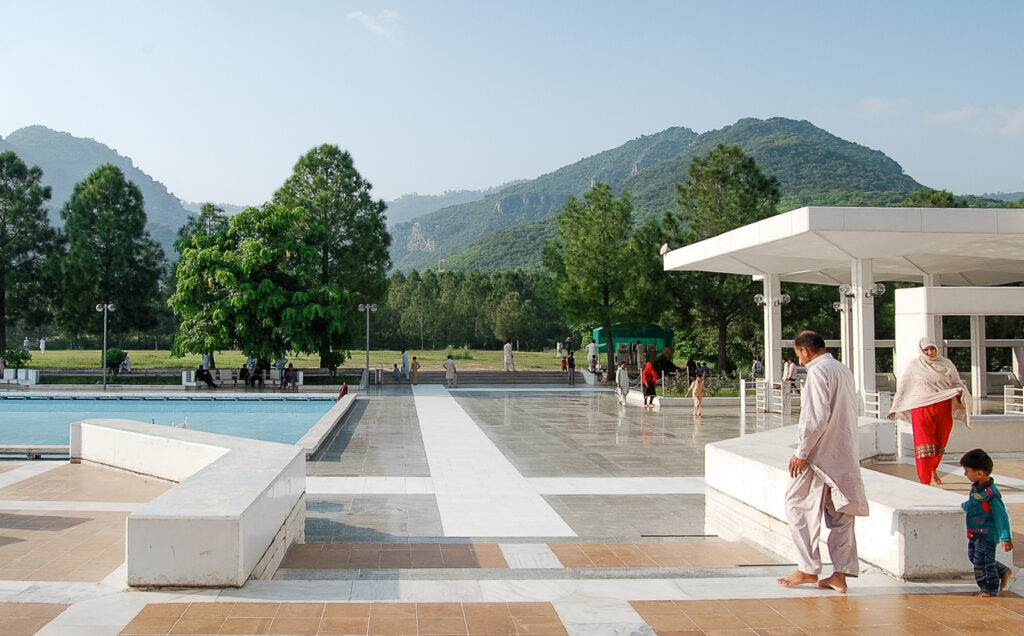
It can accommodate up to 300,000 worshippers in its courtyard and interior, making it one of the largest mosques in the world. Non-Muslim visitors are welcome outside of prayer times. The surrounding grounds are beautifully landscaped and a popular gathering spot for locals. Dress modestly, remove your shoes, and take your time — this one is truly special.
Pakistan Monument — A Symbol in Stone
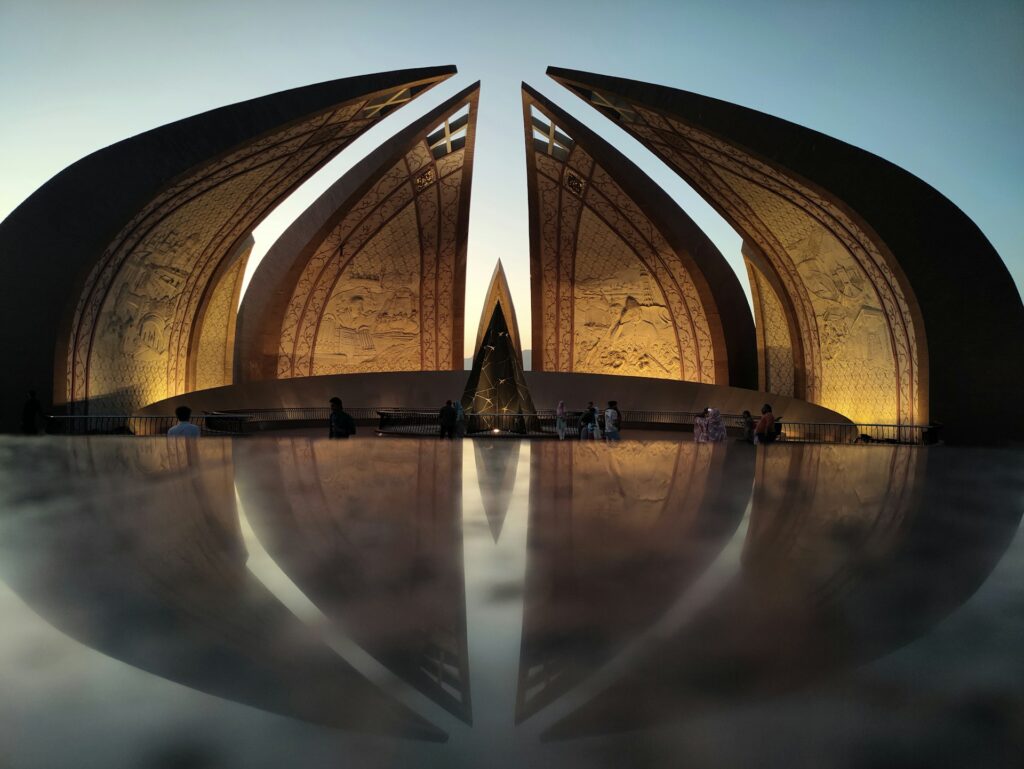
Sitting on Shakarparian Hill, the Pakistan Monument is a striking lotus-shaped structure built from rose-colored granite, designed to represent the four provinces and three territories of Pakistan.
The surrounding Museum of Pakistan tells the country’s history through artifacts, dioramas, and multimedia exhibits — it’s one of the better national museums in South Asia and worth 90 minutes of your time. The hilltop location also gives panoramic views over the city toward the Margalla Hills. Go at sunset if you can.
Daman-e-Koh — Islamabad From Above
About 4 miles north of the city center in the Margalla Hills National Park, Daman-e-Koh is a hilltop viewpoint that offers the best views of Islamabad’s famous grid layout. On a clear day you can see the Faisal Mosque, Rawalpindi, and the green corridors of the city’s parks and boulevards stretching out below you.
There’s a small cute café at the top, families picnicking on the grass, and — if you’re lucky — you’ll get to see wild monkeys attempting to steal your snacks. It’s a 15-minute drive from the city center, or you can hike up through the trails from Margalla Road.
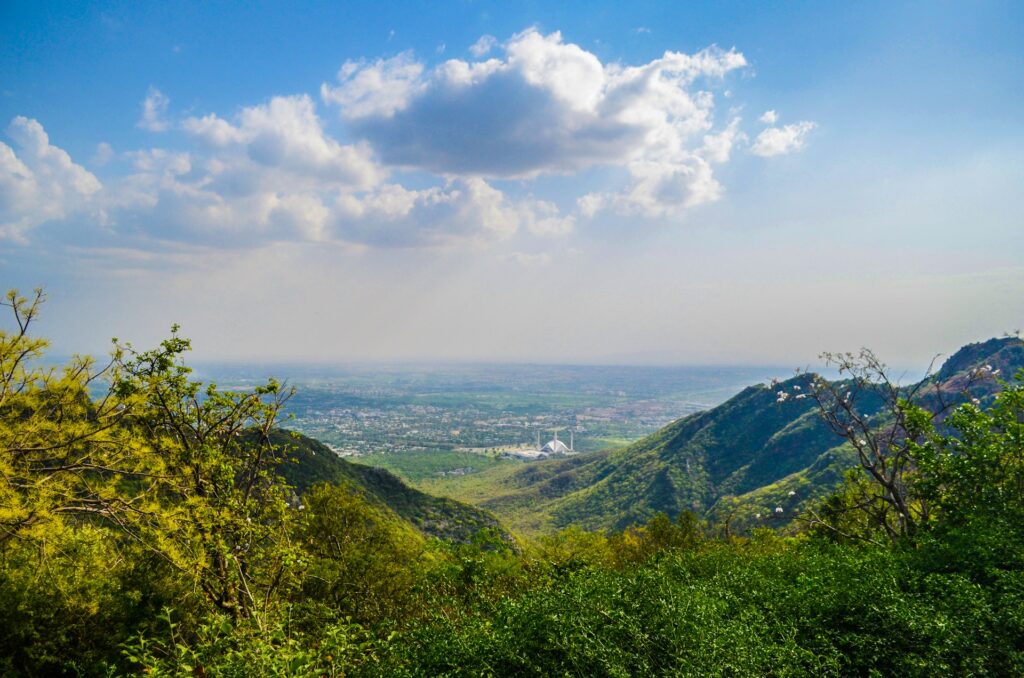
Margalla Hills National Park — Nature Right on the Doorstep
Islamabad is one of the few capital cities in the world where you can be hiking in a national park within 20 minutes of the city center. The Margalla Hills National Park covers about 69 square miles of forested hills with hiking trails of varying difficulty.
Trail 3 is the most popular — a well-marked, moderately challenging loop of about 3.5 miles that takes you through dense forest with city views. Trail 5 is longer and more rugged. Keep an eye out for monkeys, deer, wild boar, and if you’re very lucky, a leopard (they’re there, they’re just shy). Go early in the morning for cooler temperatures and better wildlife sightings.
Pakistan’s Colorful Trucks
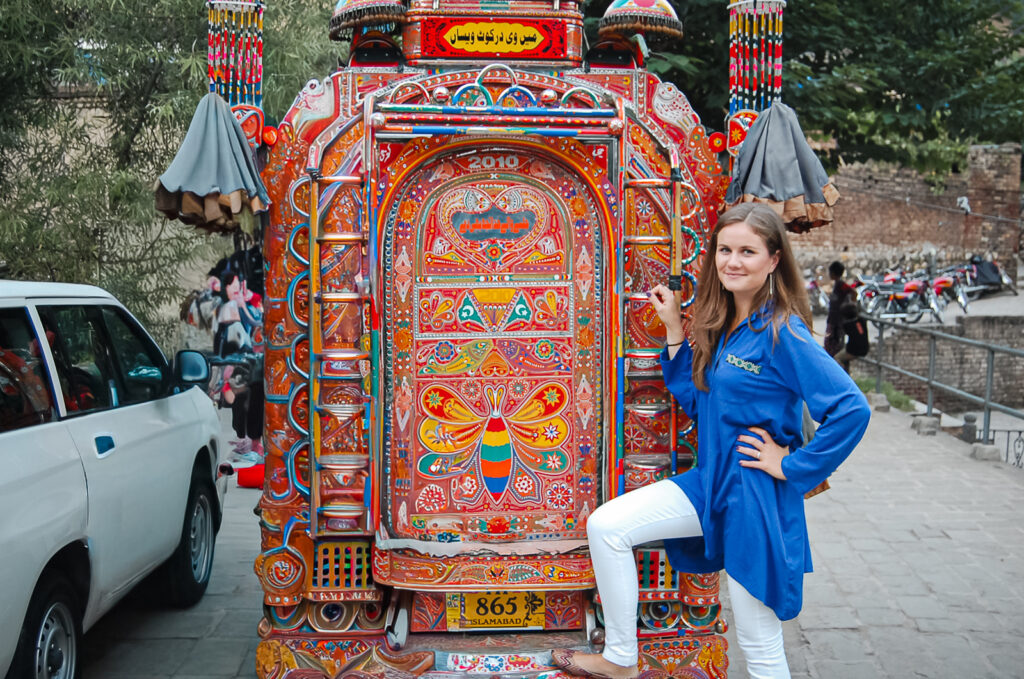
While not precisely a landmark, but rather an iconic image of Pakistan, at least in my opinion, the colorful and intricately decorated trucks are a sight to see and should definitely be included in your itinerary.
These rolling masterpieces adorned with elaborate floral patterns, calligraphy, and metallic decorations have deep roots in the country’s folk culture. They represent the identity and regional roots of the driver and some of these trucks have decorations costing $10,000-$30,000 USD.
Rawal Lake — A Quiet Escape
On the eastern edge of Islamabad, Rawal Lake is a large reservoir surrounded by walking paths, boat rental spots, and picnic areas. It’s a rather pleasant place to decompress — go for a stroll, fish, or rent paddle boats on weekends.
The lake is also a good birdwatching spot, with migratory species passing through in winter. It’s nothing flashy, but it captures a gentler, more everyday side of Islamabad that tourists often miss.
Where to Eat in Islamabad
Islamabad’s food scene is more sophisticated than many visitors expect. The F-6, F-7, and F-10 sectors of the city are packed with restaurants ranging from roadside karahi spots to proper sit-down restaurants with full menus and good coffee.
Burns Road
Burns Road (located in neighboring Rawalpindi, about 20 minutes away) is the legendary street food strip for nihari, paya (stew), and seekh kebabs — a pilgrimage worth making.
Andaaz Restaurant
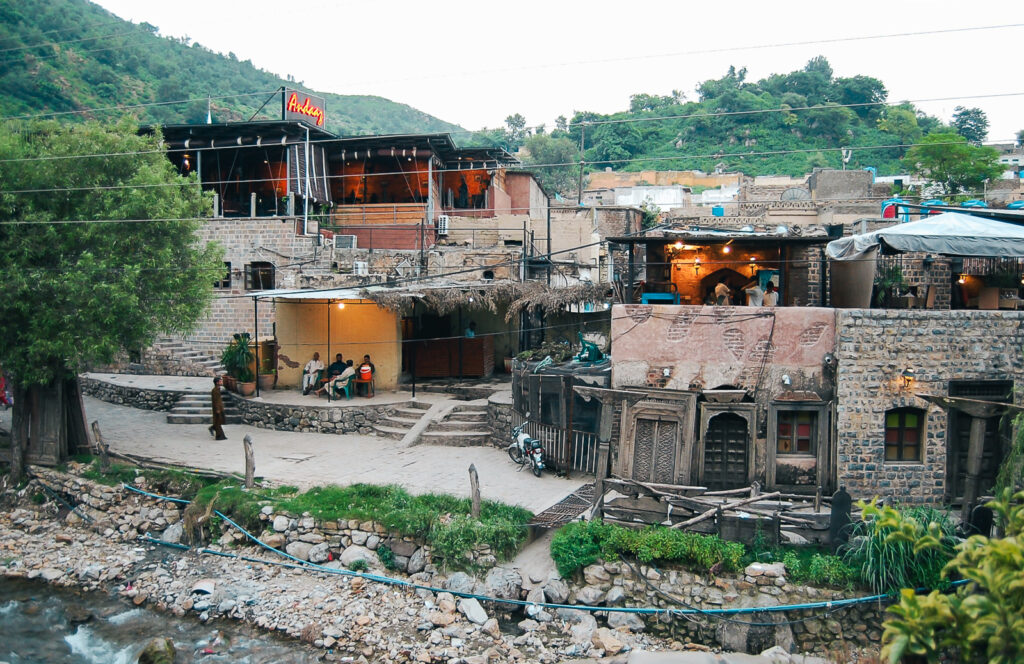
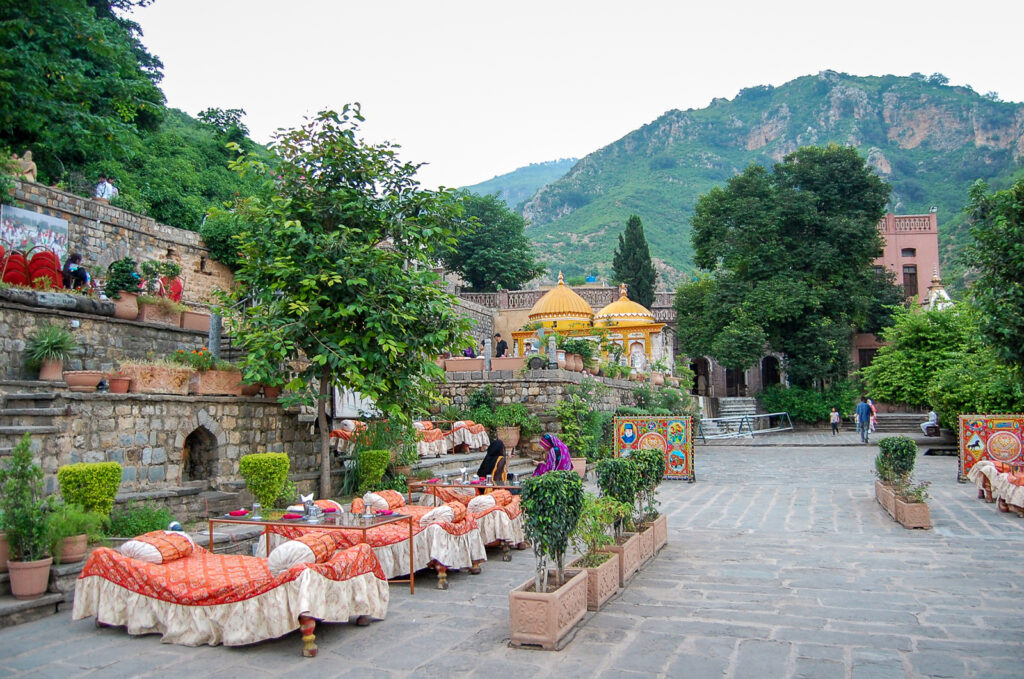
Andaaz Restaurant is the staple of the community. They are renowned for their authentic Pakistani cuisine and traditional ambiance. They have two locations – their long-standing and popular location in the historic Saidpur Village and a more modern place in ParkView City. Try going to the one in the village, as you’ll get to enjoy walking around this historic place.
Kosher Market in F-6
Kohsar Market in F-6 is Islamabad’s most upscale eating and café strip: independent coffee shops, international food, juice bars, and bakeries. A good spot for breakfast or a lazy afternoon or if you want a break from traditional Pakistani food.
Jinnah Super Market or Melody Food Street
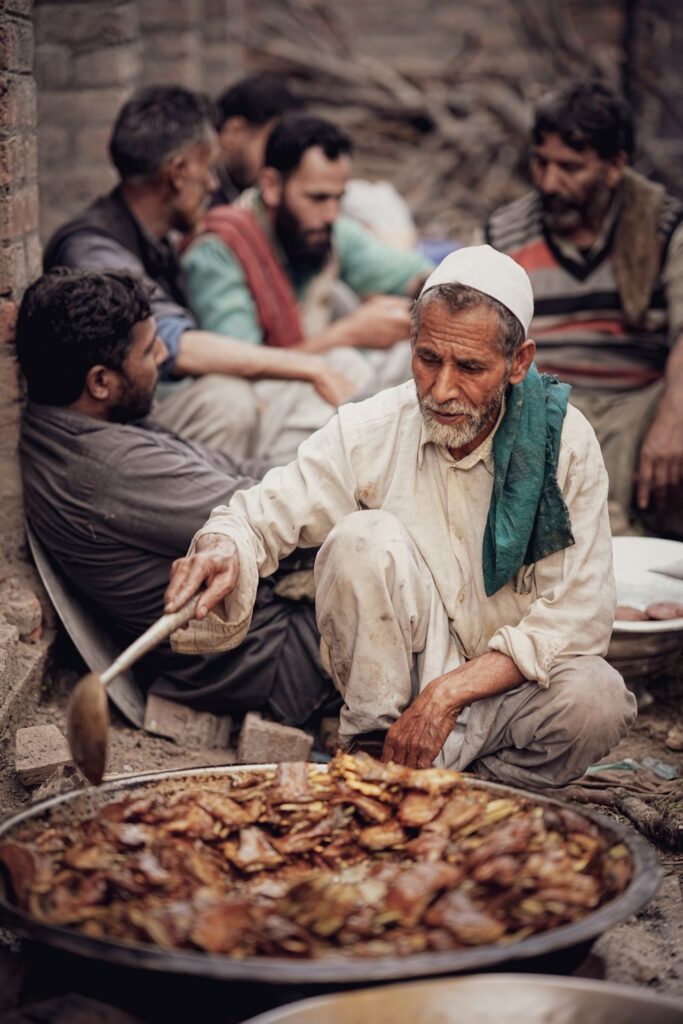
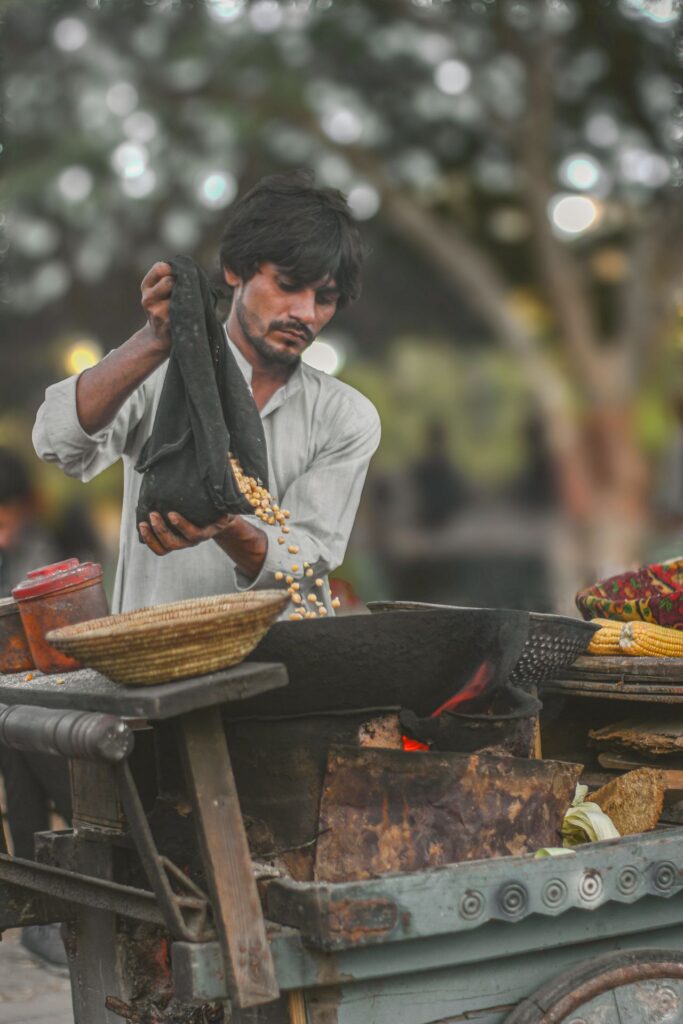
For street food, head to Jinnah Super Market or Melody Food Street for late-night karahi, chapli kebabs (a Pashtun specialty — wider, crispier, and spicier than seekh kebab), and fresh naan baked in a tandoor oven right in front of you.
Don’t miss: doodh patti chai (milk tea brewed entirely in milk), chicken karahi (tomato-based wok curry), halwa puri for breakfast (a fried bread served with lentils and semolina pudding), and fresh sugarcane juice from roadside vendors.
Monal Restaurant
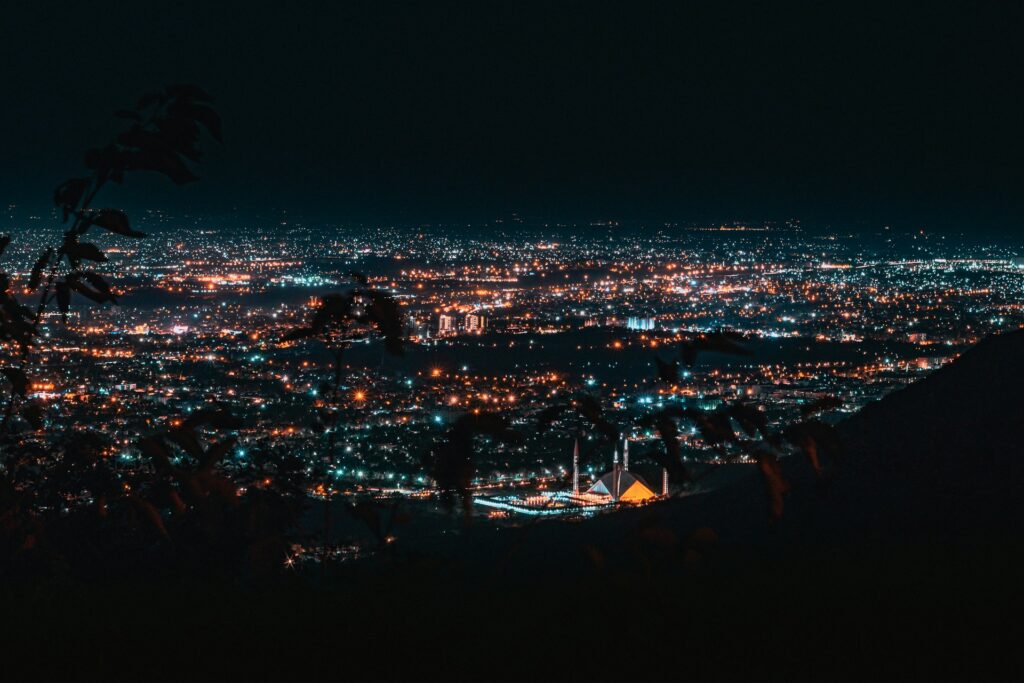
Monal Restaurant, perched up in the Margalla Hills with a sweeping view of Islamabad below, is the city’s most famous dining spot. The food is traditional Pakistani — the mixed grill is a crowd-pleaser — but the real draw is watching the city lights spread out below you at night. Book ahead on weekends.
Day Trips and Excursions from Islamabad
Islamabad’s real superpower is its location. Within a few hours in any direction, you’re in some of the most historically and naturally spectacular places in all of South Asia.
Below are some great spots for day trip ideas, but if you have more time, then head over to Pakistan’s cultural capital, Lahore, to immerse yourself in the history and ancient ruins of the Mughal dynasty. Read it about it here.
Taxila — Ancient Crossroads of Civilizations (19 miles / 30 km away)
Just 19 miles northwest of Islamabad, Taxila is one of the great archaeological sites of South Asia — a UNESCO World Heritage Site containing the ruins of a city that served as a major hub of the ancient Silk Road and one of the most important centers of Buddhist learning in the ancient world.
The ruins span several sites (Sirkap, Mohra Moradu, Jaulian), and the museum houses a world-class collection of Gandharan Buddhist sculpture. Plan for a full day of exploring.
Rohtas Fort (75 miles / 120 km away)
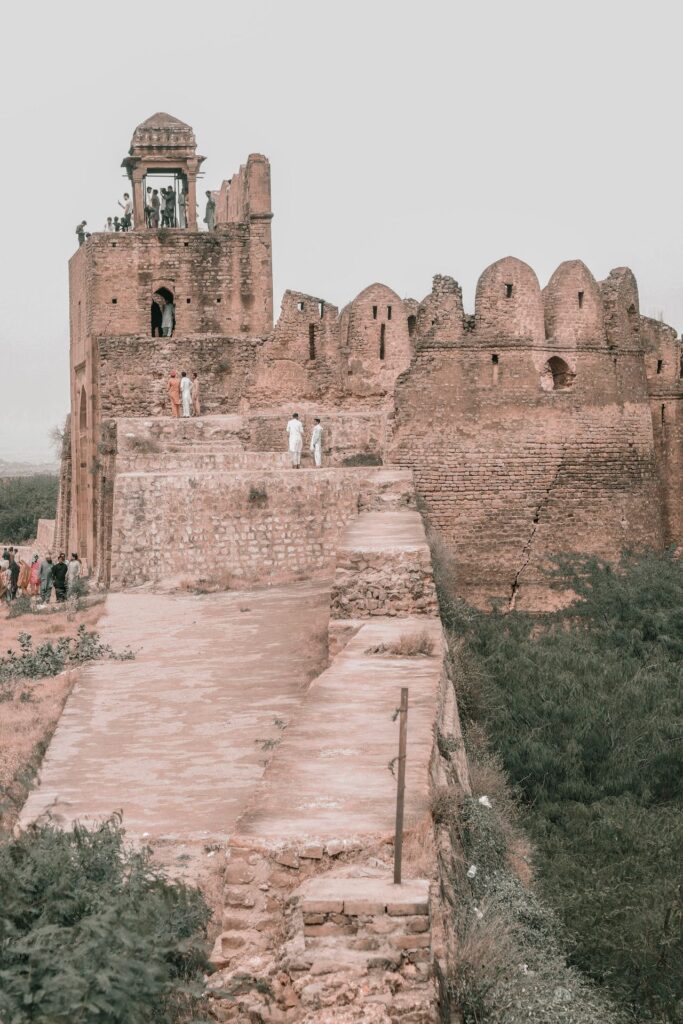
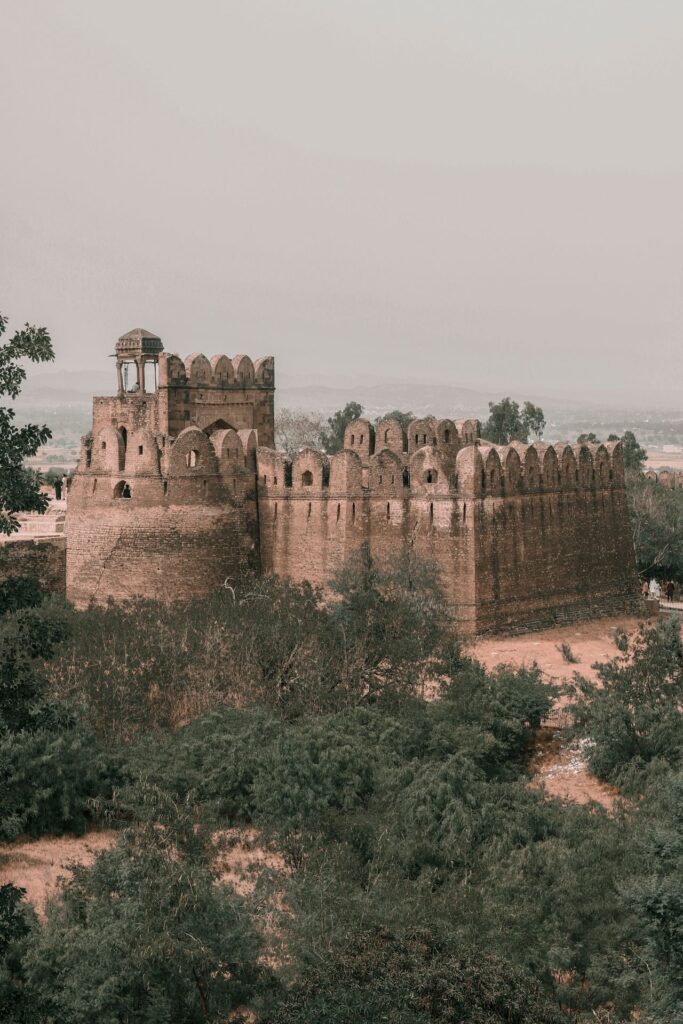
Built in the 16th century by the Afghan ruler Sher Shah Suri as a military stronghold, Rohtas Fort is a UNESCO World Heritage Site of staggering scale — its walls stretch nearly 2.5 miles. It’s dramatically photogenic, historically fascinating, and sees far fewer tourists than it deserves. Easy to pair with a stop at the Salt Range on the way.
Murree Hill Station (35 miles / 56 km away)
A classic Pakistani hill station in the Himalayan foothills, Murree has been a popular weekend escape from the summer heat since the British colonial era. Pine forests, mountain views, a pedestrian-friendly Mall Road lined with shops and food stalls, and noticeably cooler temperatures. It truly feels like a small village in Switzerland.
Nathia Gali and the Galyat (50 miles / 80 km away)
A string of mountain resort towns beyond Murree in the Galyat range, Nathia Gali is a quieter and prettier alternative to Murree. There’s excellent hiking through cedar forests, colonial-era churches and bungalows, and cooler temperatures than Murree with smaller crowds. A great overnight option if you want a short mountain escape.
Naran and Kaghan Valley (155 miles / 250 km away)
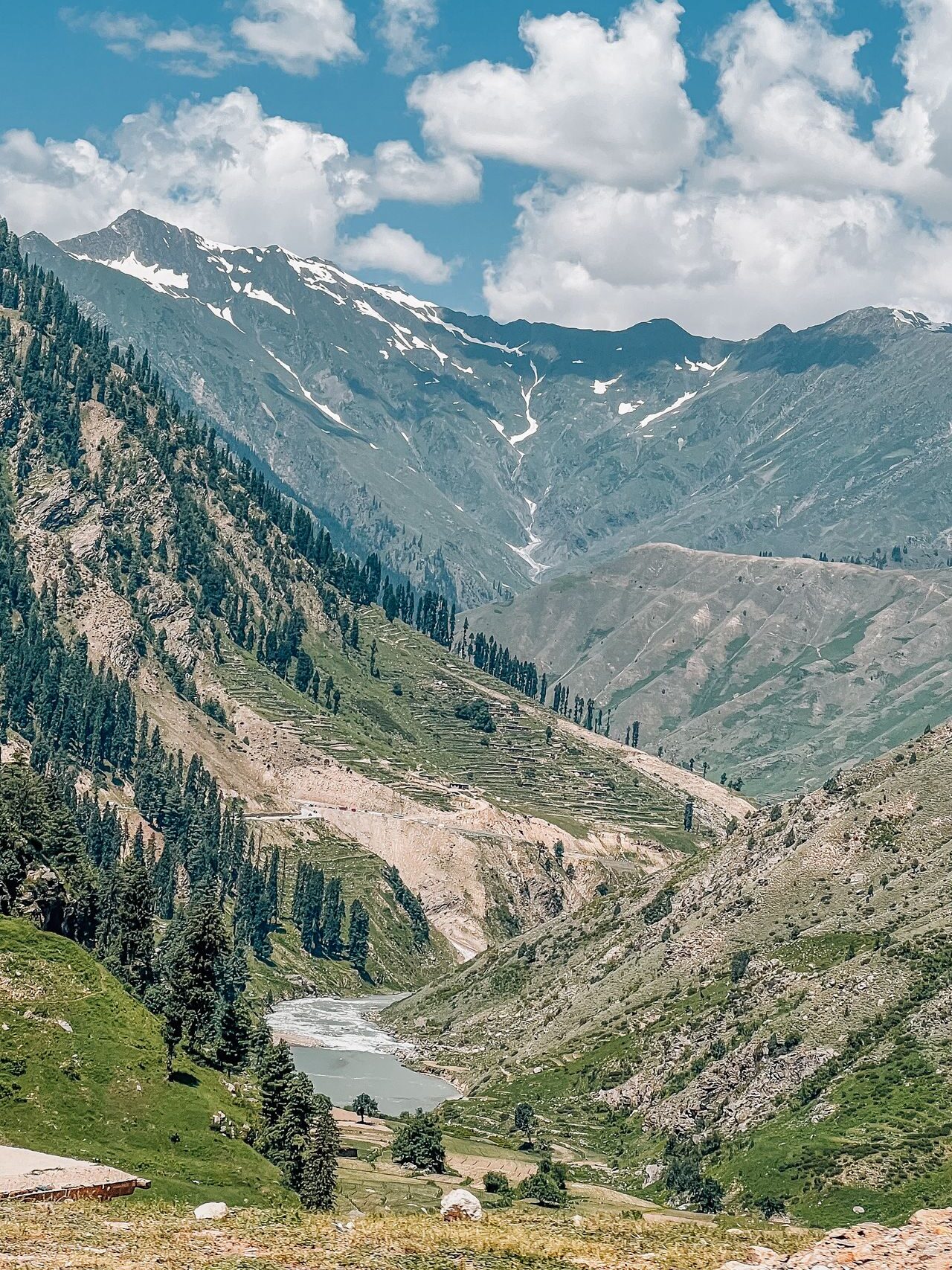
For those willing to commit to a full day’s drive (about 4–5 hours), the Kaghan Valley is one of the most jaw-droppingly beautiful places in Pakistan — a long green valley flanked by Himalayan peaks, with glacial lakes, rivers, and meadows.
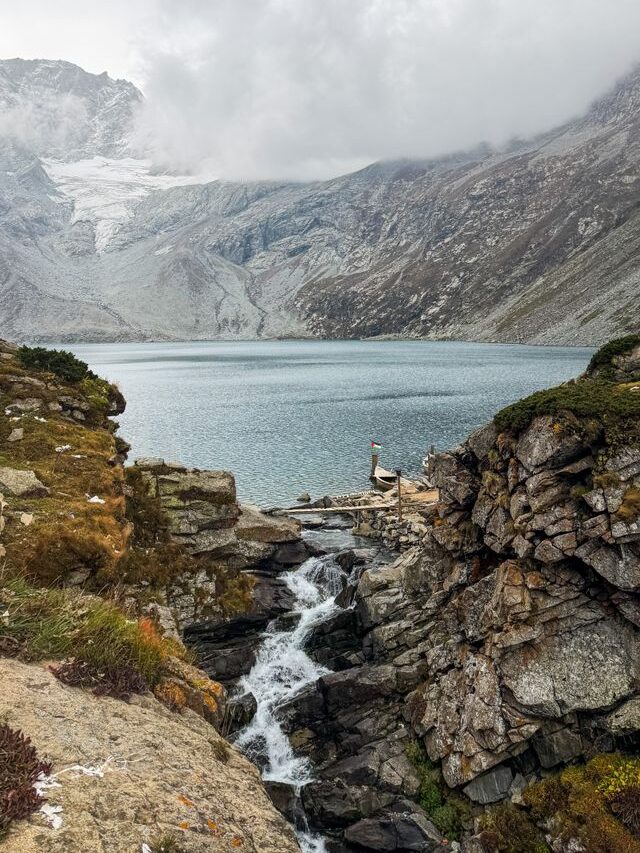
The alpine lake of Babusar Top at over 13,600 feet elevation is a destination in itself. Best visited May through September; the road can be closed in winter. I strongly recommend adding this trip to your itinerary.
Tips
- Getting around: Taxis are widely available and the ride-hailing app, Careem, is a reliable and affordable option throughout the city and Rawalpindi. Islamabad is very spread out — renting a car with a driver for day trips is an excellent and convenient option.
- Best time to visit: October through March offers the most comfortable temperatures — mild and clear. April and May can be lovely too. June through August is hot and humid (though still cooler than Lahore), with monsoon rains arriving in July. December and January can get quite cold, especially in the evenings.
- Currency: Pakistani Rupees (PKR). ATMs are widely available. Cards work at hotels and larger restaurants, but cash is essential for markets and street food.
Final Thoughts
Islamabad doesn’t announce itself the way Lahore does. It doesn’t shake you by the shoulders or overwhelm your senses in the first five minutes. It takes a slightly slower approach — a spectacular mosque here, a mountain trail there, a plate of karahi so good you reschedule your flight.
At times it reminds you of a European cityscape, but with spicier food.
Pakistan is a lot more welcoming, more beautiful, and more extraordinary than most of the world realizes. It’s time you put this beautiful country on your radar.