7 Days in Crete, Greece: A Complete Road Trip Itinerary With Must-See Stops
One week in Crete. That’s the bare minimum. And yes, I said minimum. The moment you land on Greece’s largest island, you’ll understand why.
Crete isn’t just a destination — it’s a world unto itself, layered with ancient ruins, Venetian harbors, Ottoman minarets, gorges, and beaches with crystal-clear water that Greece is so shamelessly famous for. Add in some of the best food in the entire Mediterranean, and suddenly that two-night stopover you were planning starts to feel like a rookie mistake.
Whether you’re flying in from Athens (a breezy 45-minute flight or an overnight ferry) or hopping over from Santorini by ferry, Crete welcomes you with open arms and ouzo.
The island stretches roughly 155 miles (250 km) from west to east, and the best way to experience it is to move slowly through it — start in the west, work your way east, and let each town surprise you as if though you’ve stepped into a new country. Here’s how to do it right.
Start Here: Chania, the Soul of Western Crete
Fly into Chania International Airport (CHQ) and you’ll immediately step into the best possible position — this city is the ideal base for exploring everything western Crete has to offer, and it’s one of the most beautiful towns in all of Greece.
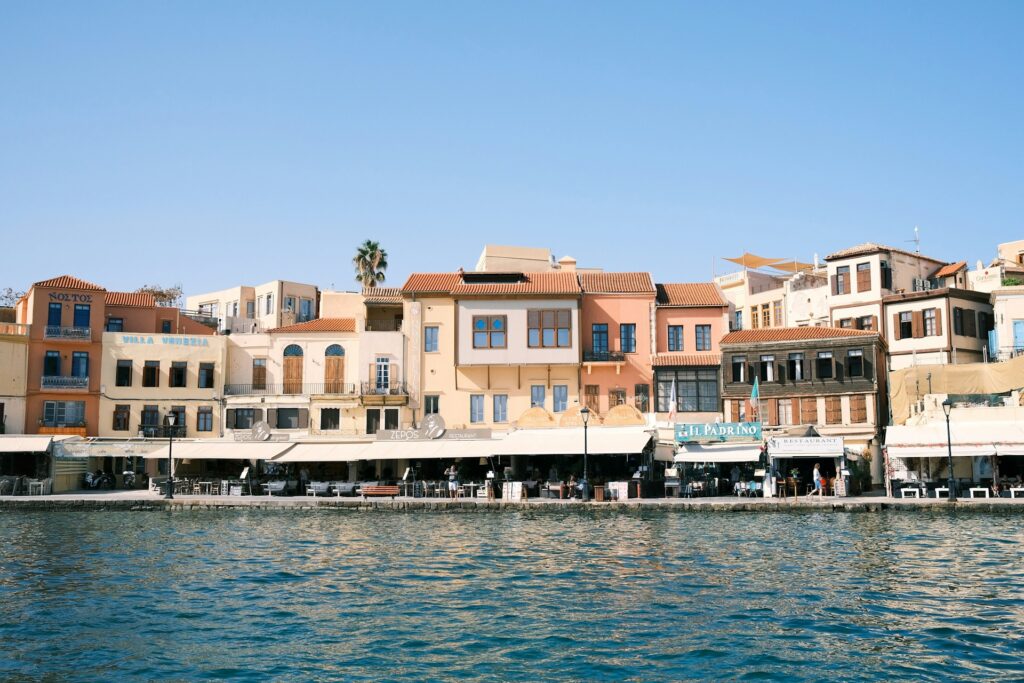
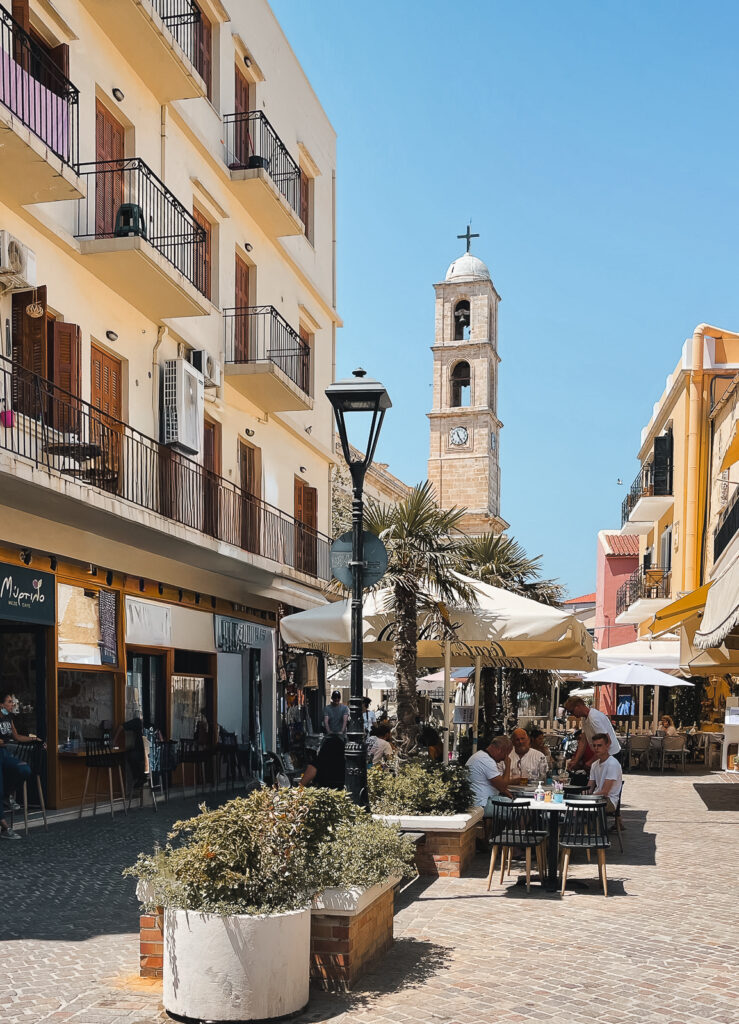
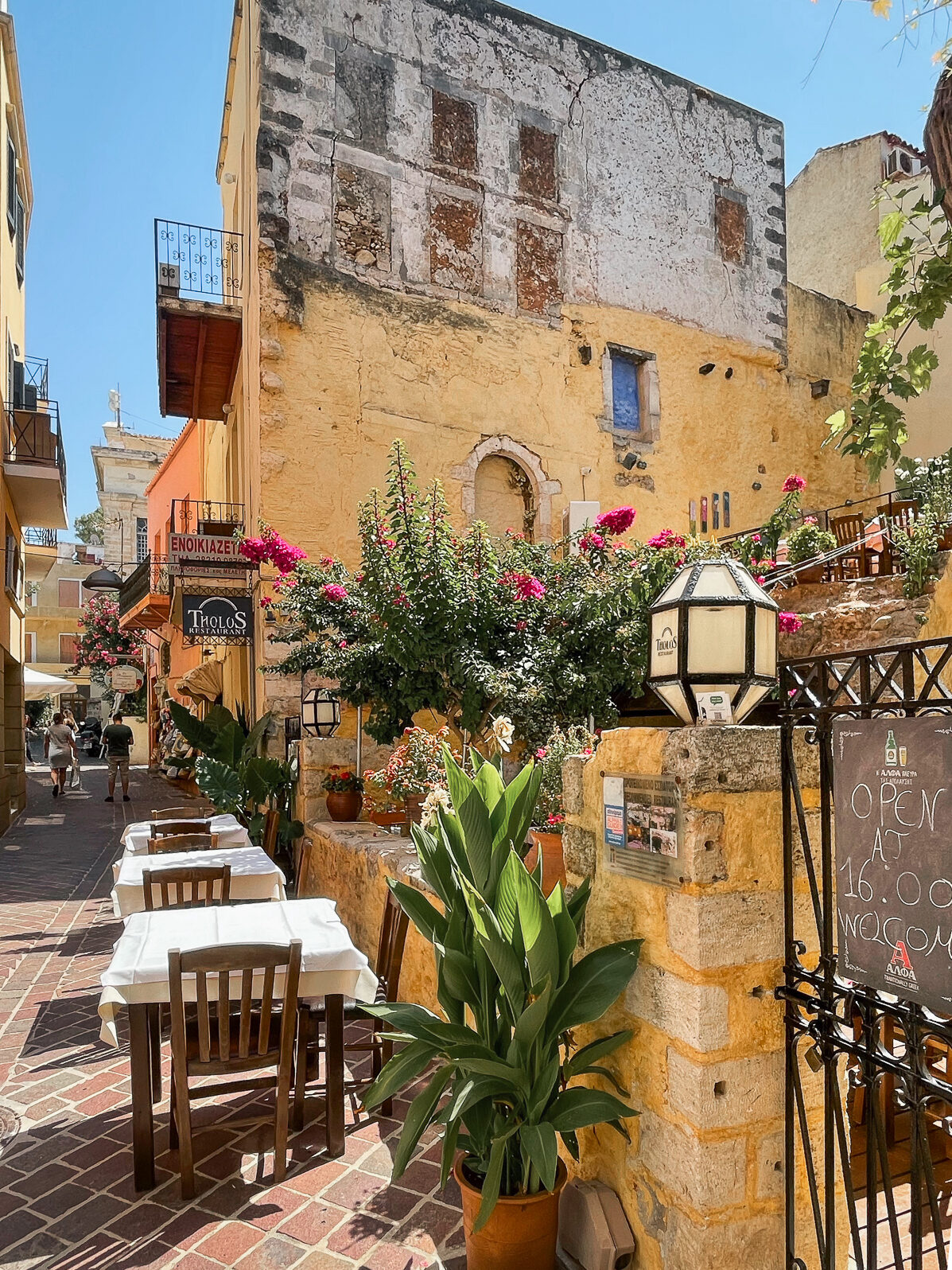
The Old Town feels like someone dropped a Venetian village into a Greek postcard. The lanes are narrow and cobblestoned, the buildings are sun-bleached and gorgeous, and around every corner is another taverna trying to lure you in with the smell of grilled octopus. Resistance is futile and inadvisable.
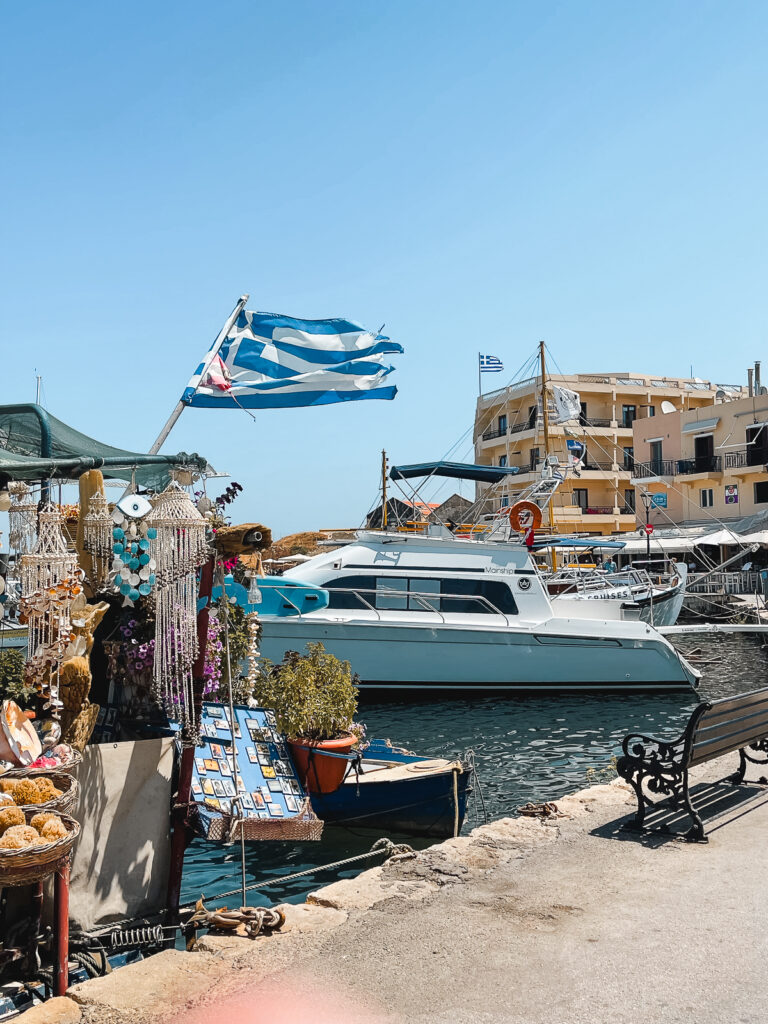
The centerpiece is the Venetian Harbor — at golden hour, with the light turning everything amber and the old lighthouse silhouetted against the turquoise blue water, it’s a scene to remember. Walk along the harbor wall to the lighthouse. The walk takes about 15 minutes and the views back over the city are fantastic.
Visit Agora, Chania’s famous covered market – it’s great for stocking up on local honey, thyme-scented olive oil, and Cretan cheeses. Pick up a bag of dried herbs and bring back the smells of Crete back to your kitchen at home.
Practical Tips: The Old Town is compact and best explored on foot. Most of the restaurants are clustered around the harbor and the streets just behind it. Avoid dining right on the harbor front where prices are tourist-level and the food isn’t the best. Duck one or two streets back for far better quality at half the price.
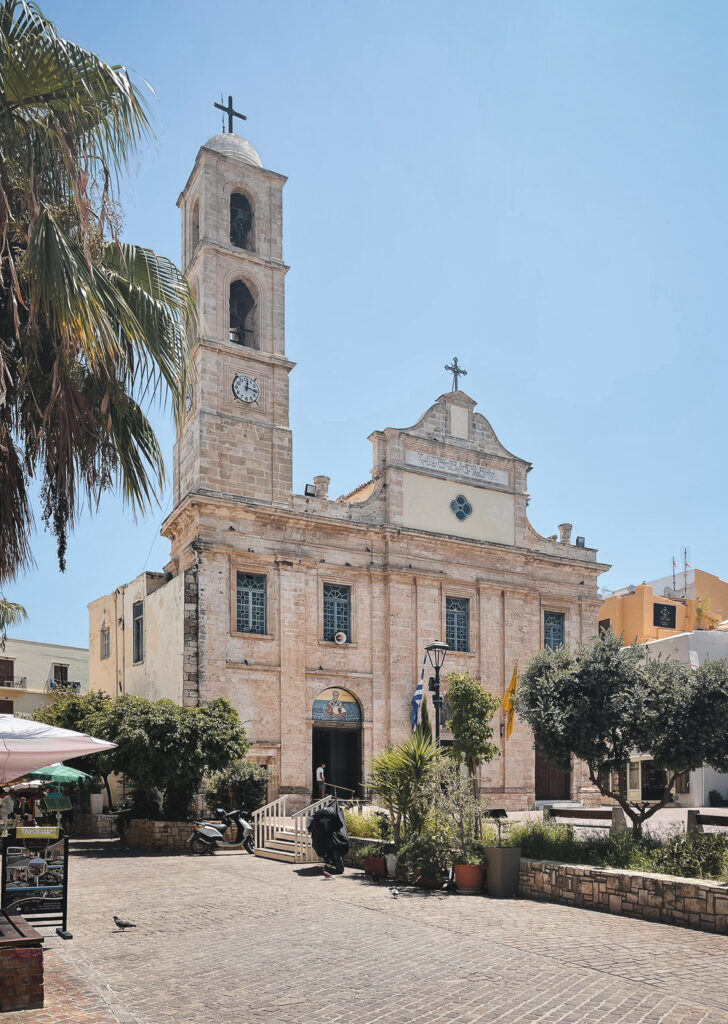
Chania has excellent hotels at every price point and staying in the Old Town itself — even for a few nights — is definitely worth it.
Day Trip #1 from Chania: Balos Lagoon
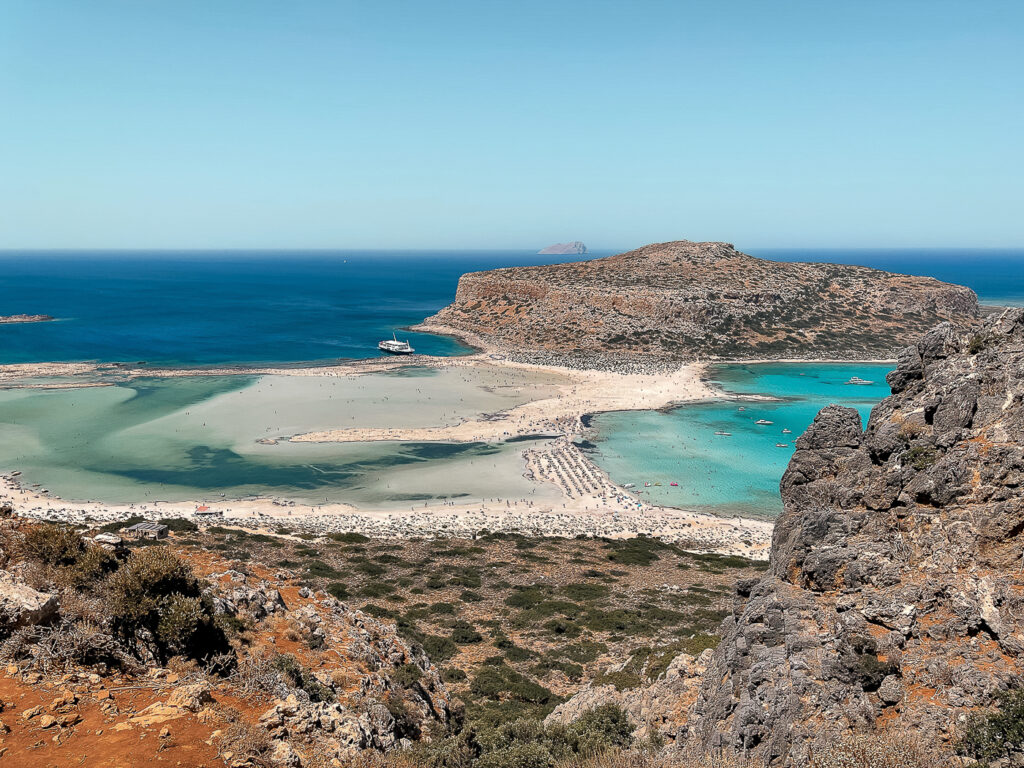
About 35 miles (55 km) northwest of Chania, lies one of the most beautiful beaches I’ve ever been to — Balos. White sand so fine it squeaks underfoot, shallow water that shifts from mint to turquoise to deep blue, and the dramatic cliffs of the Gramvousa Peninsula rising dramatically behind it all. Your camera won’t do it justice. Take the photos anyway.
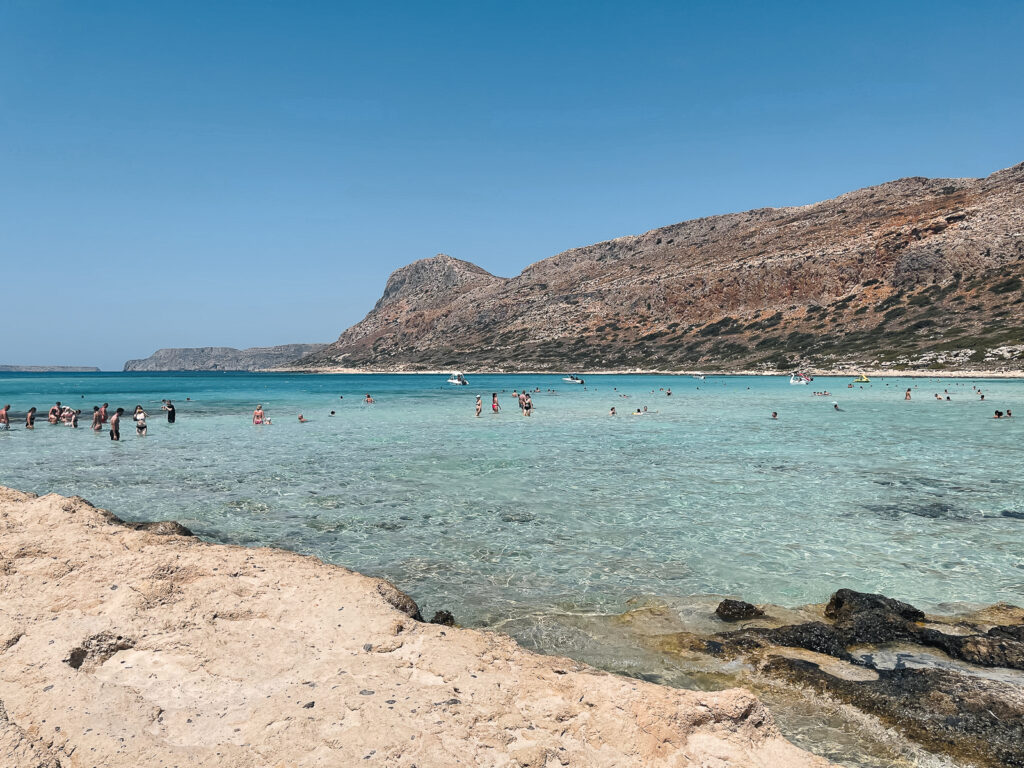
Getting there: By car, it’s about an hour and 15 minutes from Chania. The last stretch is an unpaved, rocky road that will have you reconsidering your rental car insurance choices — but don’t worry, a regular car can make it, just go slowly.
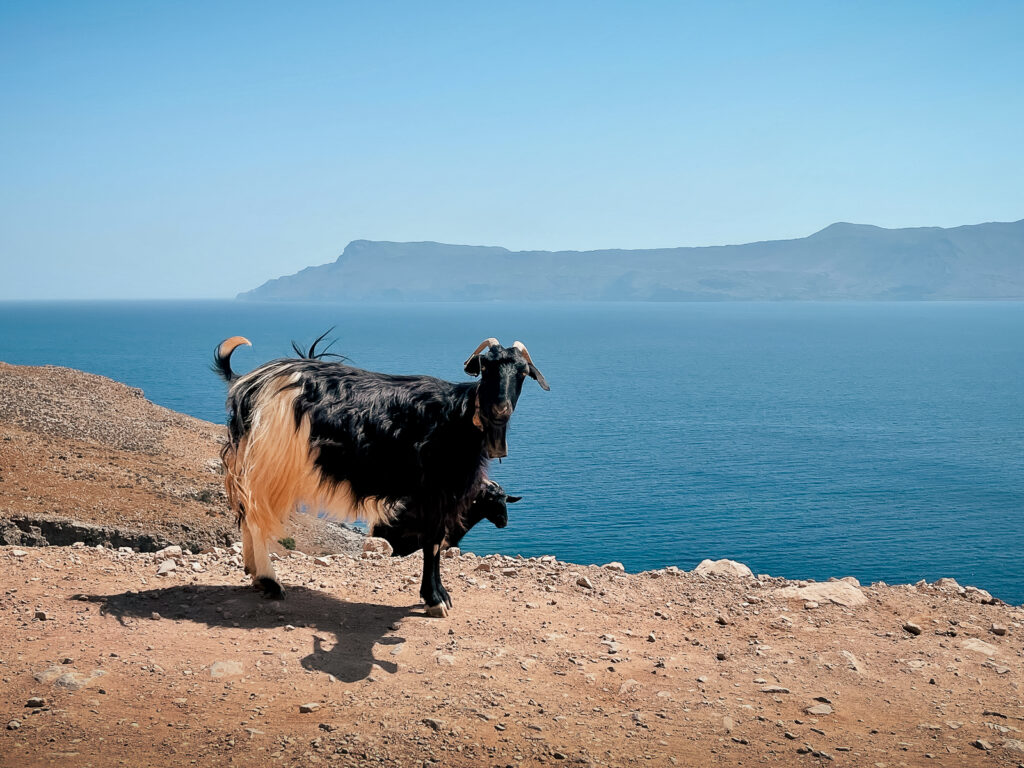
The road was so gorgeous that I even shed a few tears of joy thinking how lucky I was to experience this. Oh, and don’t get me started on all the cute goats you’ll meet along the way!
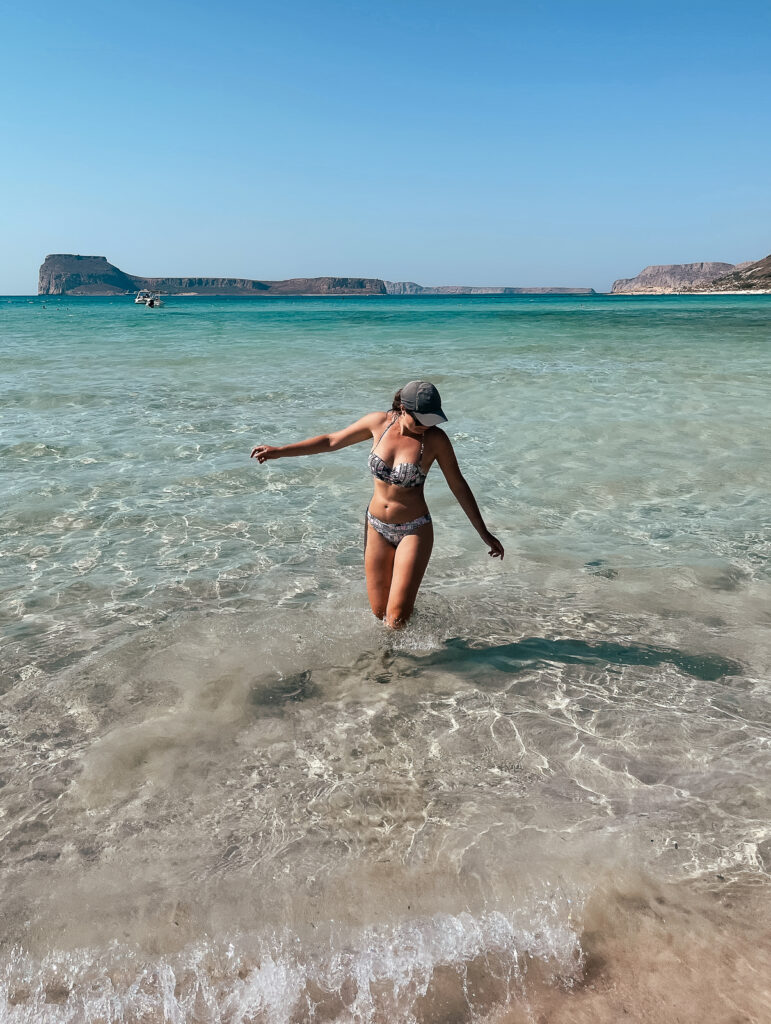
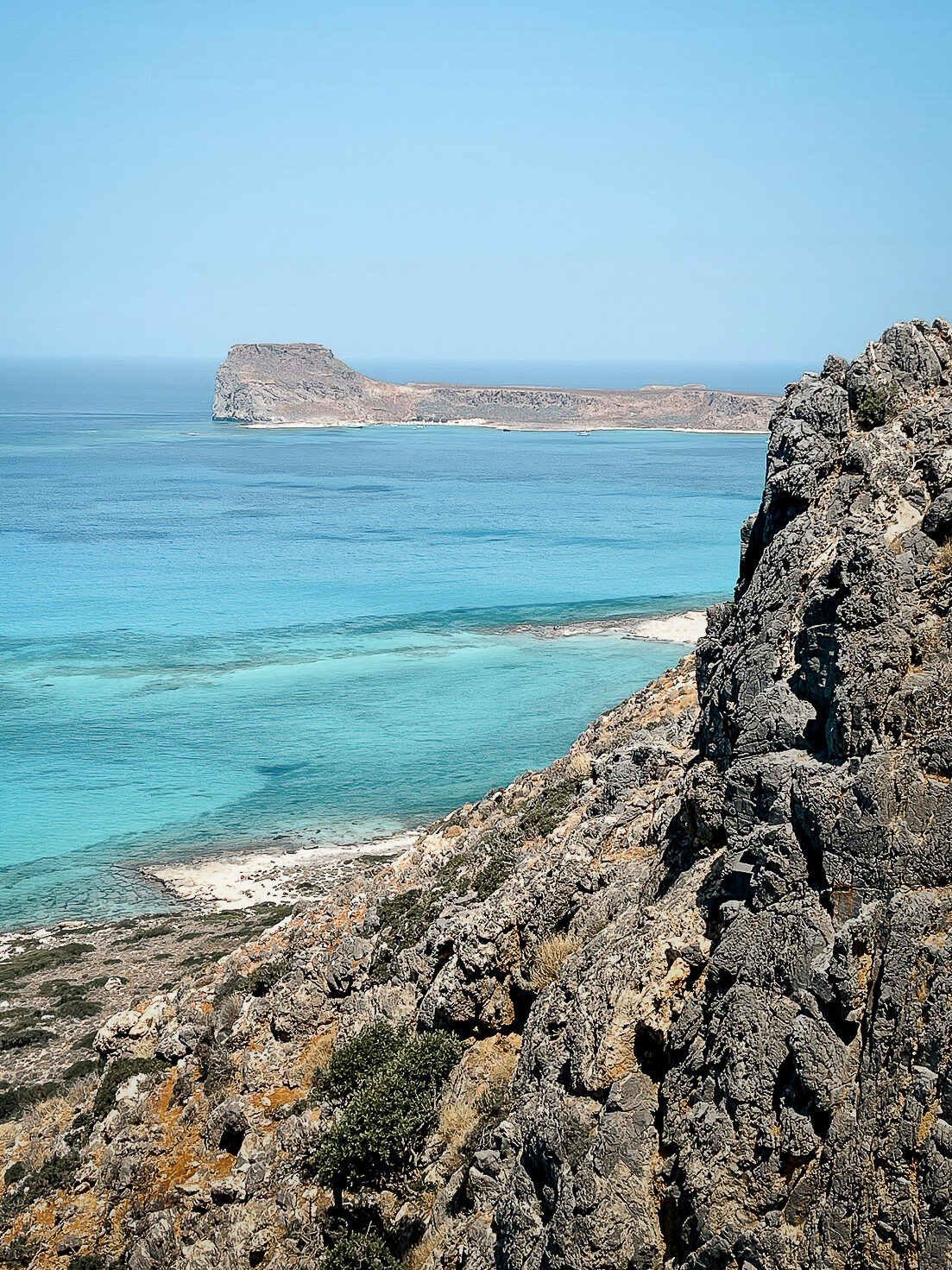
The hike: From the parking area at the top of the cliff, it’s a 20 to 30-minute hike down a rocky, exposed trail to the beach. It’s not technical but wear proper shoes — flip flops on the way back up in the afternoon heat is a special kind of suffering.
The hike back to the parking lot is significantly less magical than the descent, particularly in the afternoon heat. Bring plenty of water, wear proper shoes, and pace yourself.
You can also take a daily ferry from Kissamos port (about 45 minutes), which is the more relaxing option and gives you gorgeous coastal views on the way in. The car gives you more flexibility though, and you can arrive before the ferry crowds do, to have the beach mostly to yourself.
Best time to visit: Go early (before 10 AM) or take the late ferry to beat the midday crowds. July and August are stunning but busy; May, June, and September hit the sweet spot of warm weather without the crush. Bring more water than you think you need.
Day Trip #2 from Chania: Elafonisi Beach
If Balos is the showstopper, Elafonisi Beach is the hidden gem of western Crete and a favorite among the locals. Located on the far southwest tip of Crete, about 46 miles (75 km) from Chania (an hour and a half by car), this protected nature reserve has a secret: its sand is pink. Genuinely, blush pink — the result of crushed rose-colored shells mixed into the white sand, and it’s as stunning as it sounds.
The lagoon here is extraordinarily shallow and calm, making it ideal for families with young children who can splash around without a care. The water is warm, clear, and utterly serene.
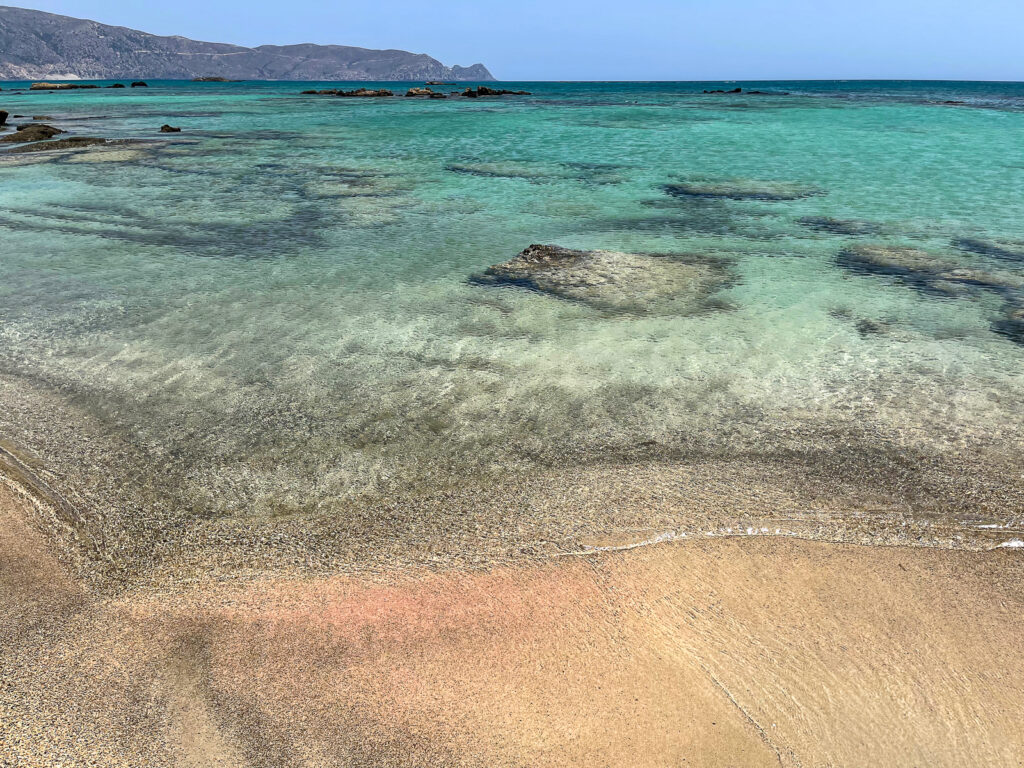
While Balos has the drama (the car ride, the hike and the cliffs behind it), Elafonisi has the peace — and being more spread out, it rarely feels as packed even on busy summer days.
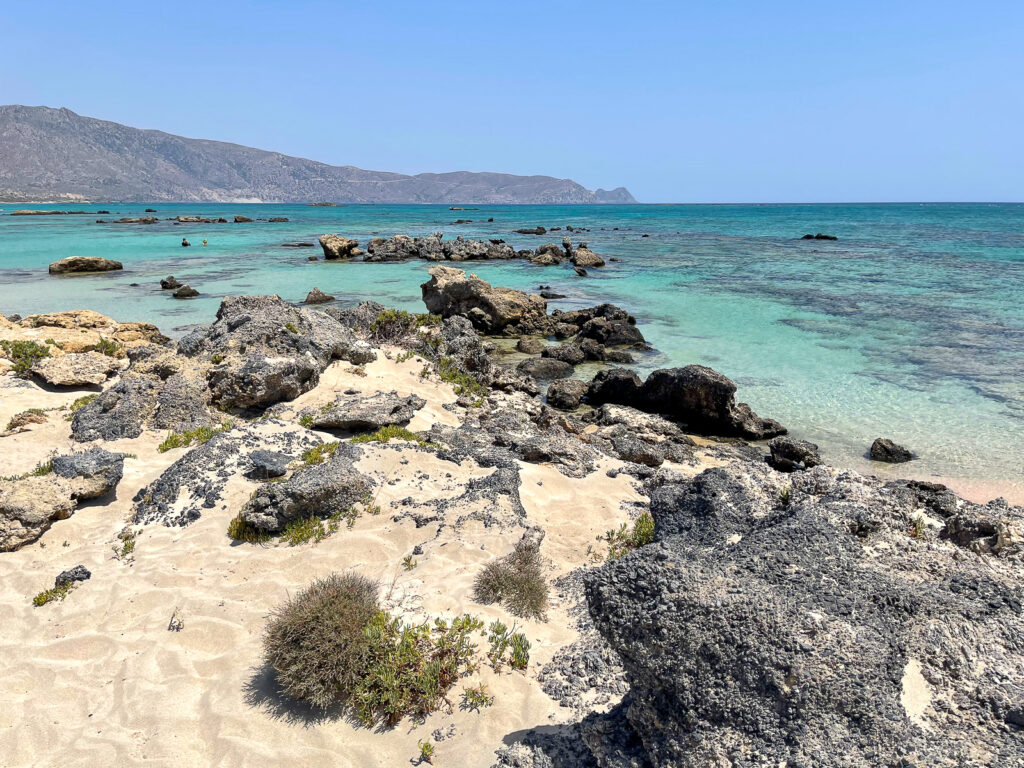
Getting there: Drive south from Chania through the stunning mountain villages of the Lefka Ori foothills — the scenery en route is half the experience. There’s a small parking fee during the summer months. The beach itself is free to access. Go before 9 AM if you want the place to yourself.
Day Trip #3 from Chania: Samaria Gorge
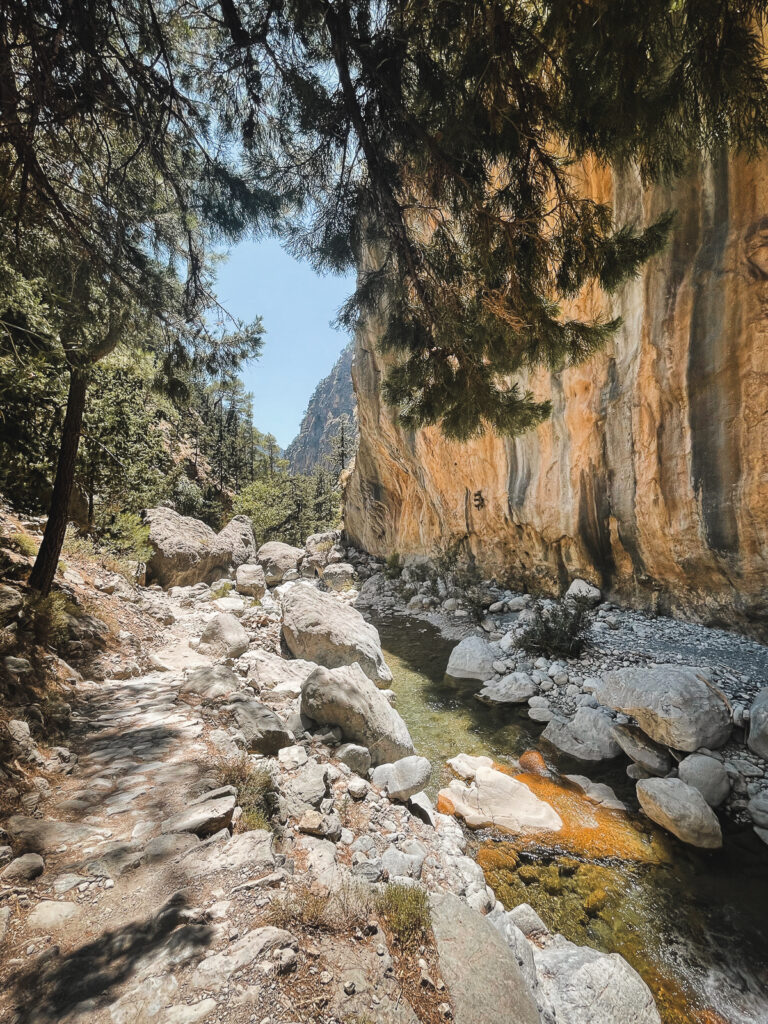
Before you leave Chania behind, dedicate one full day to the Samaria Gorge — one of the longest gorges in Europe and Crete’s most epic hiking experience. It is a 10-mile (16 km) descent through the White Mountains, past sheer rock walls, ancient pines, and a rushing river, ending at the tiny seaside village of Agia Roumeli on the southern coast.
It sounds like a lot, and it might be, but it’s absolutely worth it.
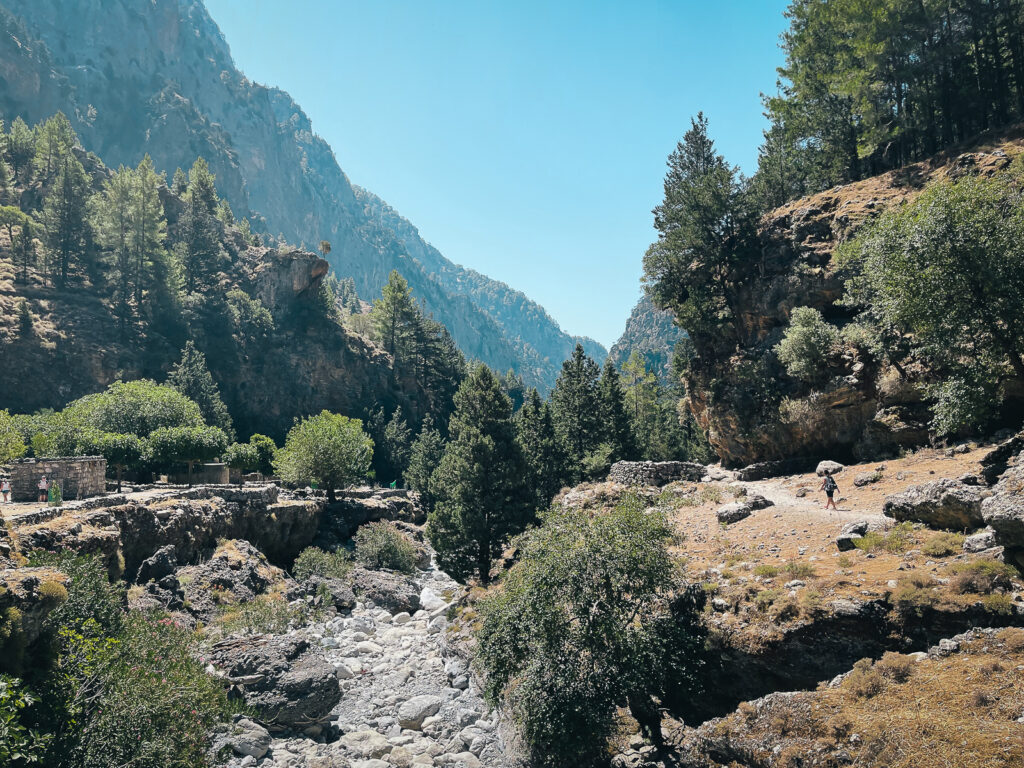
Getting there: Head to the main Chania KTEL Bus Station and catch the 6:15 AM or 7:45 AM bus to Omalos/Xyloskalo (about an hour’s ride up into the mountains).
Pro Tip: when you buy your morning bus ticket at the station, buy your return bus ticket at the same time (Hora Sfakion → Chania). They tend to sell out, and you do not want to be stranded at the port after a 10-mile hike.
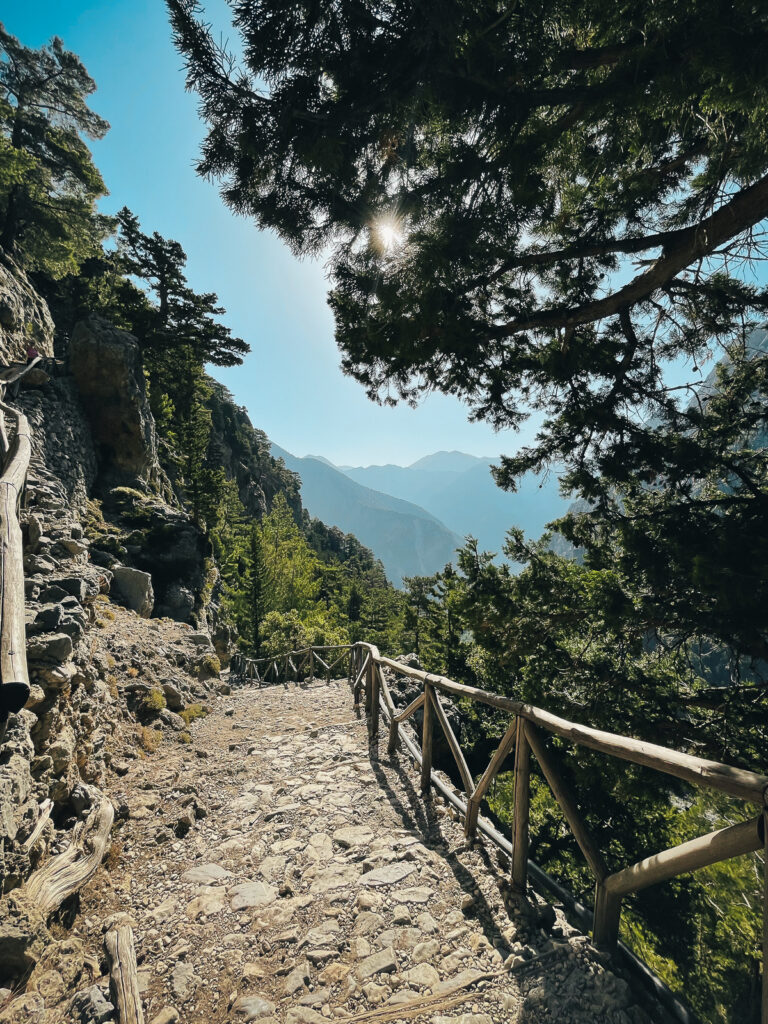
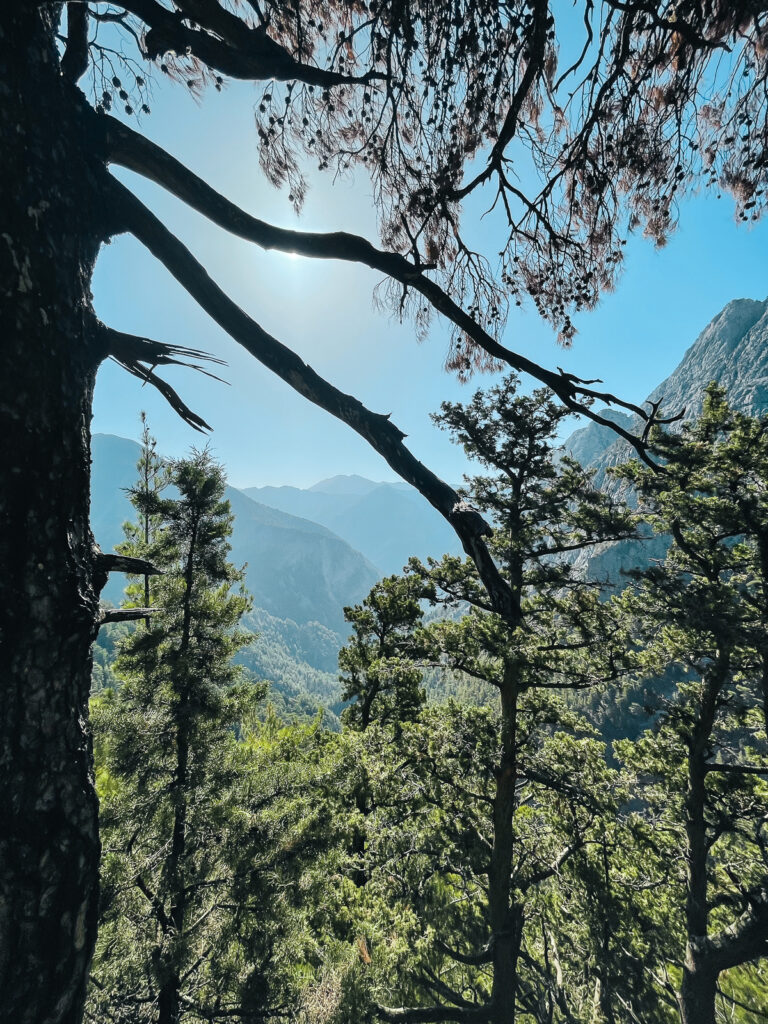
The bus drops you right at the Xyloskalo trailhead — and here’s the best part of the whole thing: you hike downhill the entire time. The trail winds through cool forest, narrows dramatically at the famous Iron Gates where the canyon walls squeeze to just a few feet apart, and leads you out at Agia Roumeli village where the Libyan Sea is waiting.
As you are waiting for your ferry back to Chania, get a cold beer and some grilled calamari, and enjoy a refreshing swim.
Getting back: As soon as you finish the hike, go straight to the kiosk in Agia Roumeli and buy a ferry ticket for the 5:30 PM boat to Hora Sfakion. The ferry takes about an hour to an hour and a half — a gorgeous, coastal cruise that your tired legs will deeply appreciate. At Hora Sfakion, your pre-purchased KTEL bus will be waiting at the port, synchronized with the ferry. It’s a 75-minute ride back to Chania.
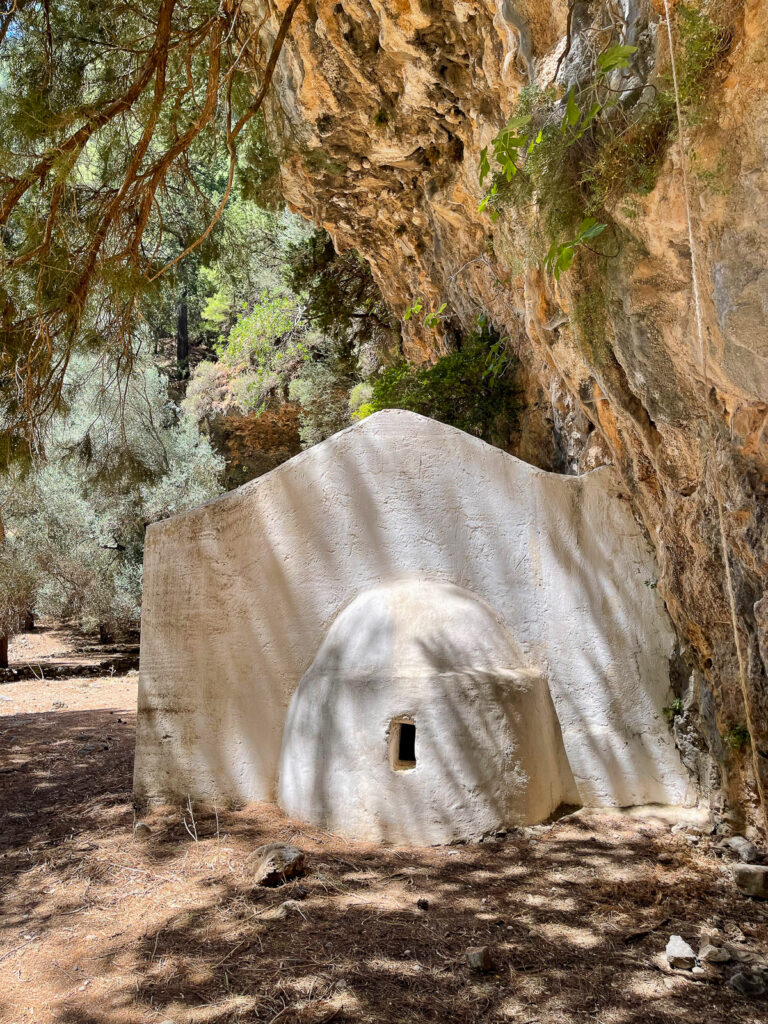
What to bring: Proper hiking shoes, at least 2 liters of water, sunscreen, swimsuit, a few snacks, and cash for the ferry. The gorge is open May through October. Entrance fee is €10 (~ 12 USD) and you can purchase the tickets here.
Start early to hike in the cooler morning hours and avoid the afternoon heat.
Head East: Town of Rethymno
From Chania, the logical next step is to move east along the northern coast to the town of Rethymno — about an hour’s drive or a comfortable bus ride. Think of it as Chania’s slightly more laid-back cousin, equally beautiful but with a little less tourist polish and a little more authentic edge.
Rethymno’s old town is a wonderful blend of Venetian and Ottoman heritage layered on top of each other, and somehow it all coexists beautifully. You’ll turn a corner expecting a Greek coffee shop and find yourself face to face with a 16th-century minaret. It’s charming, slightly unexpected, and entirely Cretan.
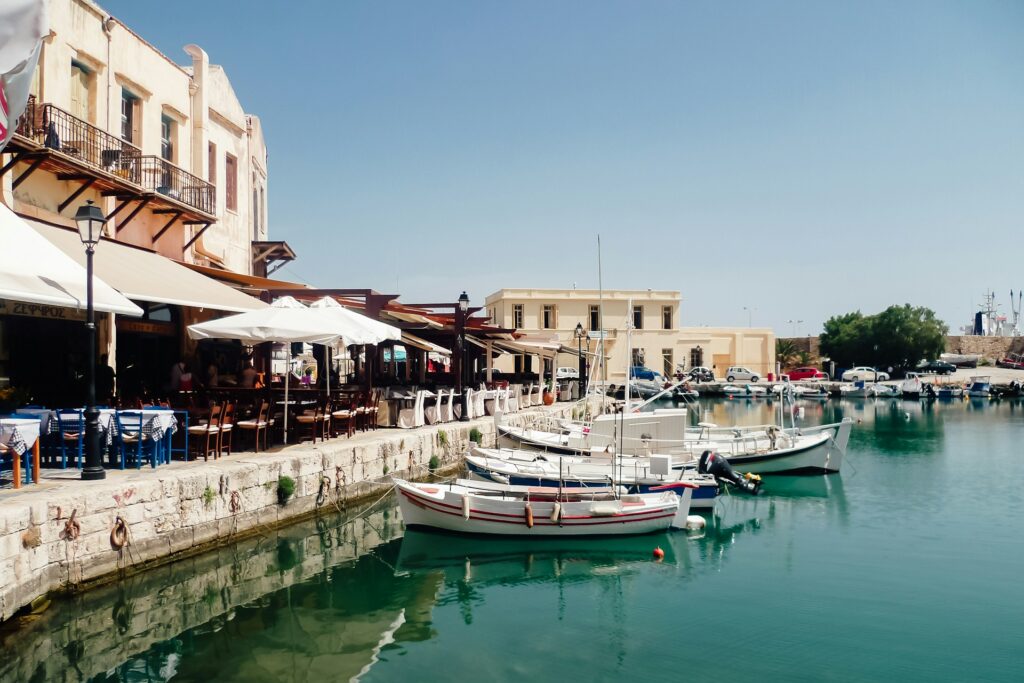
The waterfront Venetian harbor has the same sun-soaked, café-lined energy as Chania’s but feels quieter and more local. And running right alongside the town is a long, sandy beach — you can go from exploring cobblestoned alleys to swimming in the sea in about four minutes.
The winding streets of the old quarter are perfect for getting lost. Artisan shops, family-run tavernas, old men playing backgammon — Rethymno has that lived-in warmth that some more touristic towns can lack.
Best time to visit: Rethymno is a great overnight stop rather than a day trip — the evenings here are pleasant, and the restaurants get better after dark. Stay at least one night.
Day Trip from Rethymno: Arkadi Monastery
About 14 miles southeast of Rethymno and 30 minutes by car, the Arkadi Monastery is one of the most important and emotionally resonant sites in all of Crete. Built in the 16th and 17th centuries, the monastery is not only architecturally stunning — its ornate baroque facade is one of the most photographed in Greece — but its real significance is historical.
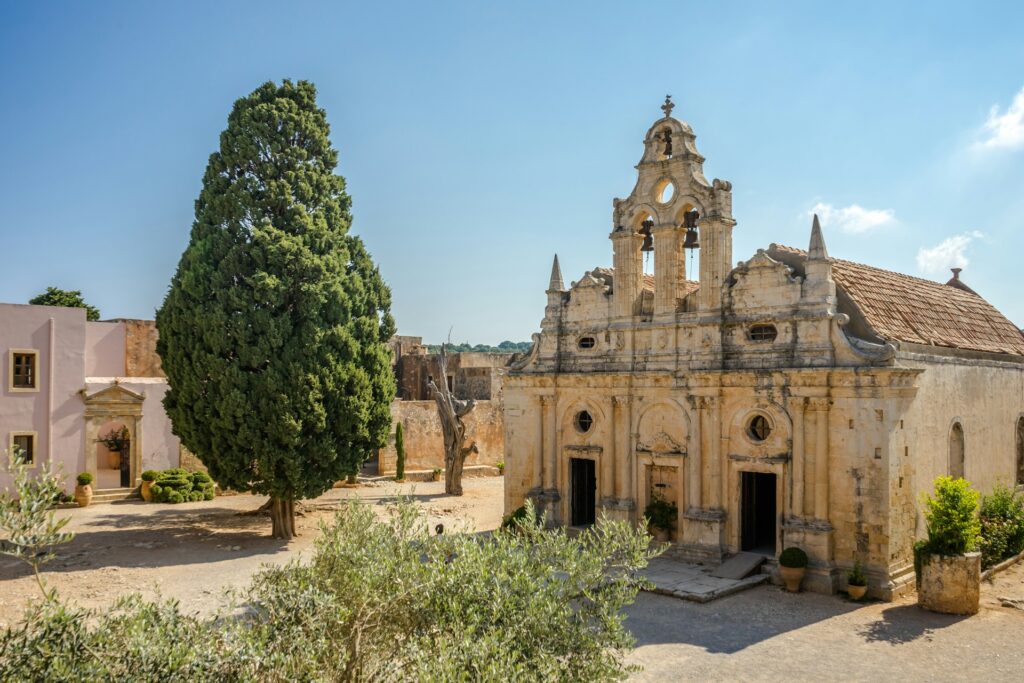
In 1866, during a Cretan uprising against the Ottoman rule, hundreds of resistance fighters and their families took refuge inside the monastery. When Ottoman forces breached the walls, the defenders chose to ignite the monastery’s gunpowder store rather than surrender.
The explosion killed hundreds on both sides. The event became a symbol of Cretan resistance and sacrifice, and the monastery is considered a national monument.
Plan to spend at least an hour here. Walk the grounds, visit the small museum, and let the weight of the history settle in. It’s a powerful, moving place.
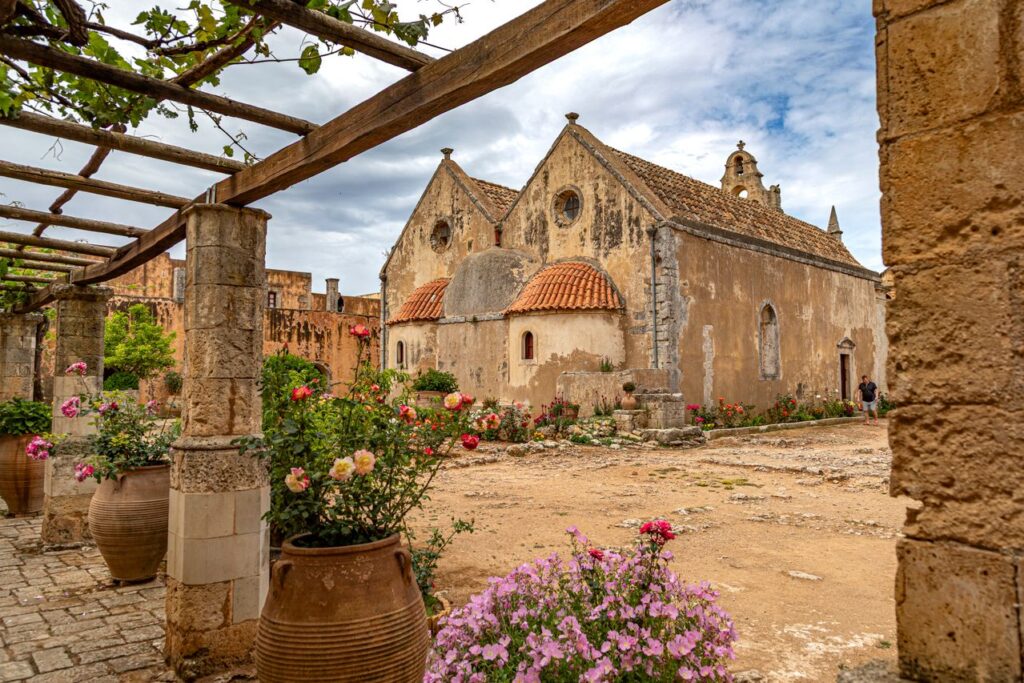
Practical Tip: Entry is around €3 (~4 USD) and includes a small museum. Plan for about an hour. The monastery is still active, so dress modestly (cover your shoulders and knees). It pairs naturally with a scenic drive through the inland villages of the Amari Valley on the way back — one of Crete’s most underrated routes, all olive groves and mountain views.
Continue East: Heraklion and Knossos Palace
From Rethymno, it’s another hour’s drive east to Heraklion — Crete’s capital and largest city, and the most practical base for exploring the center of the island.
Heraklion itself is gritty and busy in a way that surprises people expecting Chania-level charm, but it has its own energy.
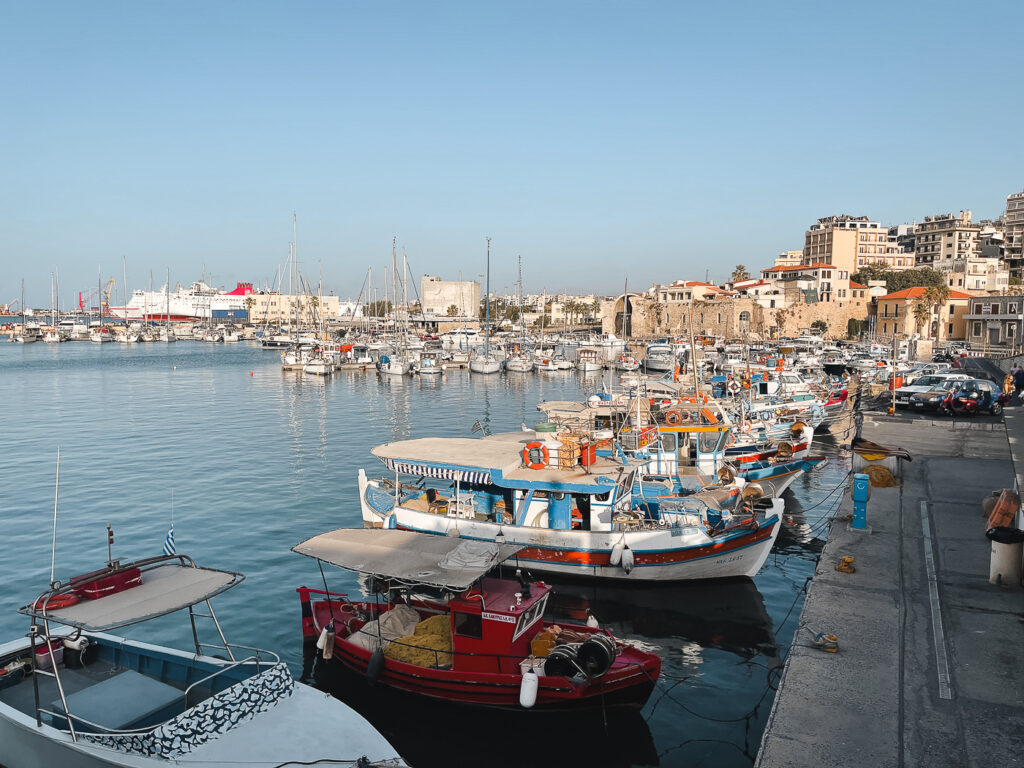
The Venetian-era Koules Fortress at the harbor is impressive, the central market on 1866 Street is a sensory overload in the best possible way, and the Archaeological Museum is an important stop on your itinerary.
Which brings us to Knossos Palace, just 3 miles south of Heraklion and easily reached by bus or taxi in 15 minutes. This is the ancient heart of Minoan civilization — and walking through it feels so surreal. The scale of the place, the grand staircases, the vibrant frescoed walls, the labyrinthine layout (yes, this is where the Minotaur myth comes from) — it feels alive.
Tickets and tips: Entry is €20 (~25 USD) and can be purchased here.
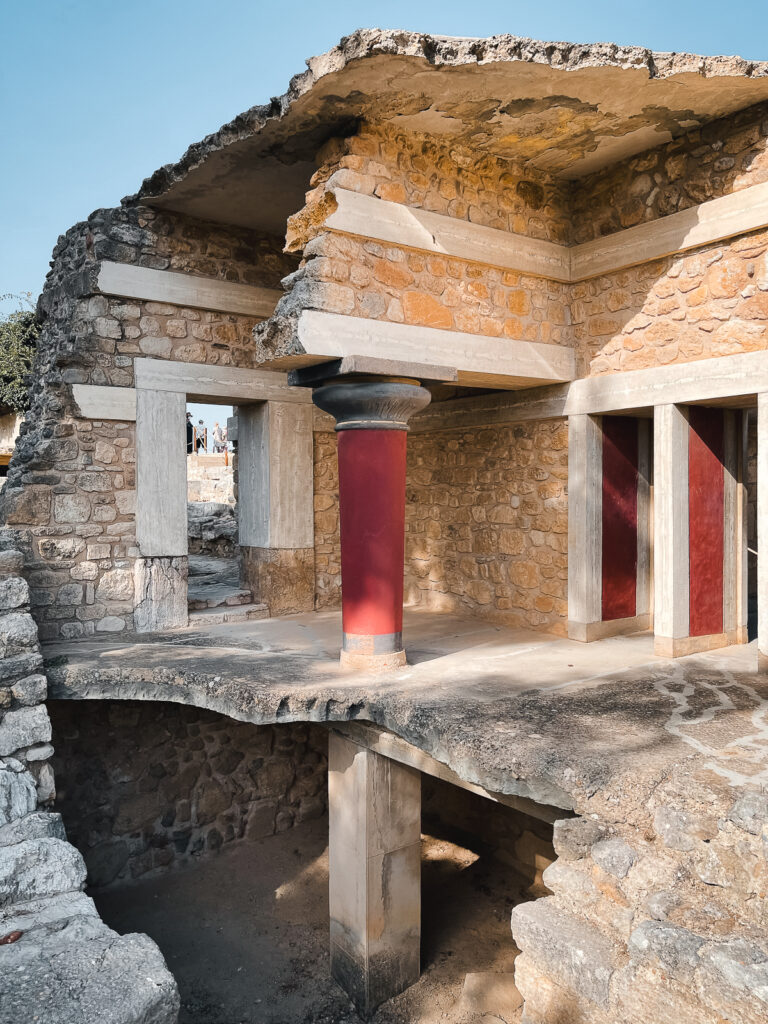
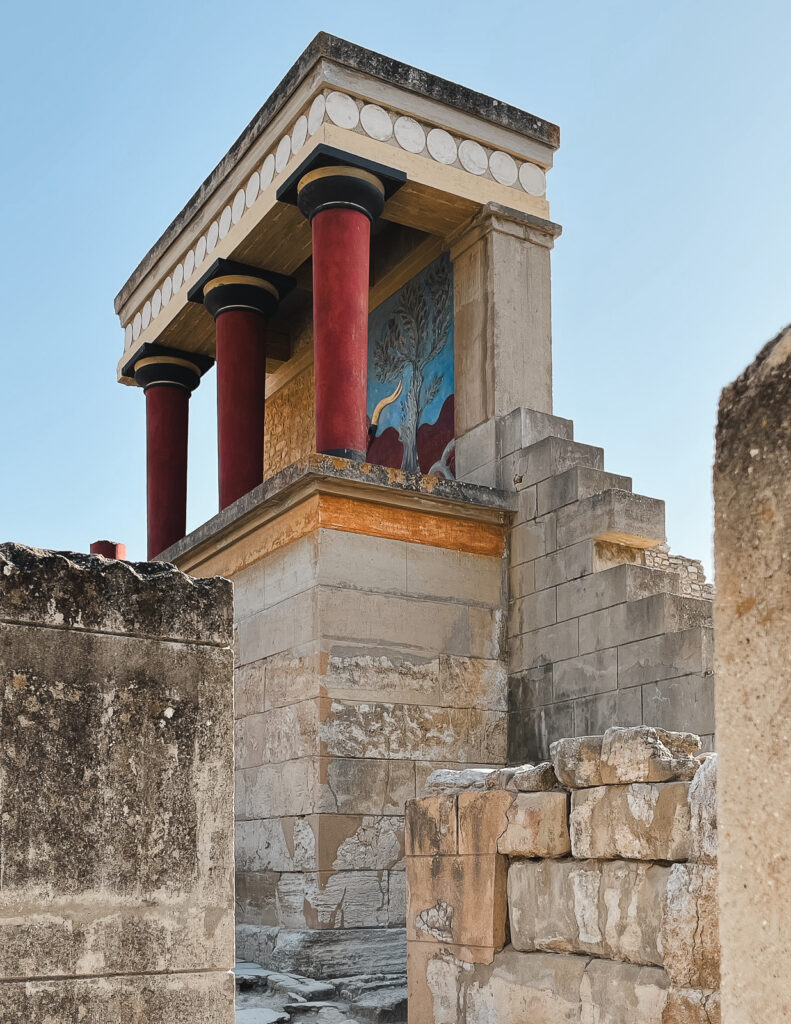
Arrive before 9 AM — by mid-morning the tour buses descend and the atmosphere shifts. The site has almost no shade, so bring sunscreen and a hat. An audio guide or a local guide makes a real difference here; context transforms the experience from impressive to genuinely mind-blowing.
Head East: Agios Nikolaos
From Heraklion, continue east for about 40 miles (an hour by car or bus) and the landscape opens up into the Gulf of Mirabello — one of the most beautiful bays in the eastern Mediterranean. Sitting right on its edge is Agios Nikolaos, a town that manages to feel both effortlessly elegant and relaxing at the same time.
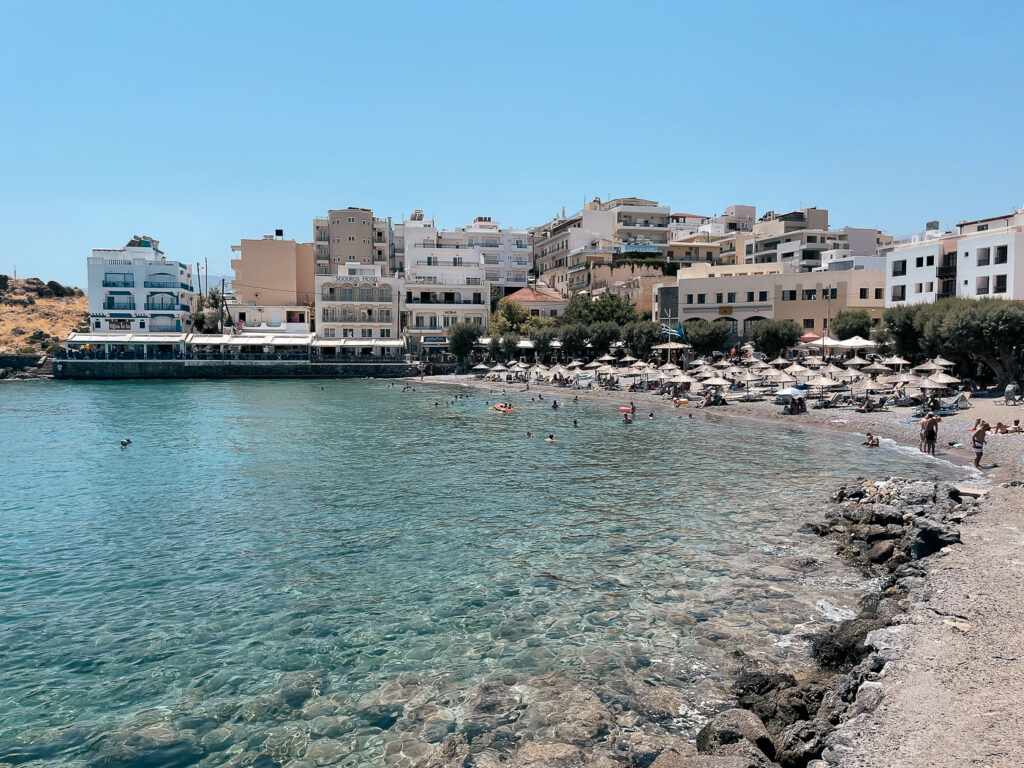
The town is built around Lake Voulismeni — a perfectly circular, deep blue lake right in the center of town. The waterfront is lined cafés and restaurants, and the whole area is just so ridiculously pretty. Add in the fact that every single taxi in town is a Mercedes-Benz, and you get the idea: Agios Nikolaos has standards.
It’s the perfect base for the eastern end of the island, and there are two day trips that absolutely shouldn’t be missed.
Day Trip #1 from Agios Nikolaos: Kritsa Village & Panagia Kera Church
This was such a highlight of my stay in Eastern Crete.
Just 15 minutes by taxi from Agios Nikolaos, the mountain village of Kritsa feels like stepping into another era entirely.
The streets are steep and narrow, old women in traditional black garments go about their business with quiet authority — the kind of scene that makes you think of The Godfather, except with better olives and no one making you an offer you can’t refuse.
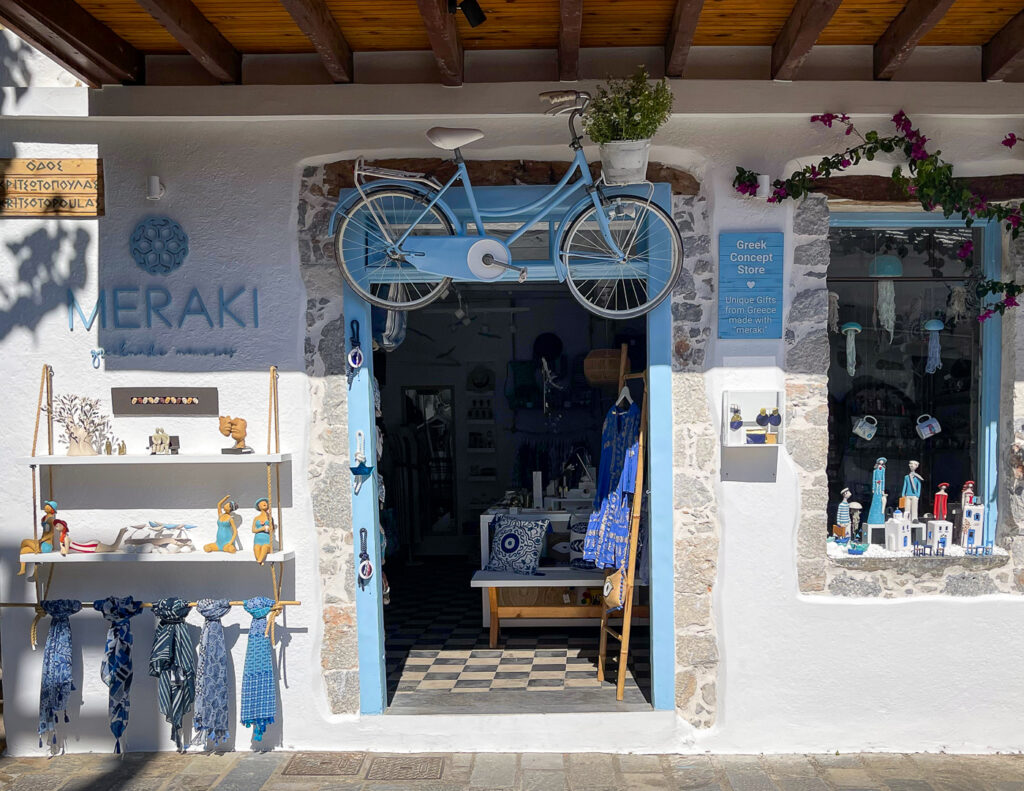
The village is also known for its weavers and artisans, so it’s a good spot to pick up an authentic souvenir that isn’t a bottle opener shaped like the Acropolis.
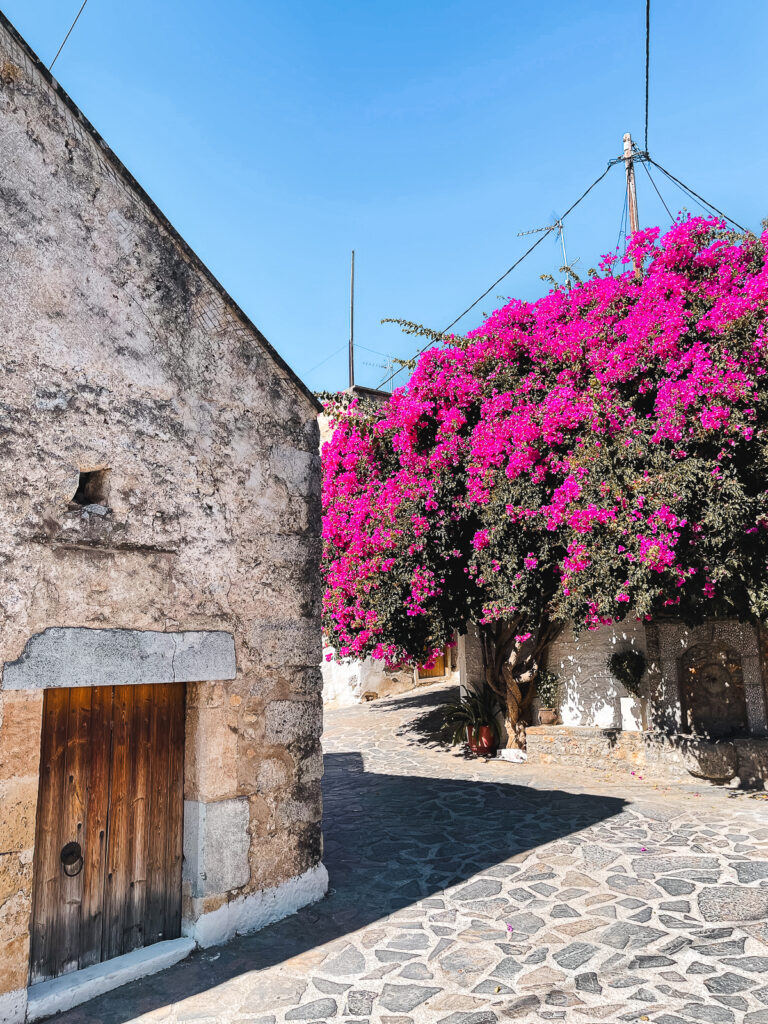
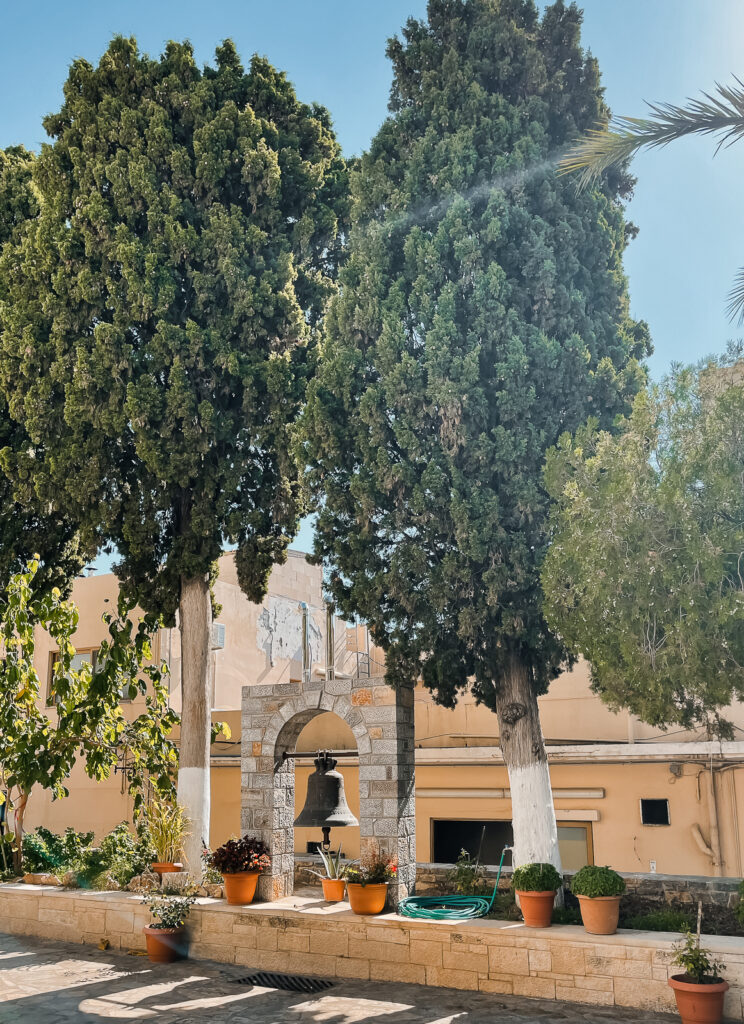
Just before you reach Kritsa, stop at the Panagia Kera Church — a small, unassuming whitewashed chapel on the roadside that contains some of the finest Byzantine frescoes you’ll see anywhere in Greece.
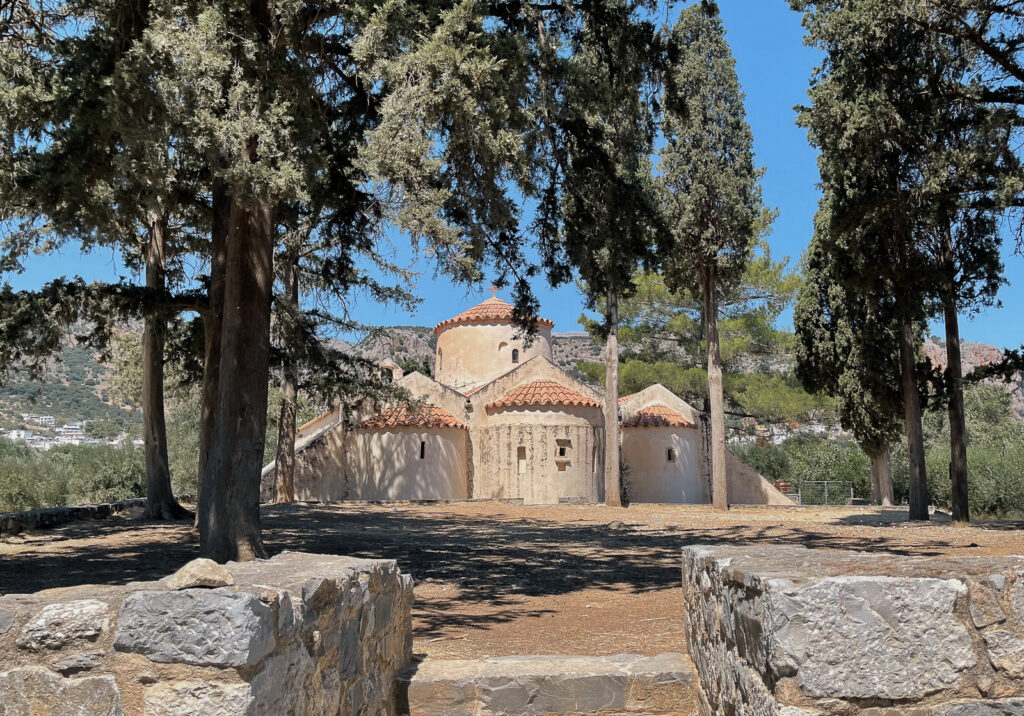
The paintings date to the 13th and 14th centuries and cover every inch of the interior in vivid, expressive scenes. It’s extraordinary. Entry is only a couple of euros and takes about 20 minutes. Don’t skip it, trust me.
Day Trip #2 from Agios Nikolaos: Spinalonga Island
This small island with a complicated history sits in the Gulf of Elounda, about 20 minutes north of Agios Nikolaos by boat. The dramatic and beautifully preserved Venetian fortress surrounds an abandoned village — once home to one of Europe’s last active leper colonies, which only closed in 1957.
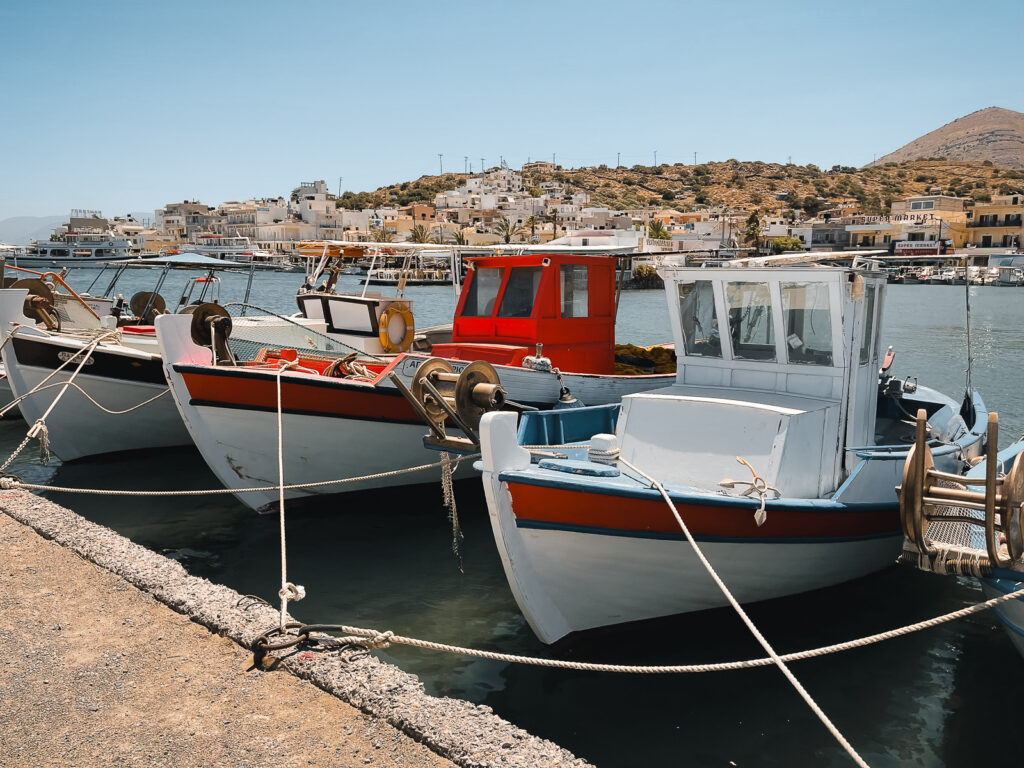
Practical Tips: Boats to Spinalonga depart regularly from Agios Nikolaos and the nearby village of Elounda (closer and slightly cheaper). Most tours cost between €10 and €15. The visit itself is self-guided and takes about an hour.
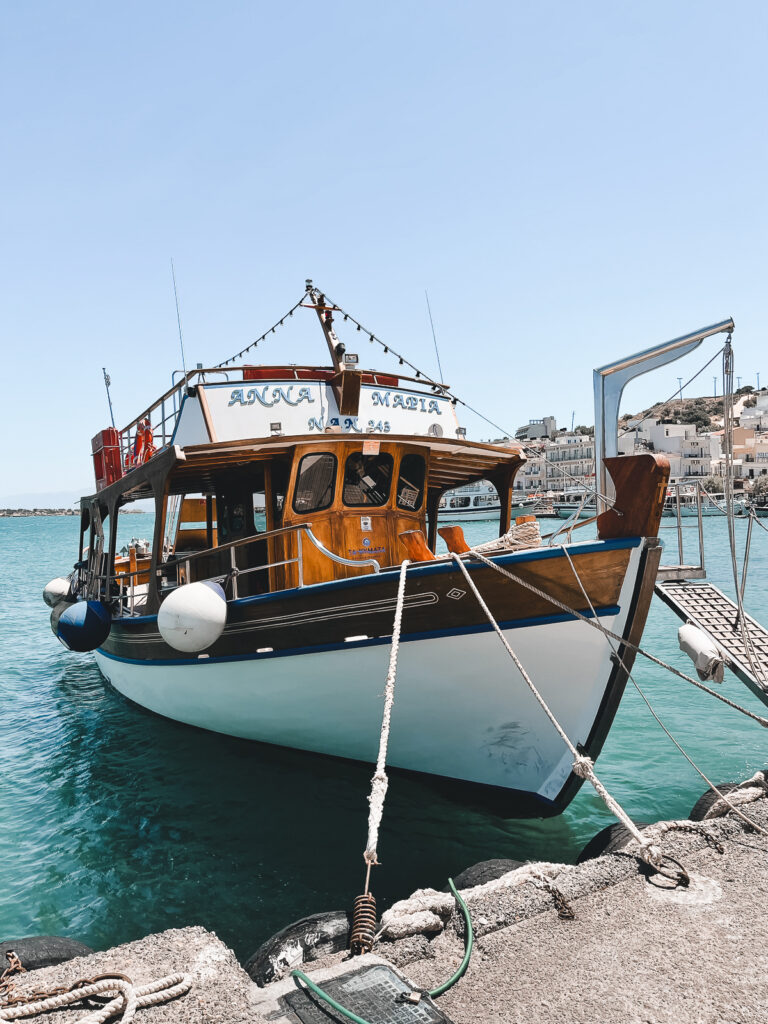
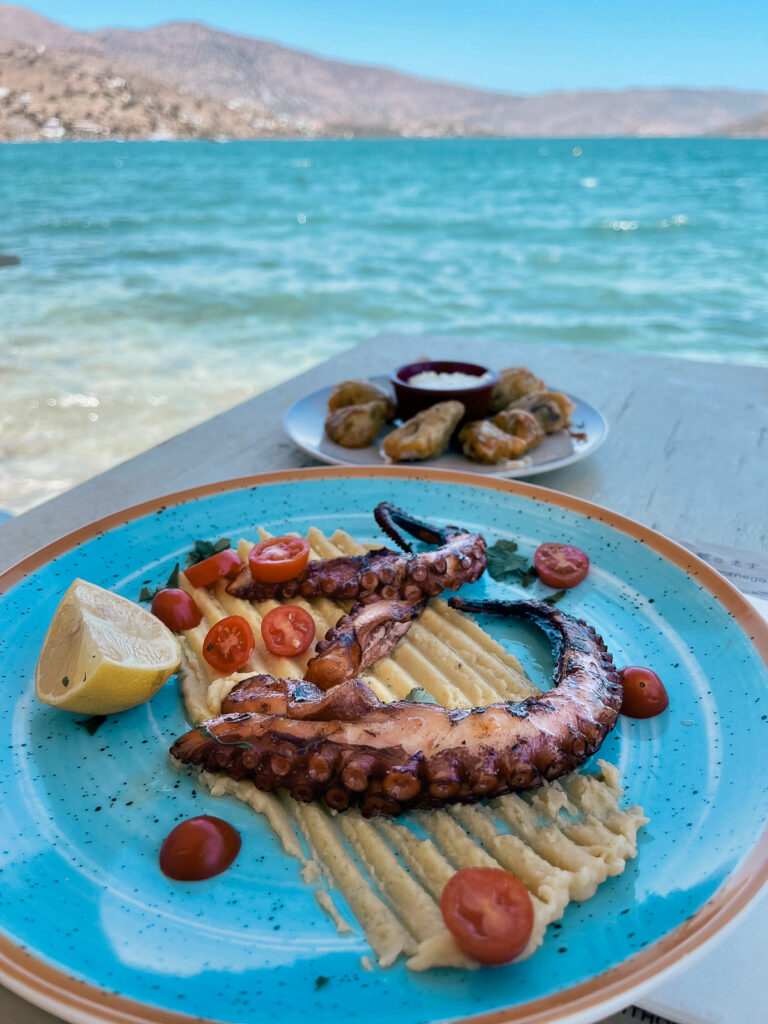
Here’s the key tip: bring your swimsuit. Most boats stop for a swim on the return journey in the impossibly clear Aegean waters of the gulf. After the emotional weight of the island, that swim feels like a gift.
Best time to visit: Morning departures beat the afternoon crowds and the light on the fortress walls is better earlier in the day.
Final Thoughts: Give Crete the Time It Deserves
Crete is not a place to rush. It rewards the curious, the unhurried, the ones willing to get mildly lost on a mountain road or linger over a three-hour lunch. A week gets you through the highlights — but two weeks lets you breathe, repeat the beaches you loved, find the taverna with no English menu and the best food you’ve ever eaten, and actually feel like you know a place rather than just visited it.
Move west to east. Let each town hand you off to the next. And come with an appetite — for landscapes, for history that feels alive, for beaches that don’t look real, and for food that will quietly ruin you for all other cuisine.
One visit is never enough. You’ve been warned.