A Complete Guide to Hiking the Acatenango Volcano in Guatemala
If there’s one adventure in Central America that will leave you absolutely speechless, it’s hiking the Acatenango Volcano in Guatemala.
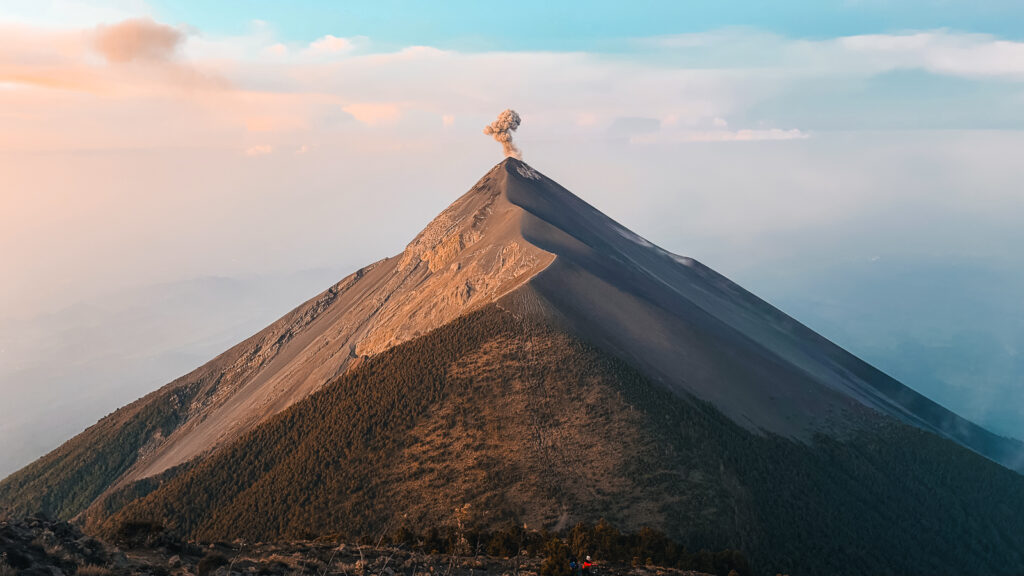
Surely, you’ve seen the photos online – the lava-spewing Volcán Fuego erupting in the night sky, a sea of clouds stretching infinitely beneath you at sunrise, a lush jungle trail and friendly dogs leading the way to the summit. This is what a bucket-list adventure looks like.
But what is this epic hike actually like? Rising 3,976 meters (13,045 feet) above sea level, Acatenango will test your fitness level and resolve, but reward you with an experience you’ll remember for the rest of your life.
Yes, it’s challenging. But is it doable? Absolutely. Is it worth it? 100% yes! Thousands of people of all fitness levels complete this hike every year, and with the right preparation, you can too.
This guide covers everything you need to know to make your Acatenango trek safe, comfortable and completely unforgettable.
What is the Acatenango Hike?
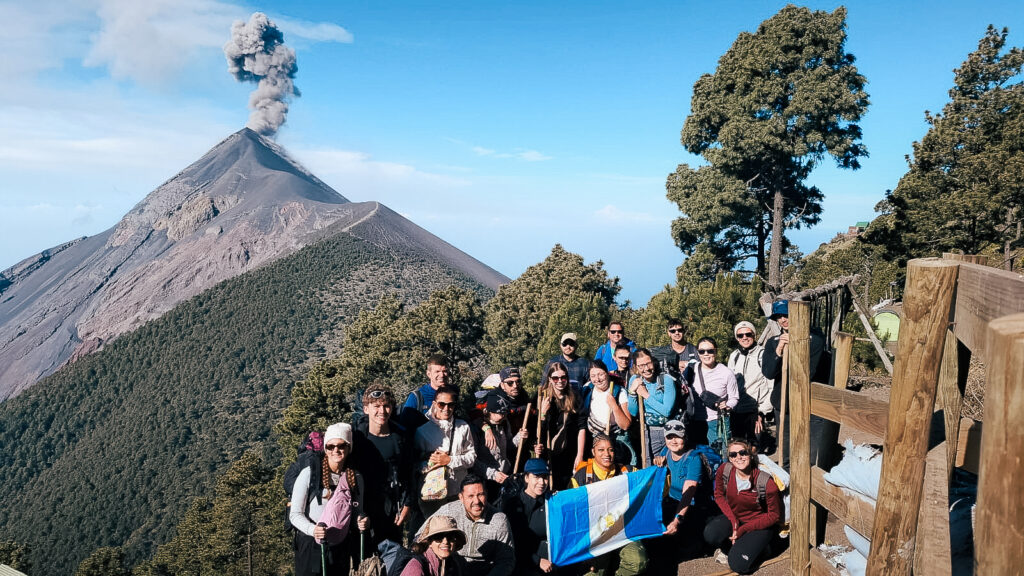
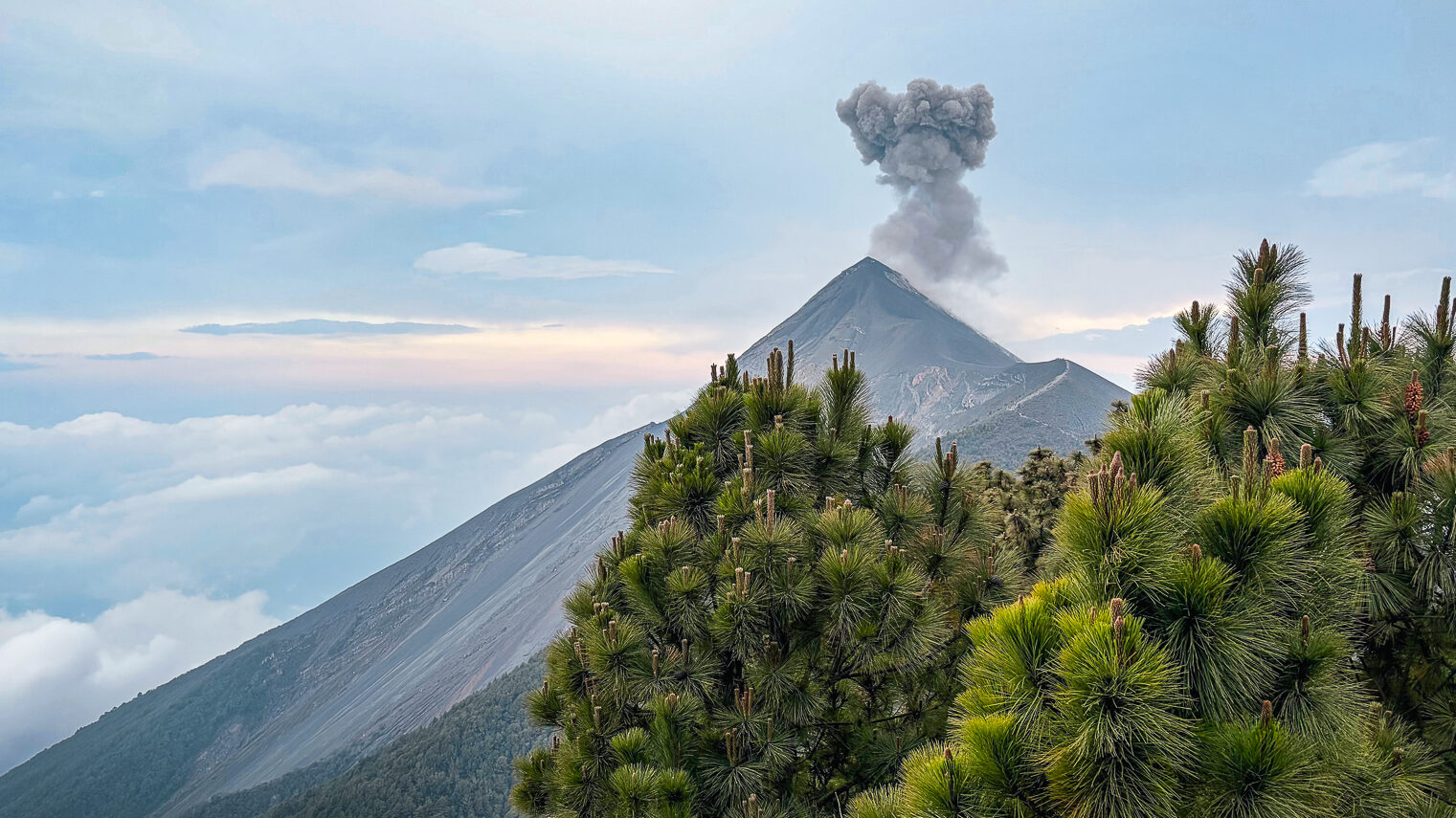
When I first started researching the Acatenango hike, I kept seeing all the mentions about Volcán Fuego. So, why am I hiking Acatenango if Fuego is the one that’s erupting? Because you can’t hike all the way to the top of Volcán Fuego, since, well, you guessed it – it’s erupting every 10-15 minutes.
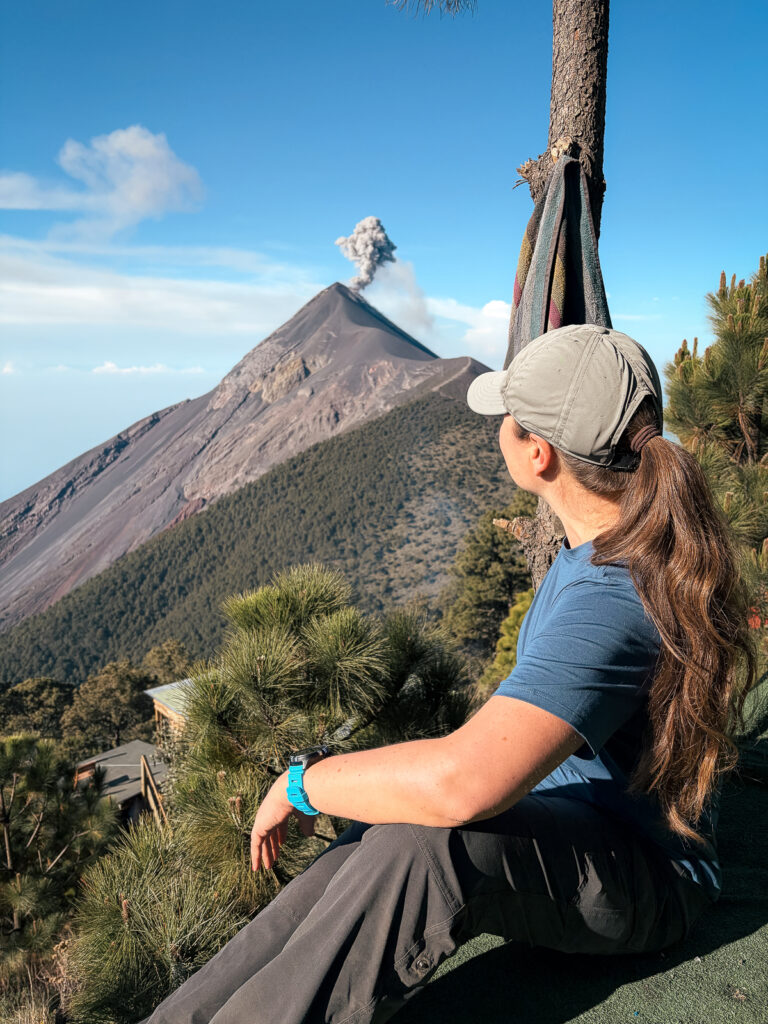
So, instead you are hiking to the nearby Acatenango Volcano that has the most incredible views of Volcán Fuego from its basecamp. But more on that later.
Best Time to Visit Acatenango
The best time to hike Acatenango is during Guatemala’s dry season, which runs roughly from late October through April. During these peak months, the skies are clearer, the trails are drier, and you’re more likely to see those jaw-dropping, unobstructed views of Volcán Fuego that make this hike so popular.
If you visit in the months of December through February, you’ll experience the frigid cold weather at night at base camp — temperatures frequently drop below freezing at high altitudes — but you’ll be rewarded with the crisp and clear air that delivers visibility that will leave you breathless (literally and figuratively).
If you happen to visit Guatemala during the wet season, May through October, don’t overlook this activity. The jungle section of this hike will come alive with lush green colors, the mist will gently cradle the treetops, and you’ll find the trail far less crowded. Just be prepared for muddy conditions, afternoon showers, and the possibility that clouds will obscure your Fuego views.
The dry season is the best option, but if the rainy season is all you have – go anyway. This hike is still worth it.
How Long Is the Acatenango Hike?
Acatenango is best experienced as a 1.5 to 2-day hike, with an overnight stay at base camp. It’s simply too challenging to complete this hike in one day and the overnight experience is honestly the whole point. Watching Fuego erupt after dark, trying to sleep while your bed trembles with each eruption and catching that magical sunrise from the summit is worth all the exhaustion.
Here’s the breakdown of the itinerary:
Most guided tours depart from Antigua in late morning, putting you at base camp by late afternoon with enough time to rest before the optional evening hike to Volcán Fuego.
What to Expect: A Day-By-Day Breakdown
Day 1: Trailhead to Base Camp (~6 Hours)
You’ll meet with your tour company at their office in Antigua, get your extra gear and lunch box from them and start making your way to the trailhead. The drive will take about an hour though the outskirts of Antigua and you’ll finally arrive at the trailhead near the town of La Soledad.
Some tour companies have arrangements with the locals who own the land, which allows them to drive through the first section of the hike. This is the steepest part of the hike, and you’ll be glad to skip it.
The first six hours of hiking take you through the lush green jungle that gradually transitions into a misty cloud forest as you gain altitude.
The trail winds through towering trees draped in moss with glimpses of the valley far below.
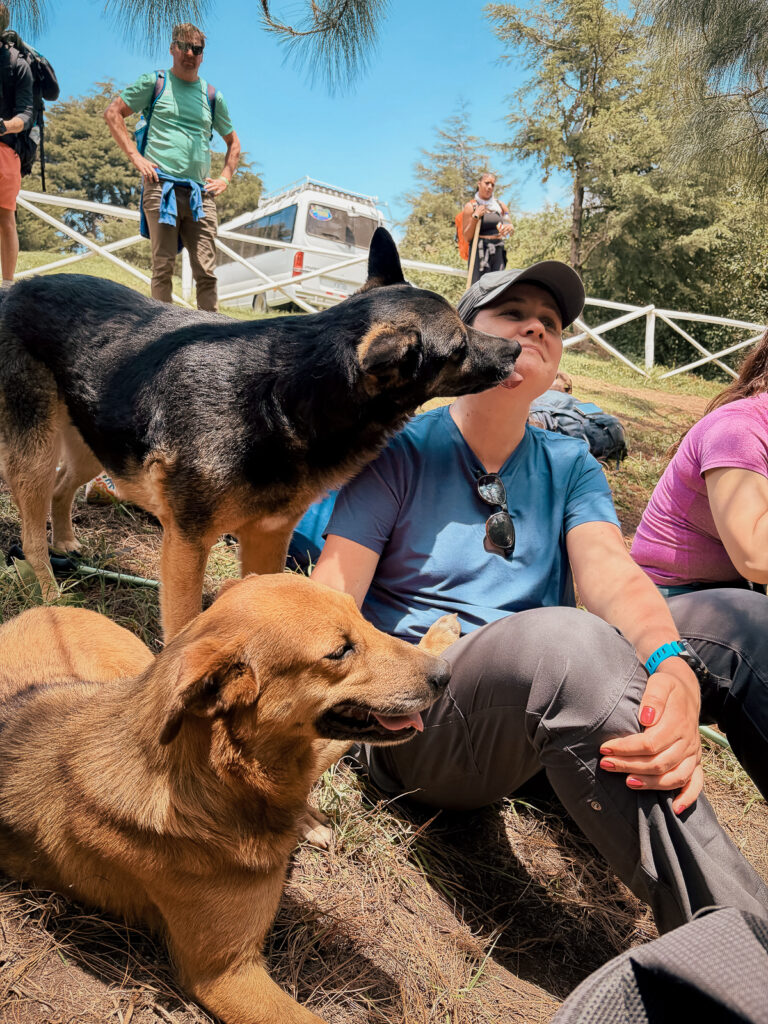
As you make your way to the basecamp, you’ll come across several rest stations where locals sell overpriced snacks and cold drinks. Be prepared to encounter many dogs that live in this area. They just want to play with you and beg for your snacks. These dogs are your guarding angels and will follow you on the way to the summit and back to the trailhead the next day.
This section is tough. It’s a constant climb up – your legs will burn, and the altitude will make itself known but keep pushing through. All this is normal. Just remember to take breaks, eat your snacks, and hydrate.
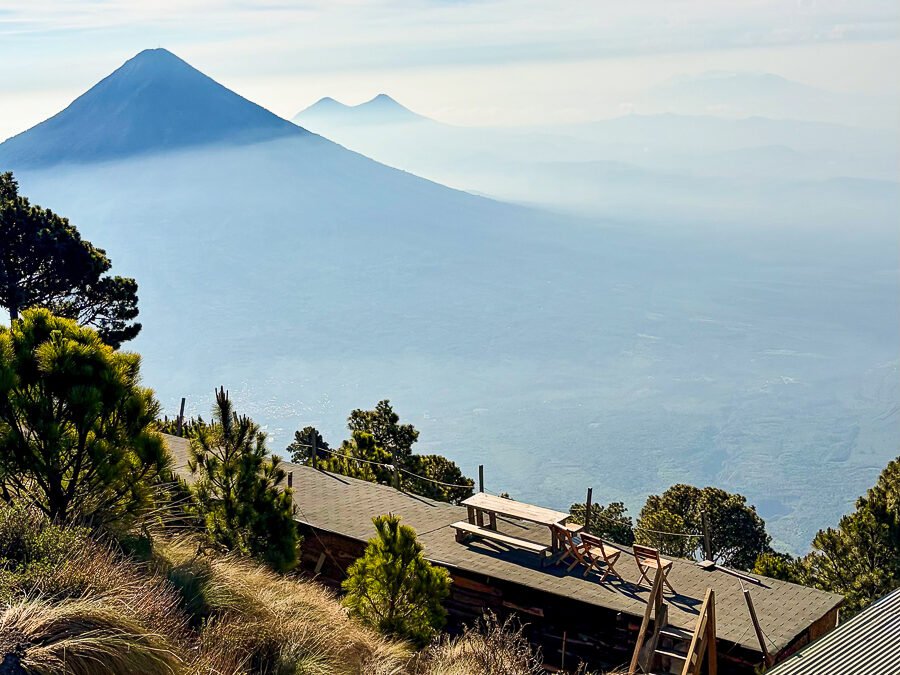
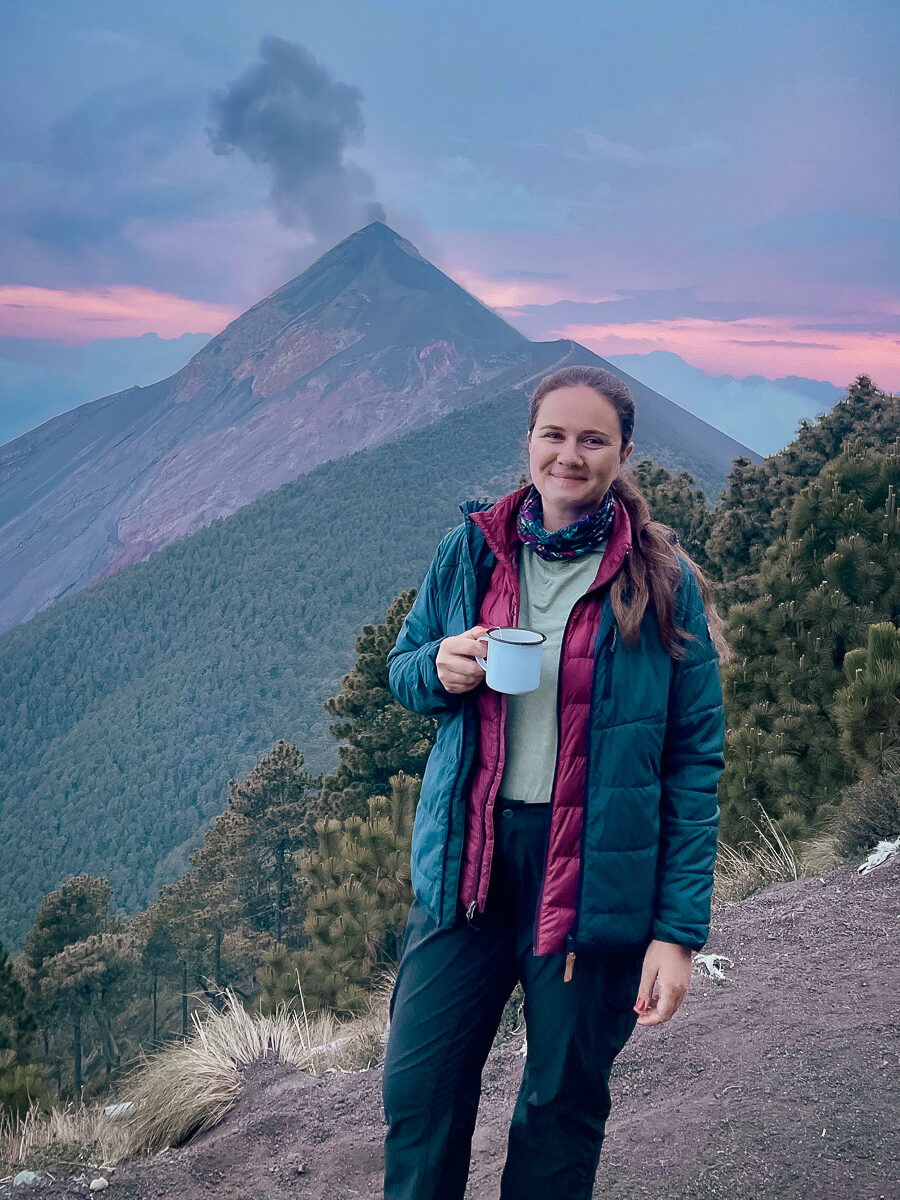
As you get closer to the summit, the tree line will open up, and you will get the first glimpse of the erupting Volcán Fuego, and all the effort will be well worth it. The base camp sits at around 3,600 meters (11,800 feet) and has the most spectacular views of Fuego. Once you reach the base camp, set up your tent or get settled into one of the wooden cabins, make some tea and enjoy the view.
Day 1 Evening (Optional): Base Camp to Volcán Fuego (4-5 Hours Round Trip)
The Fuego hike is challenging and it’s not for everyone. You start the trek around 4pm, after having already completed 6 hours of hiking to base camp. First, you descend for about an hour from basecamp and then start the 1.5-hour ascent to a small section on the side of Volcán Fuego.
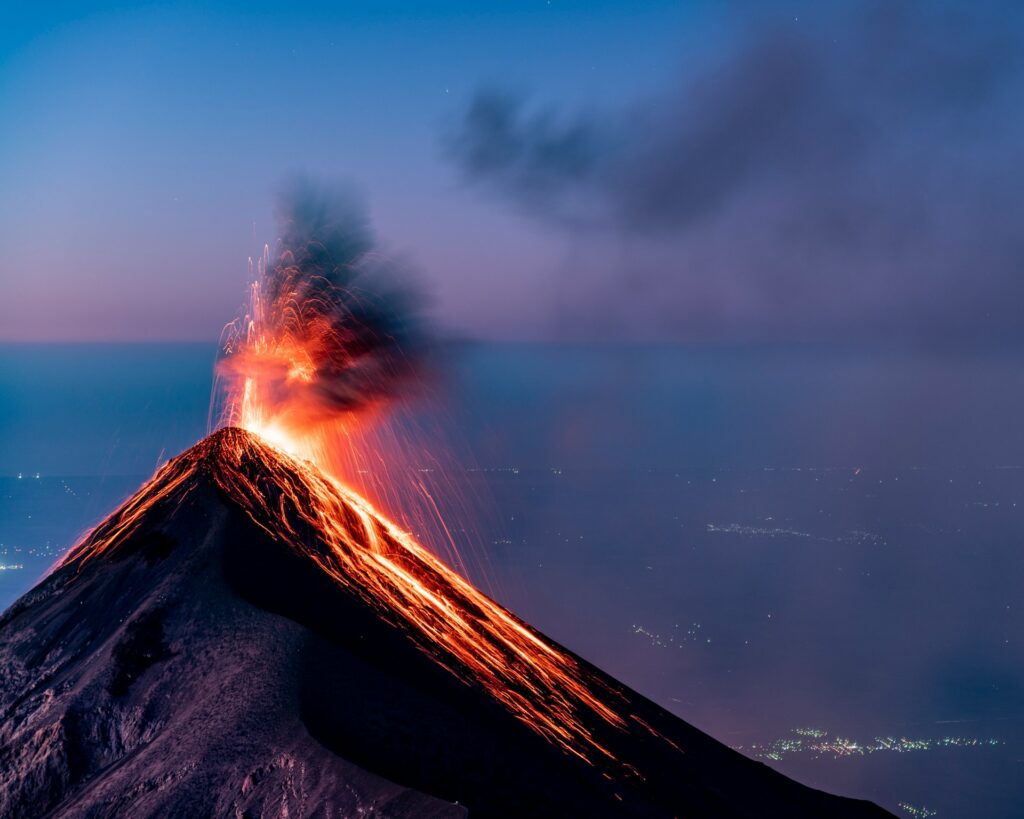
You’ll get about 30 to 45 minutes to admire the proximity of the glowing lava spewing from the top and begin your journey back to basecamp.
This guided side trip takes you closer to Guatemala’s most active volcano, where you can feel the heat radiating from the earth, feel the deep rumbling roars of the eruptions, and witness the bright red lava illuminate the sky against a backdrop of stars.
And yet, I chose not to do this hike despite the temptation, and here are my reasons:
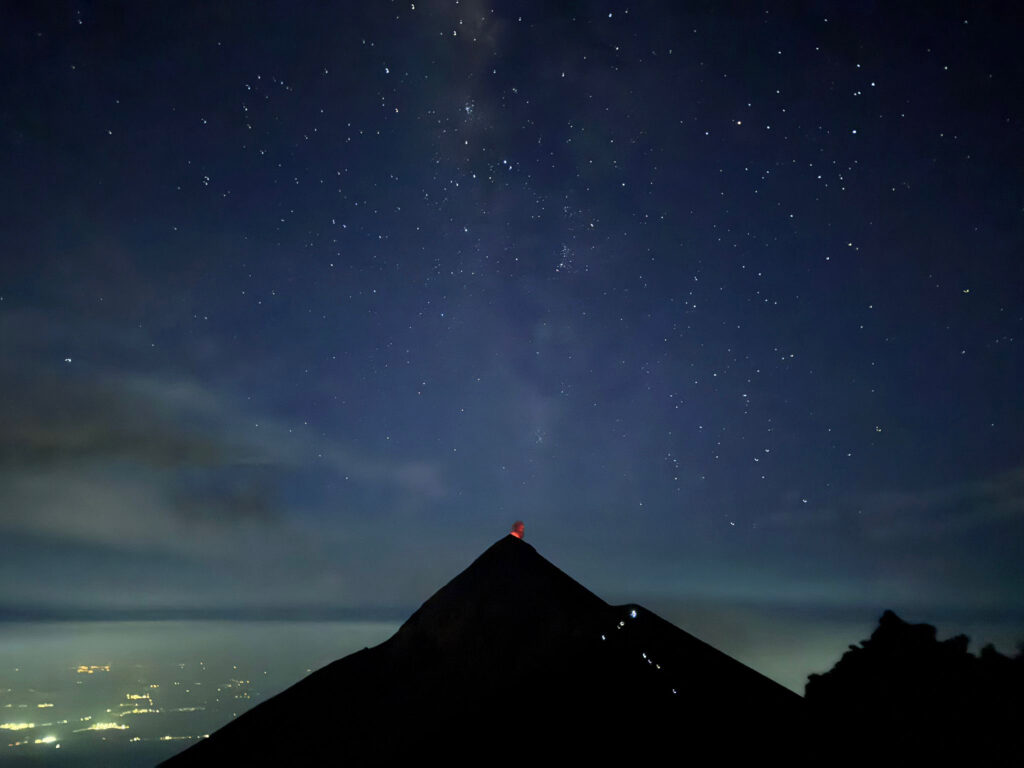
Most people in my group who did the Fuego hike came back utterly exhausted and one person got sick from the altitude. All this is not to say it’s not an incredible experience. Many hikers say that the Fuego night visit is the most memorable experience of their entire Guatemala trip. For me, reaching the summit at sunrise was more important.
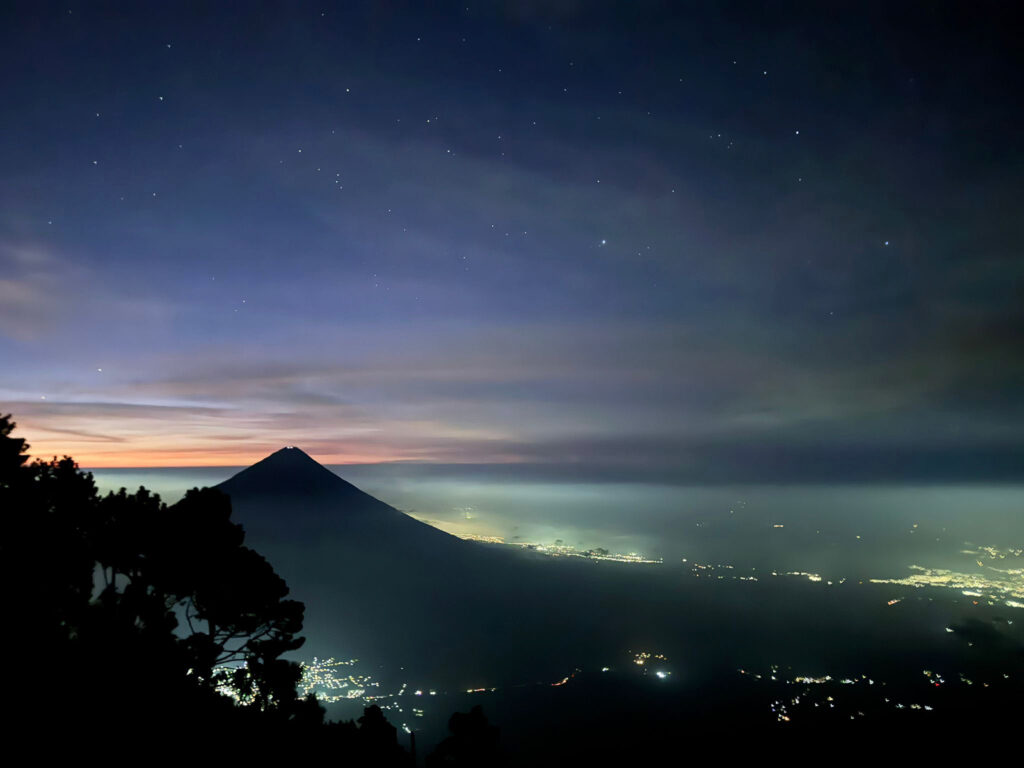
Day 2: The Sunrise Push — Base Camp to the Summit (~2 Hours)
This was the option I chose and I’m so happy I did. There is just something so magical about witnessing the sky around you come to life.
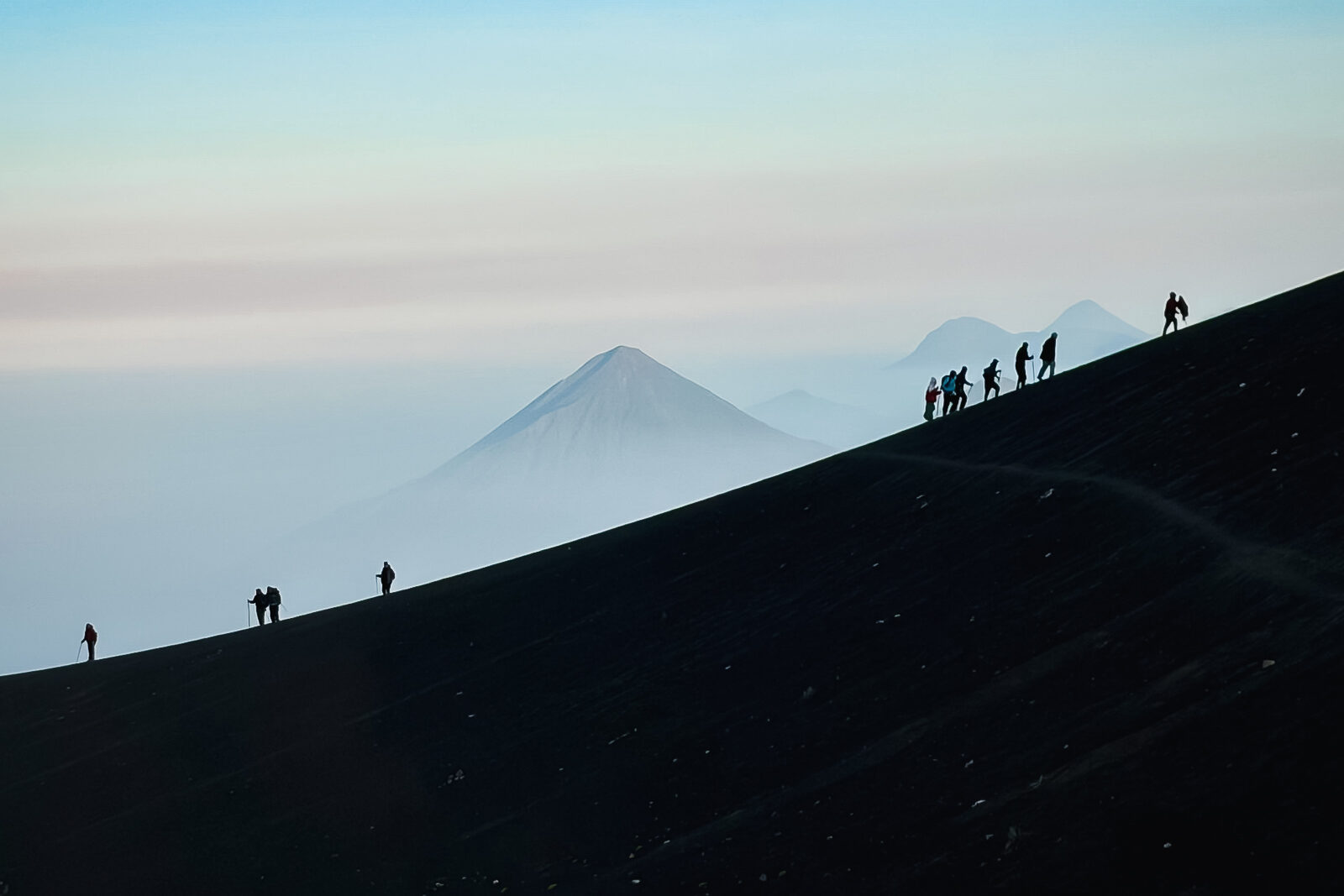
You’ll wake up before dawn around 3am, bundle up in layers, have a cup of coffee and start your ascent to the summit on the grueling gravel trail. As our guide said – one step forward will make you slide two steps back and he wasn’t joking. So, make sure to wear hiking boots with good thread.
The summit ascent from base camp is steep and covered in loose volcanic scree — a very fine, ash looking gravel that slides under your feet with every step. Trekking poles are absolute lifesavers here.
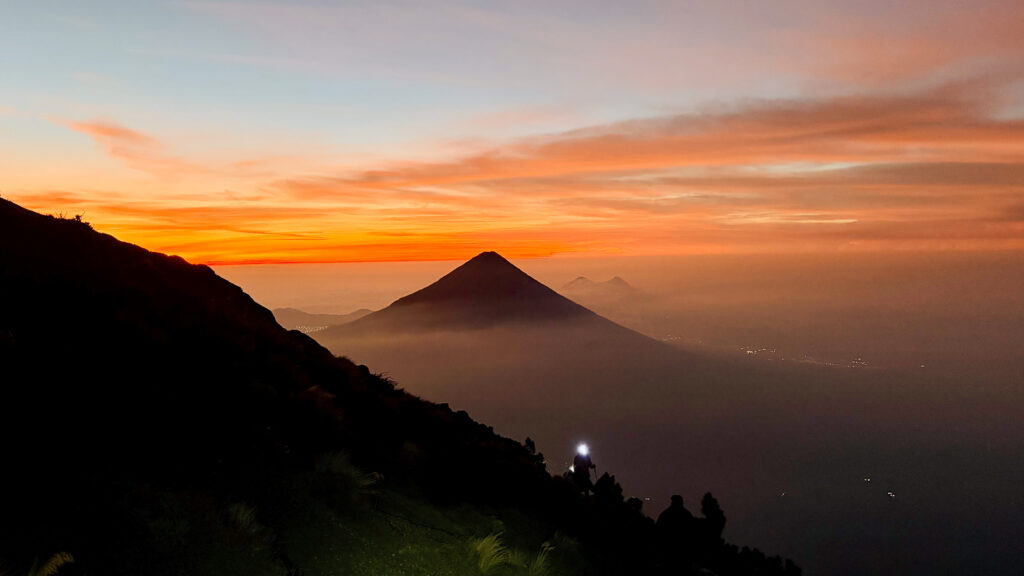
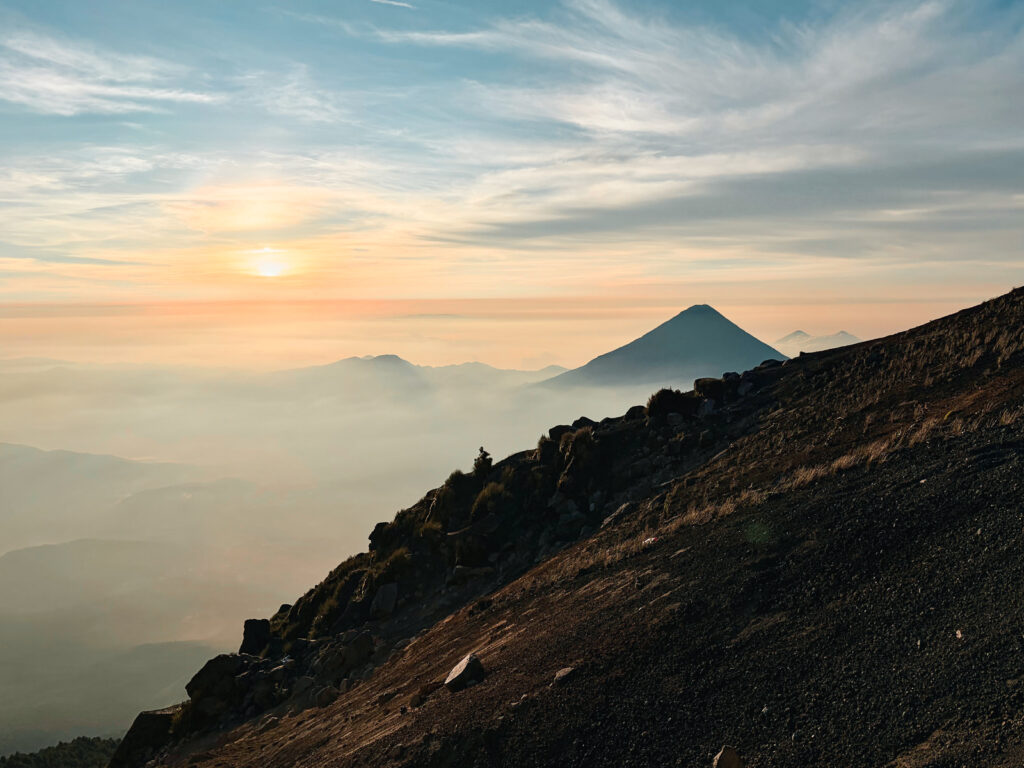
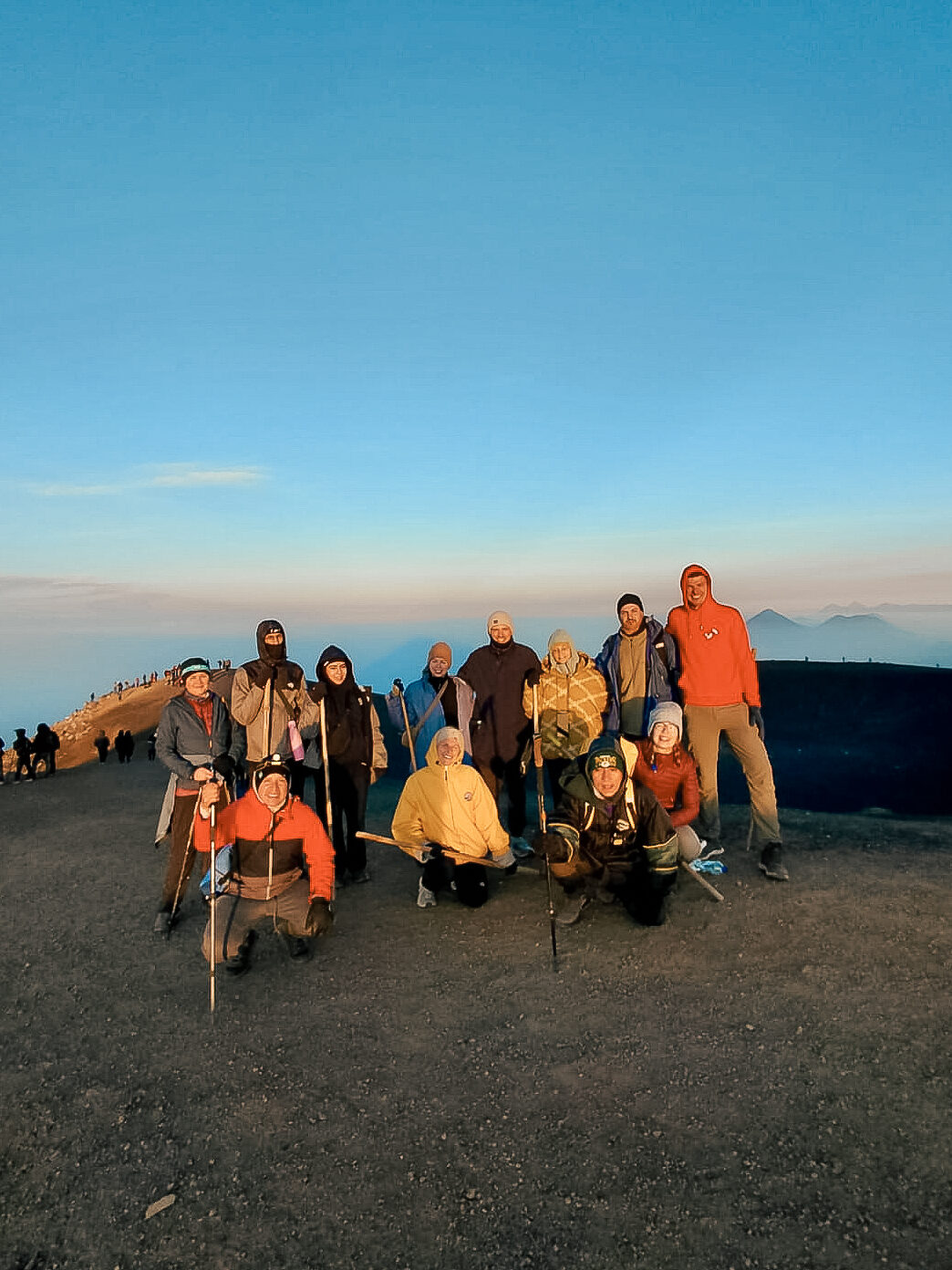
As you make your way toward the crater rim in the chilly pre-dawn darkness, the first hints of light begin to graze the horizon. And then — as you reach the summit — the sun peaks from under the horizon just above the misty clouds, and the world around you bursts with golden colors.
The sunrise from the summit of Acatenango is, without question, worth the pre-dawn wakeup call and the grueling ascent. A vast sea of clouds spreads beneath you in every direction, while Volcán Fuego continues its fiery performance. The silhouettes of other volcanoes — Agua, Santiaguito, and Santa María — rise in the distance above the clouds. You can almost hear the whispers of ancient spirits. You made it!
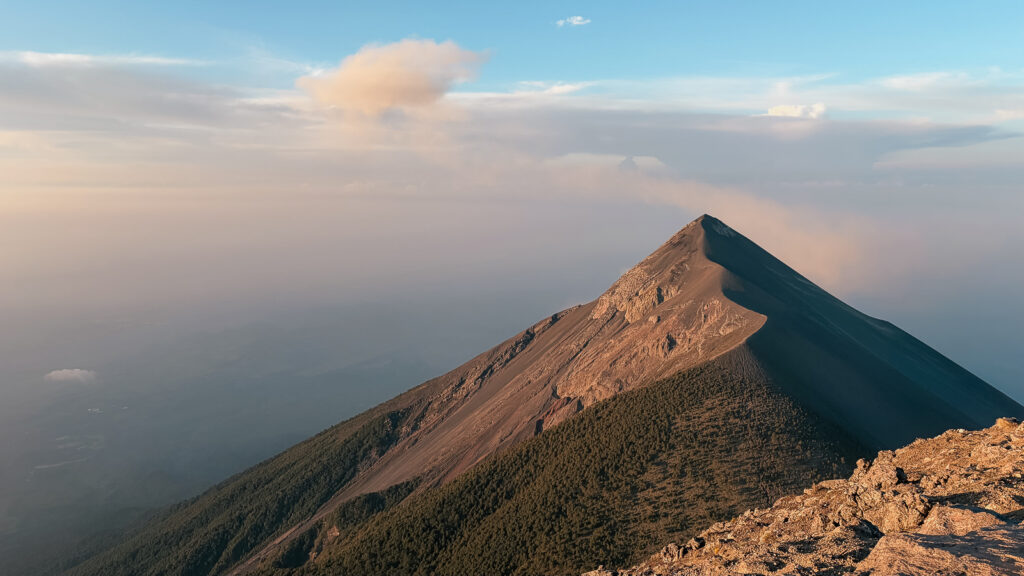
Now it’s time to descend back to base camp for breakfast.
What to Pack for Acatenango
Packing the right gear for Acatenango is truly important — this is a high-altitude, multi-day hike with sub-zero overnight temperatures.
Bring Layers:
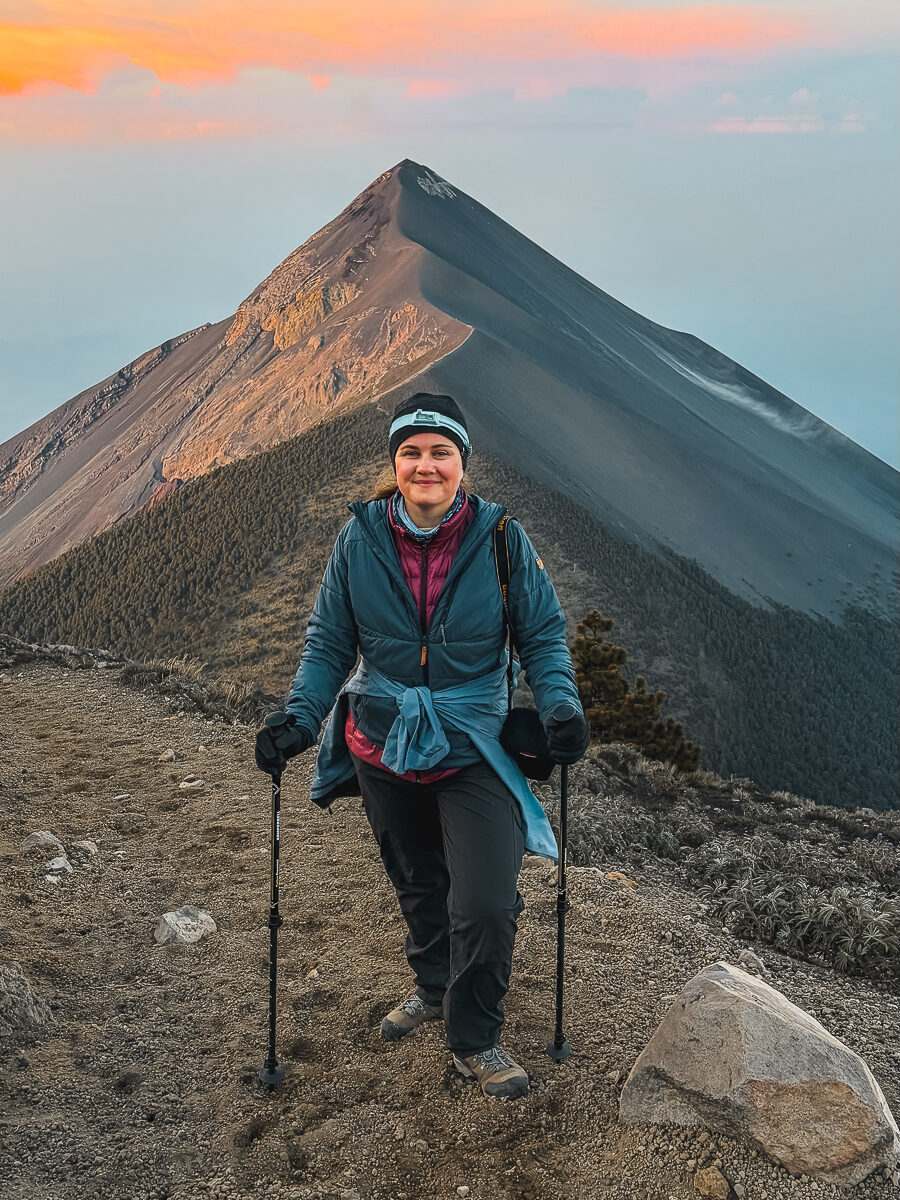
- A warm, insulated jacket (down or synthetic — many tour companies offer a jacket for rent if you prefer to pack light)
- Thermal base layers (top and bottom – mostly for sleeping)
- Mid-layer vest or hoodie
- Waterproof/windproof outer shell
- Gaiter
- Warm hat, gloves, and wool socks
Footwear:
- Sturdy hiking boots with good ankle support
- Gaiters are helpful for the ashy upper slopes
- Flip flops for walking around camp
Gear:
- Trekking poles
- Headlamp with extra batteries (essential for both the summit push and the Fuego hike in the dark)
- A 30–40L daypack
Food & Water:
- At least 2 liters of water in addition to what the tour agency provides
- High-energy snacks: protein bars, nuts, dried fruit
- Most guided tours provide meals at base camp — confirm this when booking
Other Essentials:
- Sunscreen, sunglasses and baseball hat
- Band-Aids and a basic first aid kit
- Camera or fully charged phone
- Dog biscuits and/or food
Tips
- Book a guided tour from Antigua – it’s the easiest, safest, and most enjoyable way to do this hike
- Rent most of your gear, so you don’t have to carry it in your suitcase for the rest of your trip
- Hire a porter – don’t let the naysayers guilt you into carrying your own backpack. Your legs and back will thank you in the end.
- Spend at least a day or two in Antigua to acclimatize
- Start hydrating and avoid alcohol the day before
- Bring extra snacks – I found my tour agency did not provide enough food or snacks for this level of exertion
Final Thoughts: Is Acatenango Worth It?
Acatenango is difficult. There will be moments on that steep, ashy ascent when you’ll question your life choices. Your lungs will feel the altitude and your legs will feel the miles. But here is what every person who does this hike will tell you – it is absolutely and utterly worth it!
The walk through the misty forest accompanied by friendly jungle fogs is incredible. The base camp views of the erupting Volcán Fuego are stunning. The sunrise above the clouds is breathtaking. Feeling the ground rumble under your feet with each volcanic breath – priceless.
So, pack your bags, lace up your hiking boots, and get yourself to Guatemala. Acatenango is waiting and it’s magnificent.And if you are wondering where to relax after the hike, head over to one of the quaint villages on Lake Atitlan – you can read about it here.