Visiting Tikal, Guatemala: Is the Sunrise Tour Worth It? (An Honest Review)
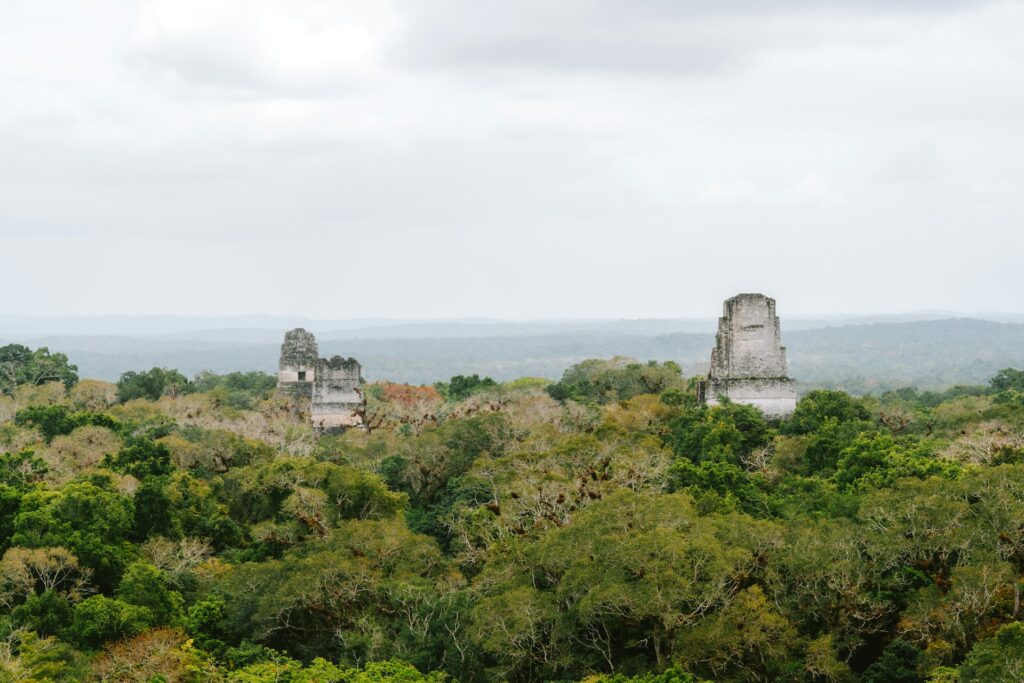
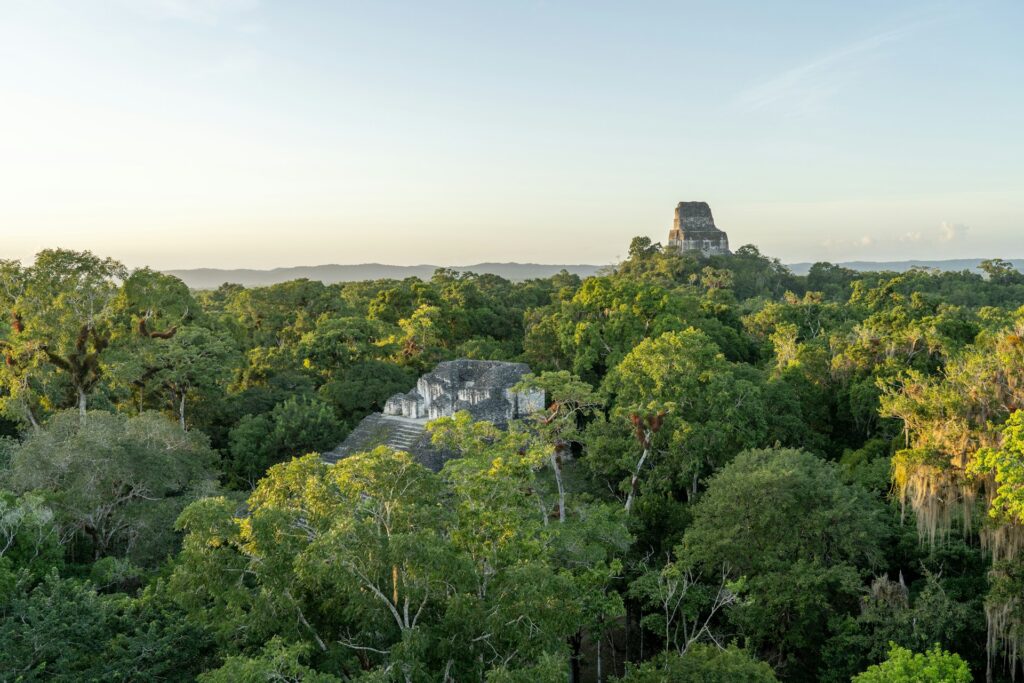
Deep in the lush jungle of northern Guatemala, the ancient Maya city of Tikal rises from the forest floor like something out of a Jurassic Park dream. Towering limestone temples pierce the rainforest canopy, howler monkeys fill the air with their otherworldly morning roar, and the mist rolls across the treetops at dawn in a way that no photograph can fully capture.
If this place isn’t on your Guatemala itinerary yet, it should be. Here is everything you need to know to get you prepped and ready to go.
A (Very Brief, I Promise) History of Tikal
I know — history class flashbacks, but bear with me because understanding even a little bit of Tikal’s history makes the visit so much more meaningful.
Tikal is one of the largest and most powerful cities of the ancient Maya civilization. Settled around 900 BCE, Tikal became a major political and religious center, reaching the height of its power during the Classic Period (roughly 250–900 CE). At its peak, the city was home to an estimated 100,000 people.
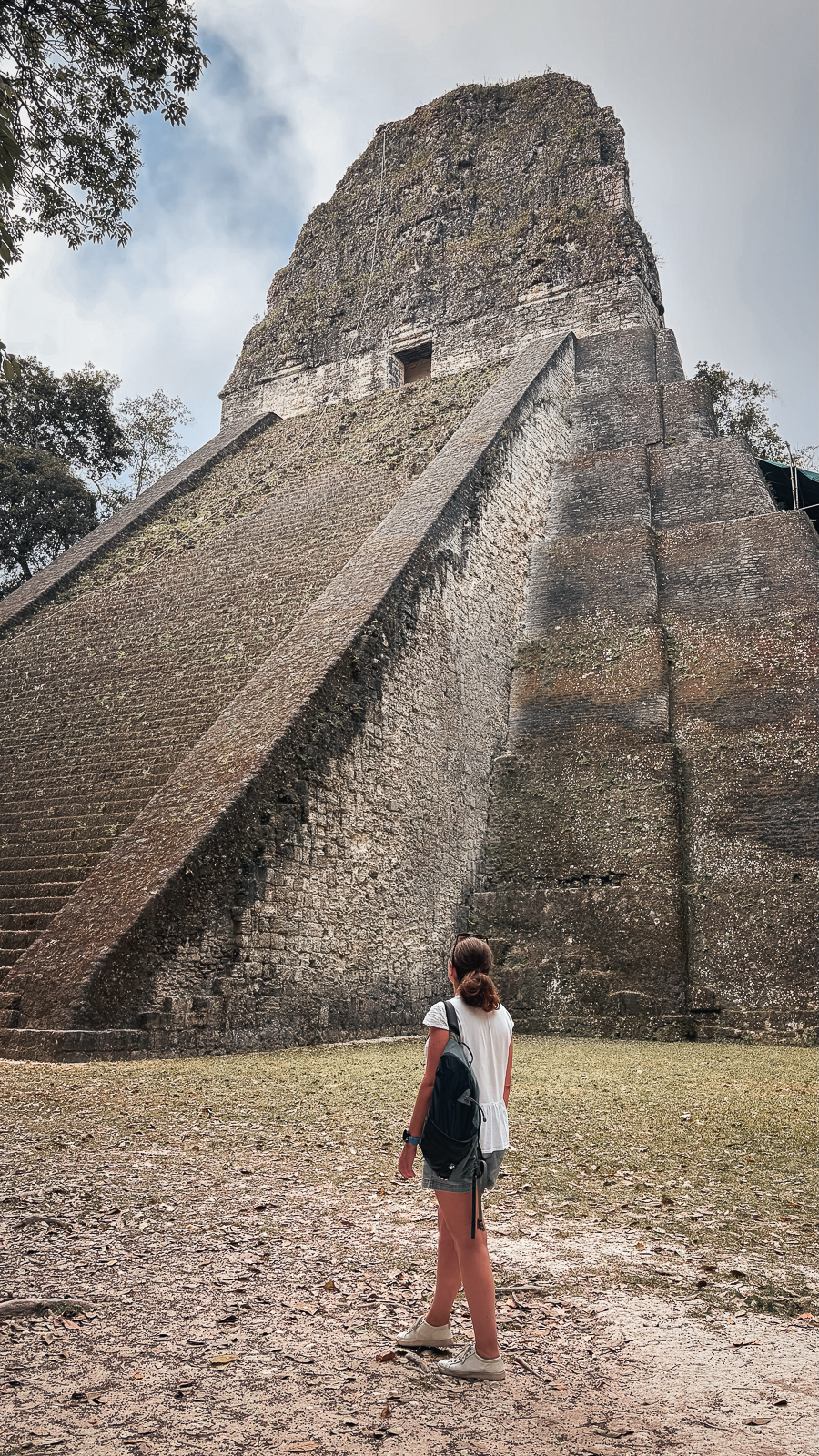
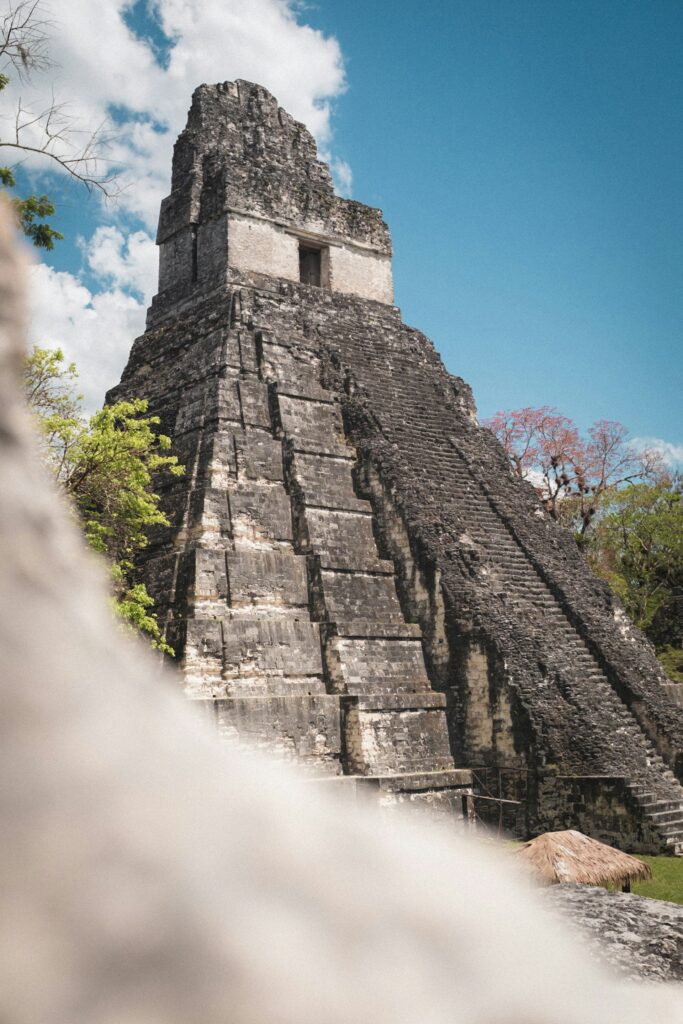
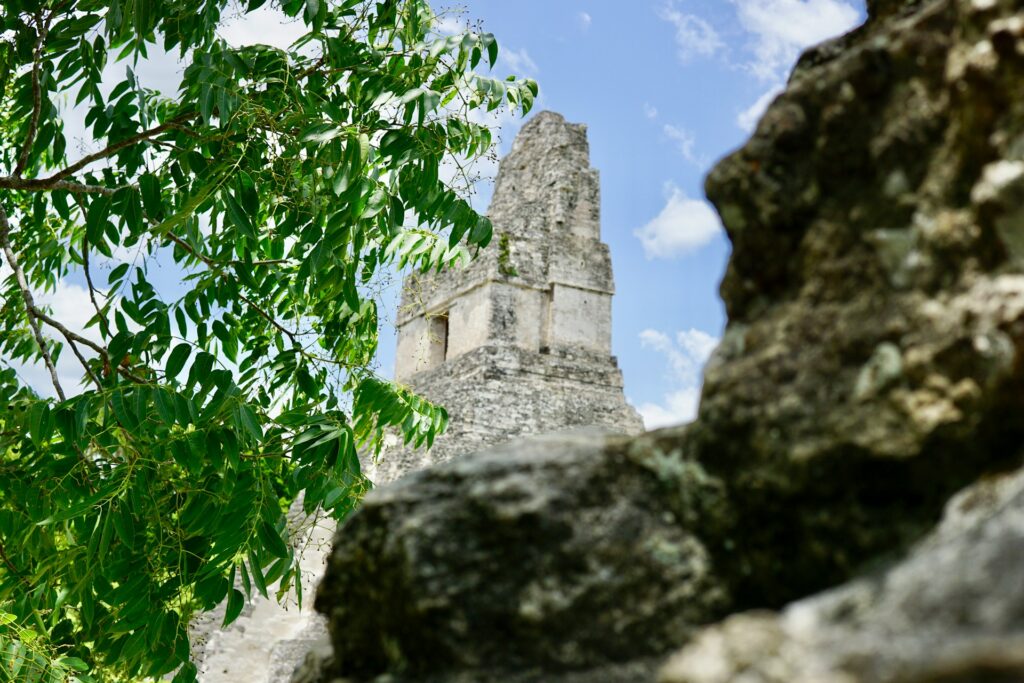
Tikal’s rulers were ambitious. They commissioned some of the most impressive structures of that time — towering temple-pyramids built to worship the gods and honor the dead. Temple I, also known as the Temple of the Great Jaguar, was constructed around 732 CE as a tomb for the ruler Jasaw Chan K’awiil I. Temple IV, the tallest pre-Columbian structure in the Western Hemisphere at 65 meters (213 feet), was completed around 741 CE.
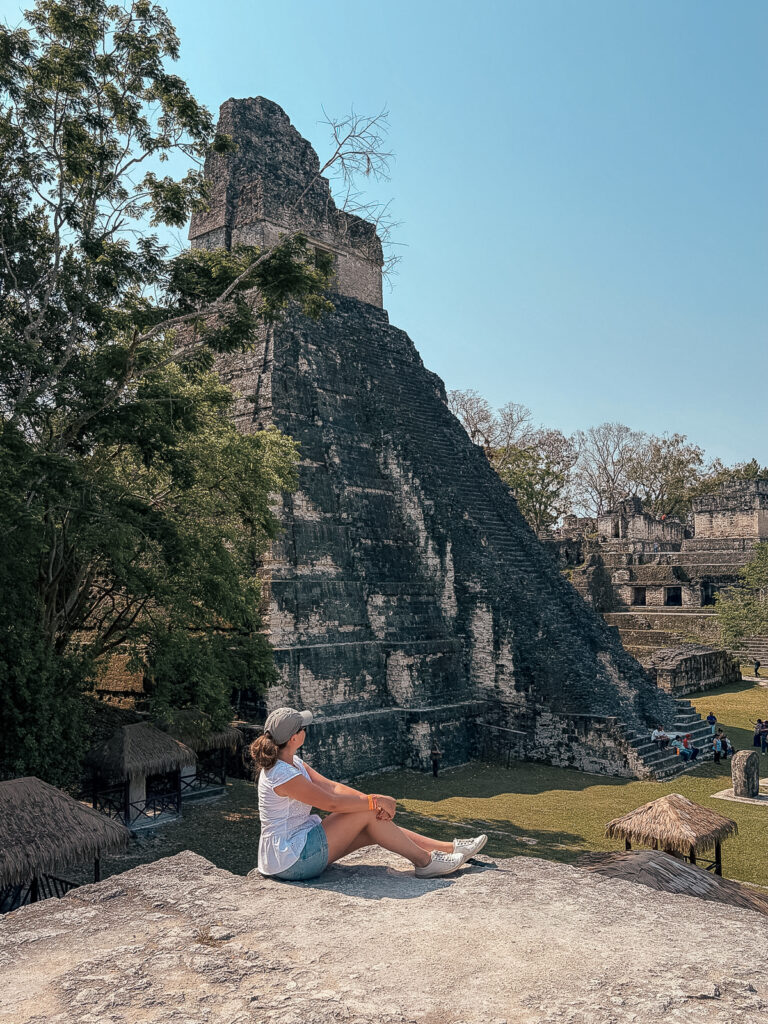
Then, around 900 CE, like many Maya cities, Tikal was mysteriously abandoned. Nobody knows exactly why – theories range from prolonged drought to war and agricultural collapse. The jungle slowly reclaimed the thriving metropolis, and for nearly a millennium, the city lay hidden beneath the trees.
Tikal was then rediscovered by the outside world in the 19th century and designated a UNESCO World Heritage Site in 1979. Today, it is one of the best-preserved archaeological sites in all of Latin America.
Best Time to Visit Tikal
The best time to visit Tikal is during the dry season, from November through February. Temperatures are milder, the trails are less muddy, and you’ve got a better shot at clear skies for those temple-top views.
December and January are peak months, so expect more crowds, but Tikal is big enough, so it never feels overrun.
If you are visiting in April, like I did, be prepared: it is one of the hottest months of the year in the Petén jungle. We’re talking 35°C+ (that’s 95°F+) with humidity that makes it feel like you’re walking through sauna.
Hiking between ruins in that heat at midday is genuinely tough. But if April is your only option, then I suggest doing a sunrise tour. You’ll be leaving the park around noon when the sun becomes unbearable.
The rainy season (May – October) has its own appeal. The jungle turns emerald green and crowds thin out. Be prepared for afternoon showers and muddy trails, so dress accordingly. But honestly? Tikal in the rain is still pretty charming.
Tikal Entrance Fees
Entrance fees to Tikal National Park are approximately 150–200 GTQ per person (around $20–25 USD) for the standard daytime entry. The fees are set by the Guatemalan government and can change, so check the prices before going.
Important: If you want to do a sunrise or sunset tour, you will need a separate ticket. It allows you to enter the park before it officially opens, which you absolutely need if you want to reach Temple IV before sunrise, or stay in the park after the official closing time.
Buy your tickets in advance here (official website), especially in peak season, and either print them or download them on your phone. The website is in Spanish, but use the browser translate option to get it in English.

How to Get to Tikal
Getting to Flores
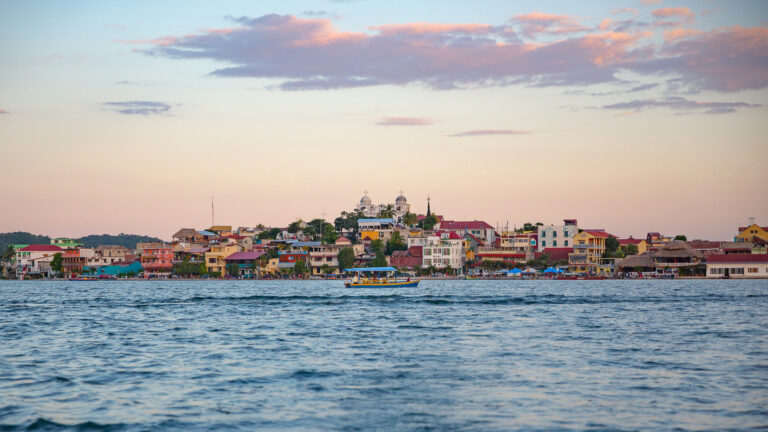
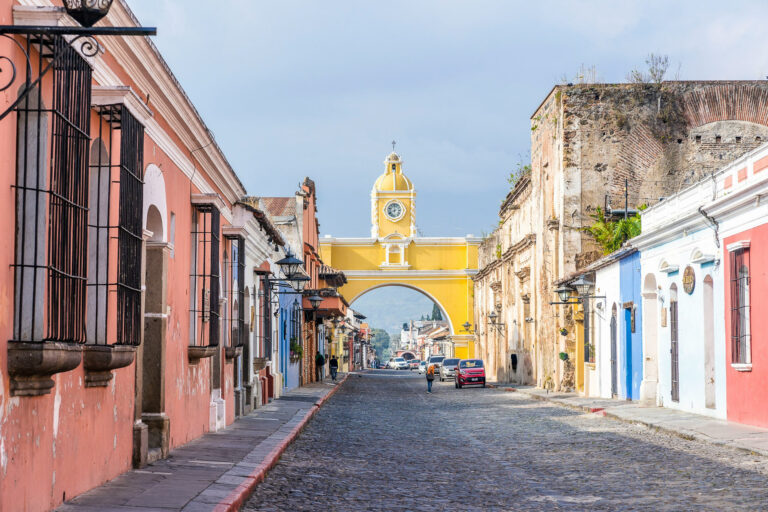
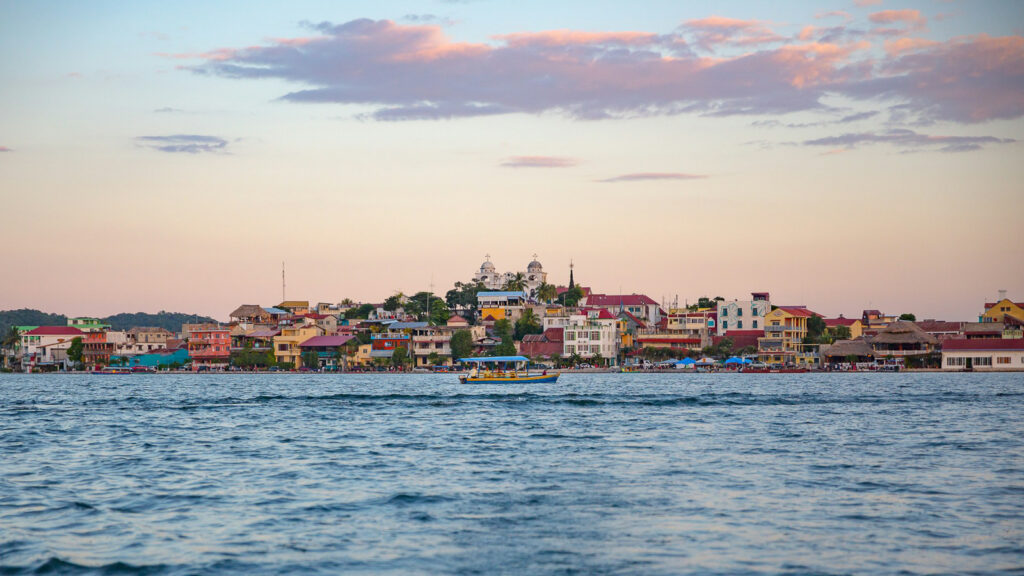
Tikal is located in the Petén region in northern Guatemala, and the closest town is Flores — an absolutely charming small colonial town built on a tiny island in the middle of Lake Petén Itzá.
So many people just visit Tikal and skip this quaint colorful town. I highly recommend adding it to your itinerary if visiting Tikal. But let’s get there first.
By Plane (the smart move): The flight from Guatemala City (GUA) to Flores (FRS) only takes 45-minute.Who wouldn’t want to take this flight? It’s bar far the easiest and most convenient option.
By Road (the determination): If you prefer to travel by car or bus, be prepared for a long journey. The drive or shuttle bus from Guatemala City to Flores takes approximately 10 to 12 hours, depending on traffic and number of stops.
Shuttle buses are a popular budget option, but the journey is exhausting. The scenery through the Guatemalan countryside is beautiful though. So, if that’s your vibe, bring snacks, good book and zero expectations to be on time.
Alternatively, you can rent a car and make the drive yourself, but the roads aren’t always the best.
Getting from Flores to Tikal
Tikal is approximately an hour’s drive from Flores.
From Flores, you have several options:
Should You Stay Inside Tikal National Park?
Here’s something a lot of people don’t know – you can actually stay inside the national park. There are only three hotels to choose from — Jungle Lodge Tikal, Hotel Tikal Inn, and Hotel Jaguar Inn Tikal — but staying there is definitely an experience.
Why it’s great: You are literally right there, steps away from howler monkeys waking you up before dawn. You can wander in the park before the crowds show up and long after they leave (you still need a separate ticket). There is just something so magical about staying in the middle of a jungle!
And if that’s not adventurous enough for you – then you can purchase a permit for camping right on the park grounds.
The Cons: You’d be missing out on Flores, and I can’t tell you enough how much I loved that little town. The only downside to that town is honestly the heat. Flores has tons of food options, bars, a chill lakeside vibe, cute stores and lots more accommodation options.
The park hotels are a bit pricier than what you get in Flores.
Flores has an adorable town square with local food vendors, beautiful churches and many colorful buildings that serve as a perfect backdrop for pictures.
Do You Need to Hire a Guide?
The short answer: you don’t need one, but you’ll probably wish you had one.
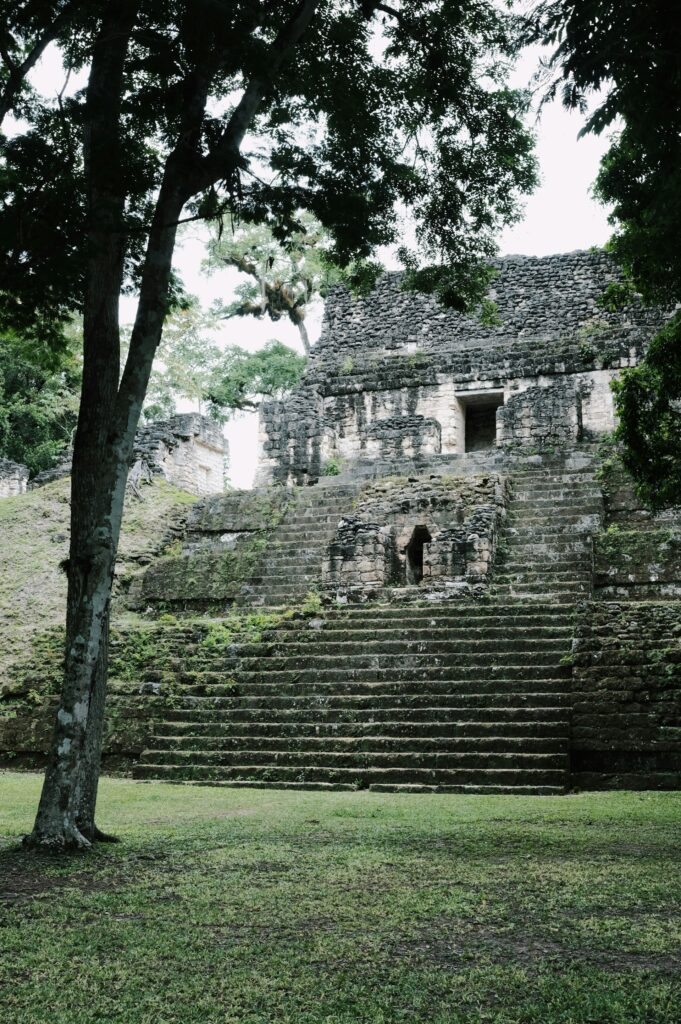
Tikal is huge — and without guidance, it is easy to miss important structures or walk past significant details without understanding what you are looking at. An experienced guide brings the ruins to life with history and mythology. Suddenly, you hear stories about the kings buried inside the temples and the astronomical precision behind their construction.
That said, if you are a seasoned traveler, it’s perfectly fine to navigate the park yourself. Just make sure to bring a physical map, as cell service is close to non-existent inside the park.
For the sunrise tour specifically, I’d hire a private guide, especially if you are a slower walker. The walk (or should I say a brisk hike in humid conditions in the dark through a jungle?) takes about 30 to 40 minutes. Group tours set one pace for everyone, and if you are not a fast walker, you’ll have a hard time keeping up. Private guides offer the flexibility to leave a little earlier, so you can walk at a comfortable pace and still reach the top before sunrise.
Best Tikal Tours: Sunrise and Sunset
The Sunrise Tour — Do Not Miss This
If you do one thing in Tikal, make it the sunrise tour. It is, genuinely, one of the most stunning travel experiences in Central America.
Here is what it looks like: You arrive at the park before dawn, while the jungle is still dark. From the entrance, you set off walking toward Temple IV, the tallest of Tikal’s pyramids. The stars are brightly lit in the dark blue sky, and the jungle is alive with sound.
As you make your way to the temple surrounded by whatever is rustling in the trees around you, the magic begins. The howler monkeys. As they wake with the light, their reverberating roars pierce the silence. They sound like something ancient is awakening. It’s eerie and completely unforgettable.
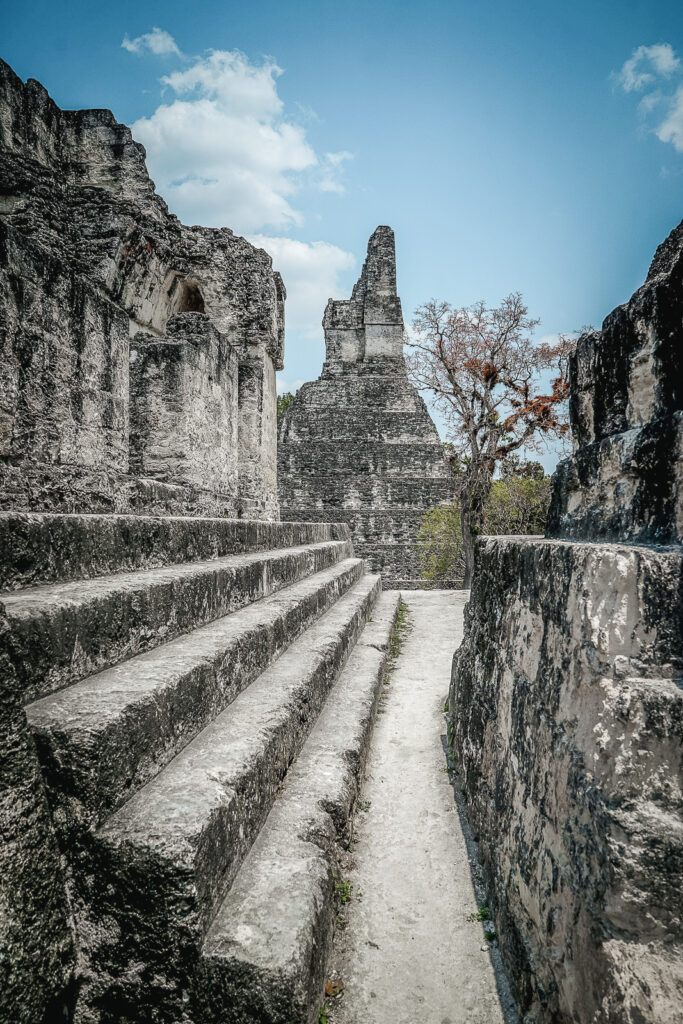
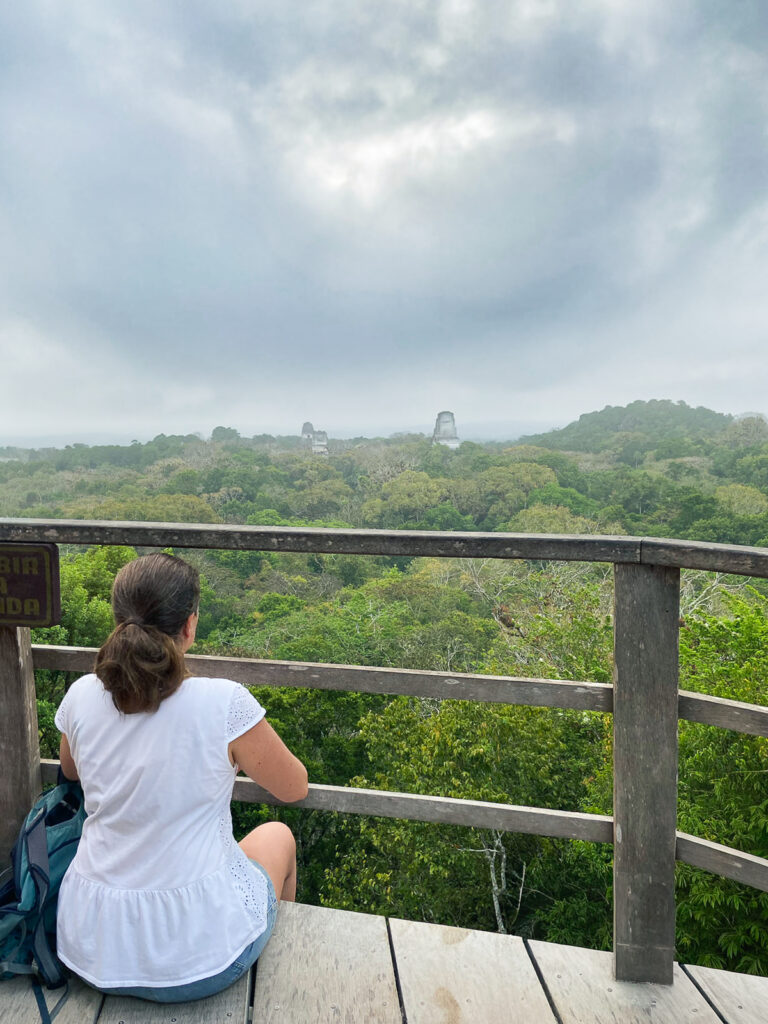
You then reach Temple IV, climb what seems like an endless number of stairs, and reach the platform at the top. Many mornings are misty and you might not actually see the sun rise, but honestly, it doesn’t matter. Watching the mist roll between the treetops while the jungle wakes up around you as the other temple peaks emerge from the canopy below you is an experience that’s hard to put into words.
After the sunrise, you spend the rest of the morning exploring the ruins at a leisurely pace before the afternoon heat kicks in. This is another major advantage of the sunrise tour. By midday, you’ll be back in Flores enjoying lunch and an ice-cold drink.
The Sunset Tour
The sunset tour is also great — the golden hour light on the limestone temples is gorgeous. But, given the extreme afternoon heat for much of the year, the sunrise tour gets my vote.
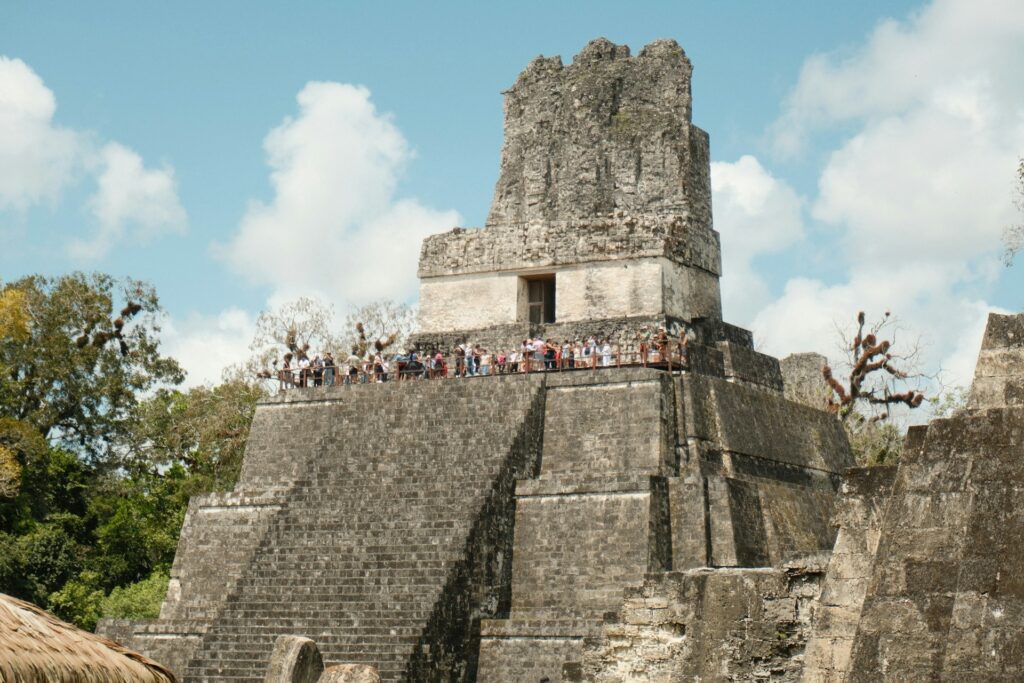
The Ruins You Don’t Want to Miss at Tikal
If you are exploring Tikal without a guide, make sure you hit these highlights:
Wildlife in the Park
Here’s what Tikal does that most archaeological sites don’t: it also functions as a wildlife sanctuary. Tikal is as much a wildlife destination as it is an archaeological one. The national park protects a vast stretch of tropical rainforest, and the biodiversity is remarkable.
The animals have absolutely zero chill about sharing the space with tourists.
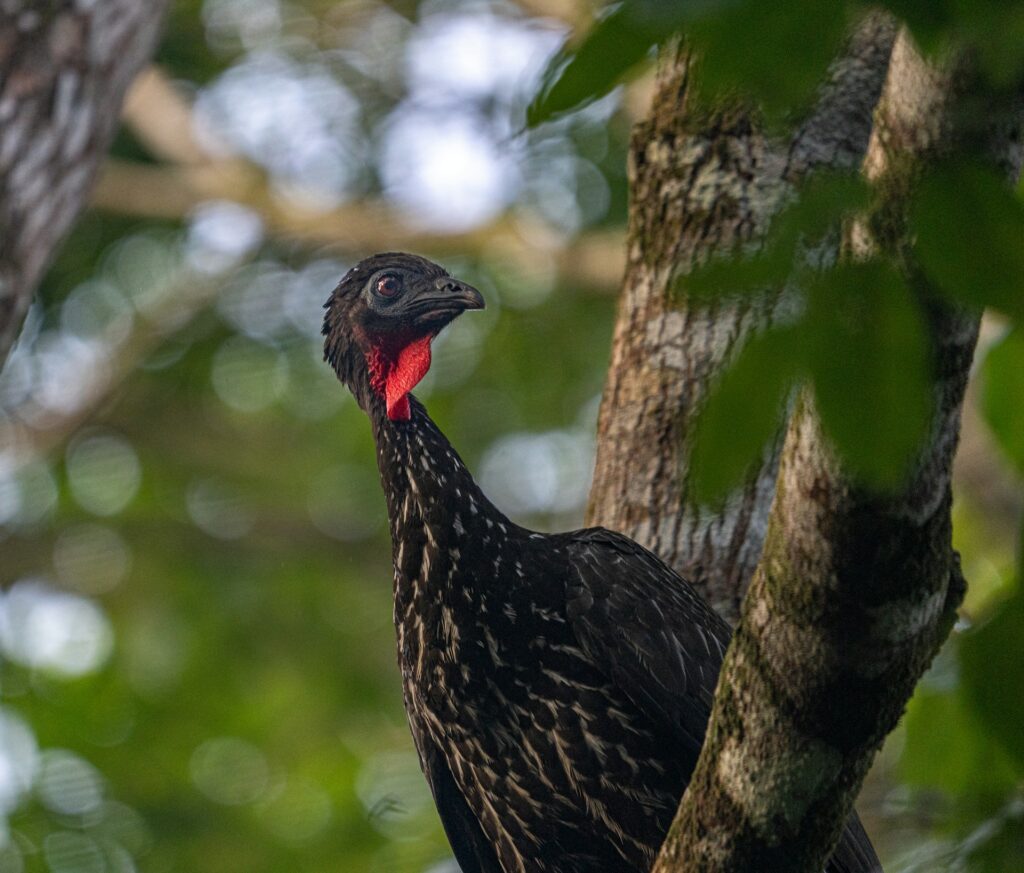
You will almost certainly encounter coatis — curious, raccoon-like creatures who have decided that personal space is for other animals. Toucans and parrots are everywhere and spider monkeys swing through the canopy overhead.
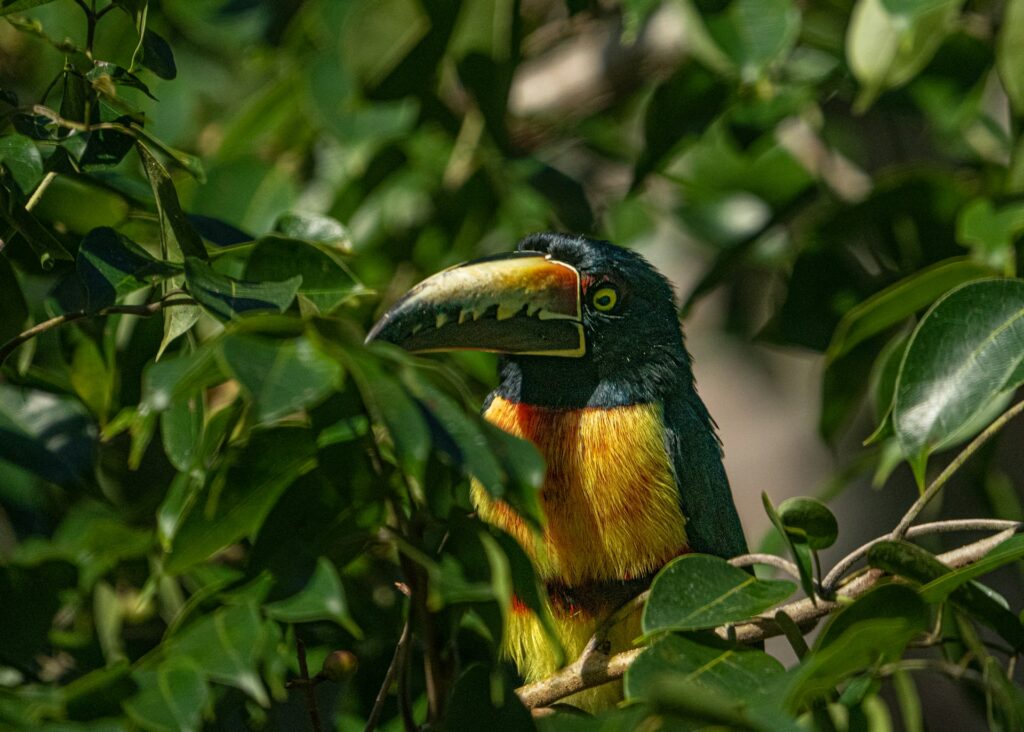
And then there are jaguars. Spotting one is rare and really lucky – but they are there. Our guide told us that just a few weeks before our visit, he watched a jaguar bolt out of the jungle, snatch a coati right in front of unassuming tourists, and disappear back into the jungle before anyone really knew what had happened. Sadly, he had a video to prove it – poor little coati.
We didn’t see one ourselves, but knowing they are out there adds a certain eerie feeling while walking between the ruins.
Other Essential Tips for Visiting Tikal

Final Thoughts
Tikal is one of those rare places that exceeds expectation — even when you arrive with high ones. There are a lot of incredible places in this world, but Tikal is special.
Standing at the top of a temple as the jungle mist burns off in the morning light, and the howler monkeys wake the forest below you as their roars echo through ancient stone plazas – there’s nothing quite like it. This experience stays with you long after you have left this magical place behind. So, book the flight. Do the sunrise tour. You’ll thank me later.