The Best Villages on Lake Atitlán, Guatemala: Which One Is Right for You?
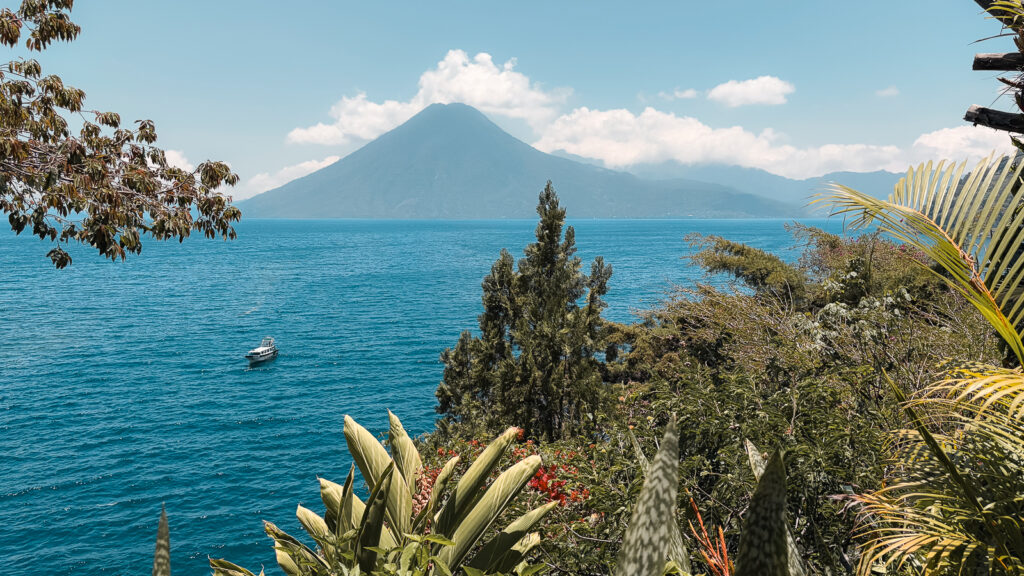
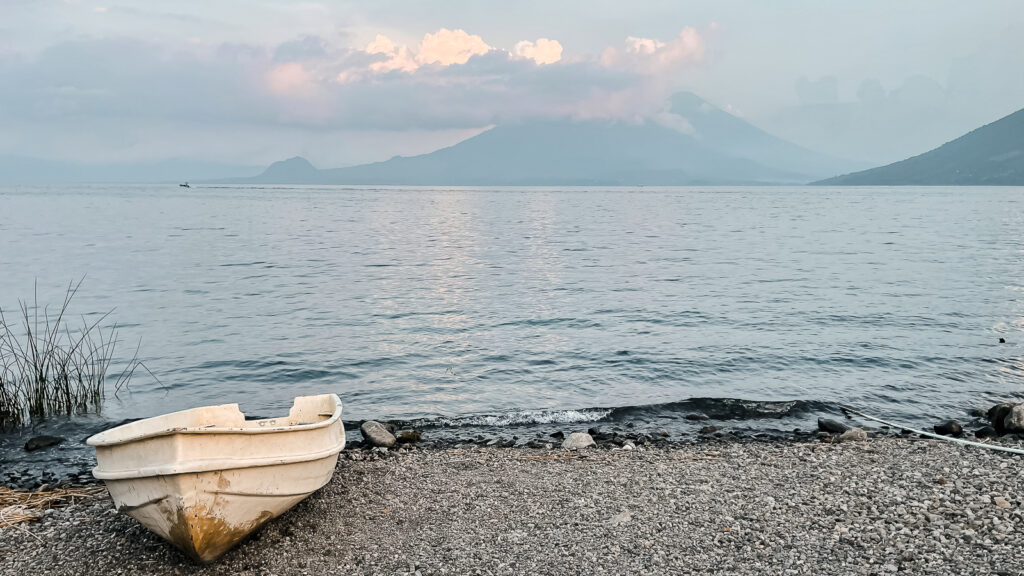
Framed by three towering volcanoes and cloaked in a perpetual blue haze, Lake Atitlán is truly breathtaking. Aldous Huxley famously called it “really too much of a good thing” — and once you arrive, you’ll understand exactly what he meant.
Scattered around its shores are a dozen Mayan villages, each with its own distinct atmosphere, from backpacker-filled San Pedro La Laguna to the deeply traditional streets of Santiago Atitlán and the colorful murals of San Juan La Laguna.
Whether you’re planning a quick two-night stop or a week-long lakeside retreat, this guide covers everything you need to know about the best villages on Lake Atitlán — and how to experience them like a veteran traveler.
How to Get to Lake Atitlán from Guatemala City or Antigua
Getting to Lake Atitlán is pretty straightforward. There are several options to suit different budgets and travel styles.
Private Transfer
The most comfortable and hassle-free option is a private transfer. Expect around a 3–4-hour drive From Guatemala City, depending on the time of day you leave. Guatemala City is known for heavy traffic.
From Antigua, it’s typically 2.5 – 3 hours.
If you are staying in Antigua before heading to Lake Atitlán, read my other blog post about best things to do and places to eat here.
A private driver will drop you off either in Panajachel — the main gateway town on the lake — and from there you can take a boat to another village, or you can request your driver to take you directly to your destination. Expect the ride to be slightly longer if going directly.
This is a great option for families, groups, or anyone with heavy luggage.
Shared Shuttle Van
Shared shuttles are the most popular choice among independent travelers. They are affordable, and widely available from both Antigua and Guatemala City. These minivans typically seat 8–12 passengers, depart at set times in the morning, and can be booked through your accommodation or at any travel agency the day before.
The downside of shared shuttles though is that they take significantly more time, as they have to pick up all the passengers and make several stops on the way.
Chicken Bus
If you are budget-conscious and willing to embrace local life, the chicken bus — Guatemala’s iconic repurposed American school buses — is such an experience.
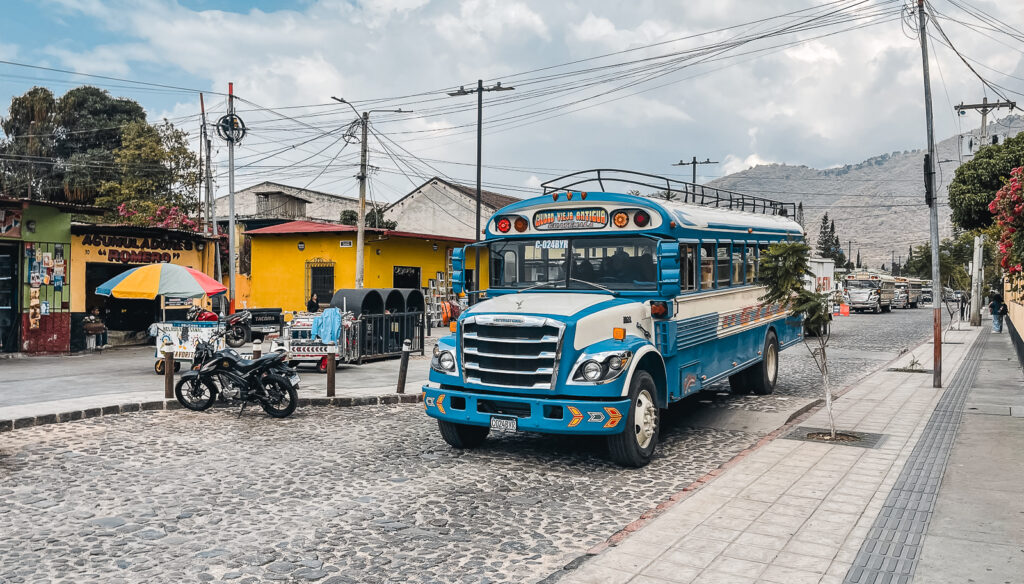
From Antigua, take a bus to Chimaltenango, and then transfer to one heading toward Panajachel on Lake Atitlán (ask for “Pana”). If traveling from Guatemala City, head to the Zona 4 terminal and look for buses to Sololá or Panajachel.
The fares are a fraction of shuttle prices, but the journey time is considerably longer, especially with connections. It’s an adventure, for sure.
Best Time to Visit Lake Atitlan
Lake Atitlán is worth visiting year-round, but the dry season runs from November through April. Skies are clear, trails are easy to navigate, and the lake’s famous afternoon wind — known locally as El Xocomil — is a little calmer. Peak months are December through March, so book your hotel in advance if visiting during this period.
The rainy season (May through October) brings the lush greenery and fewer tourists. Mornings are usually sunny, with rains typically rolling in during the afternoon. If you don’t mind the occasional downpour, the shoulder months of May and October are best if you want to experience a quieter life in the villages.
Getting Around: Lanchas and Tuk-Tuks
Lanchas (Boats)
The best way to travel between the villages is by lancha — a small, public boat that zips across the lake throughout the day. Lanchas depart roughly every 30 minutes from the main docks and connect key villages: Panajachel, San Pedro La Laguna, San Marcos La Laguna, San Juan La Laguna, Tzununa, Jaibalito, Santa Cruz La Laguna, and Santiago Atitlan.
The last lancha heading toward Panajachel departs around 5:30pm
The last lancha leaving Panajachel toward the villages on the lake’s west shore leaves Pana around 7:30pm
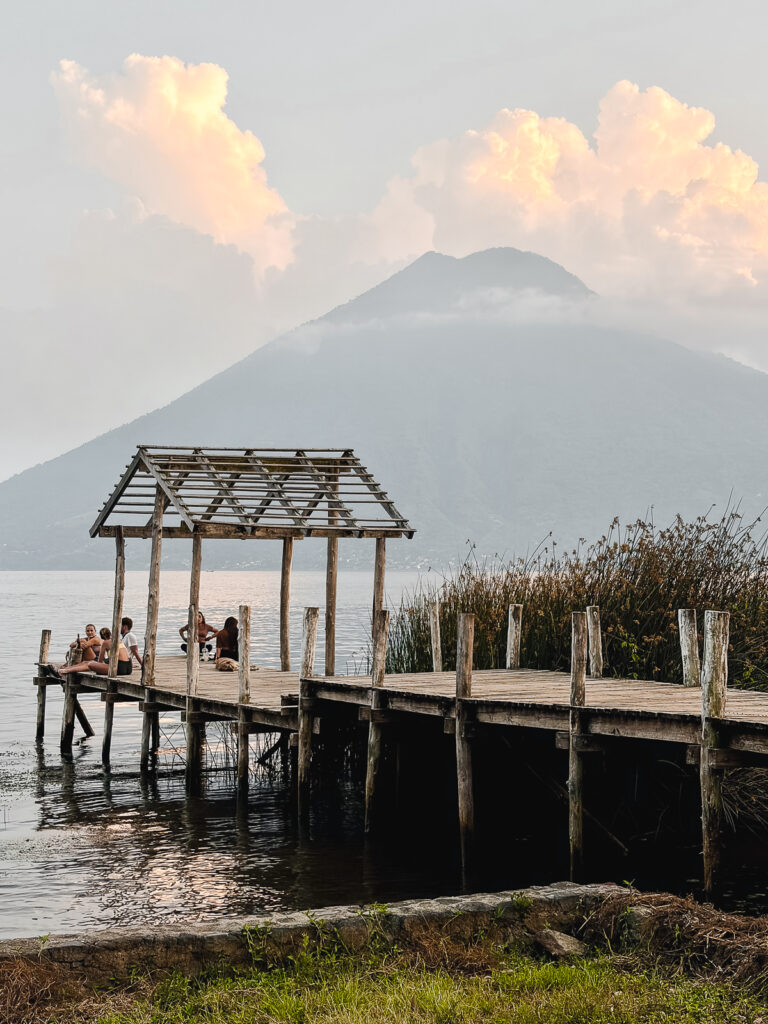
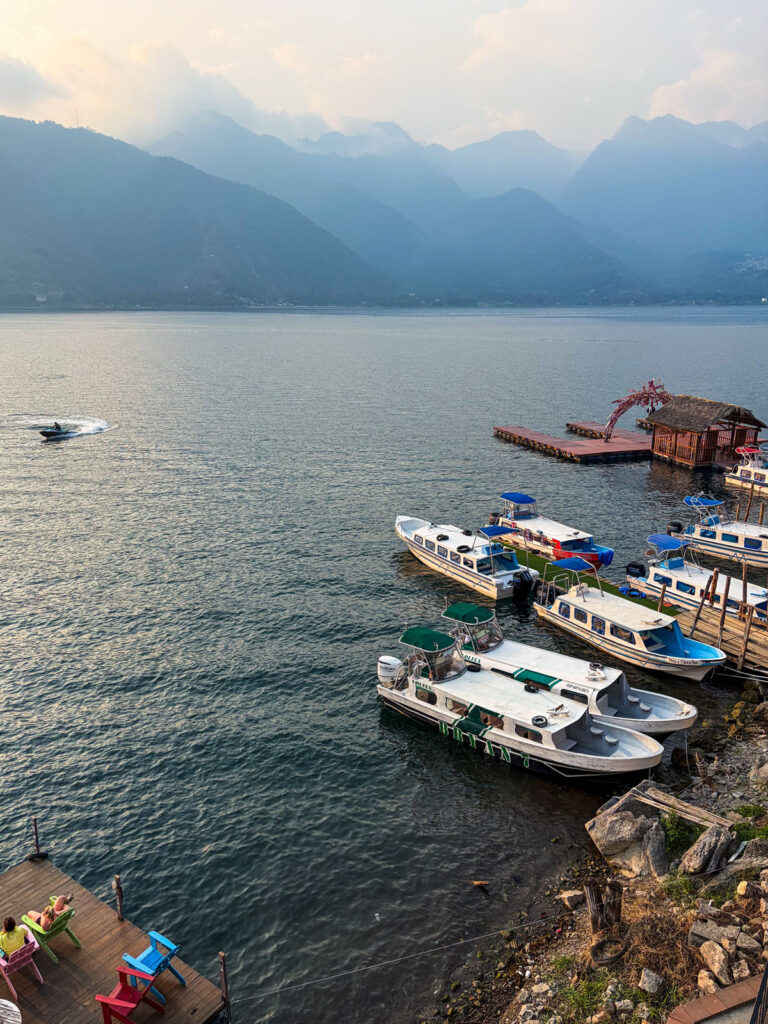
Plan your day around these times, especially if you’re based outside of Panajachel. If you miss the last boat, don’t despair, there are many private boats available for hire, but expect much higher prices – anywhere between 400 to 600 Q (about $50 – $80 USD).
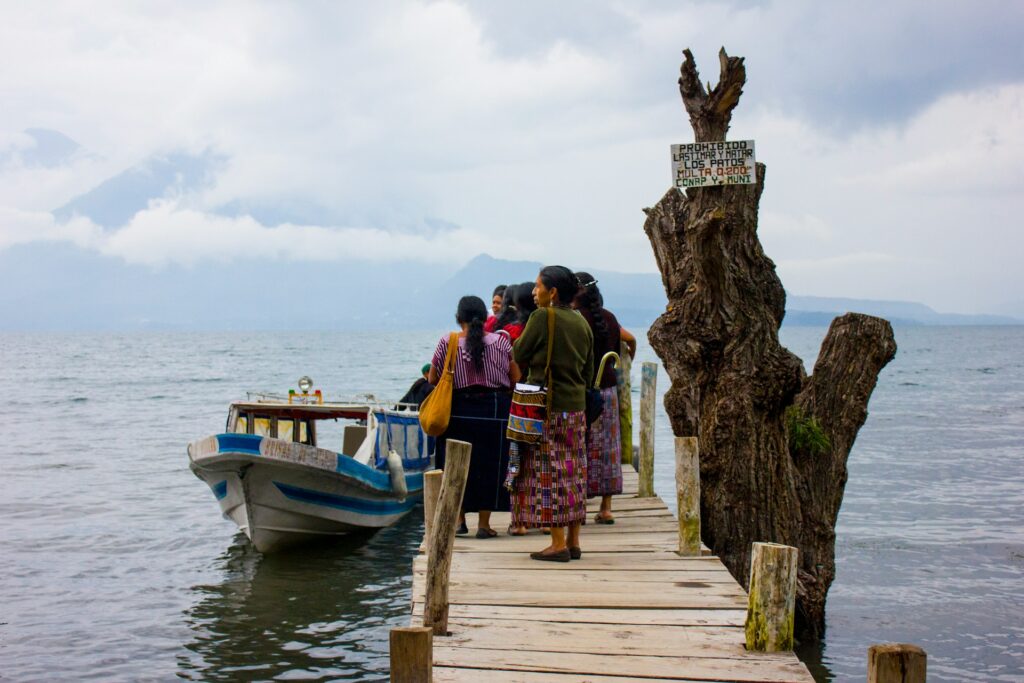
Travel Times by Boat
Tuk-Tuks
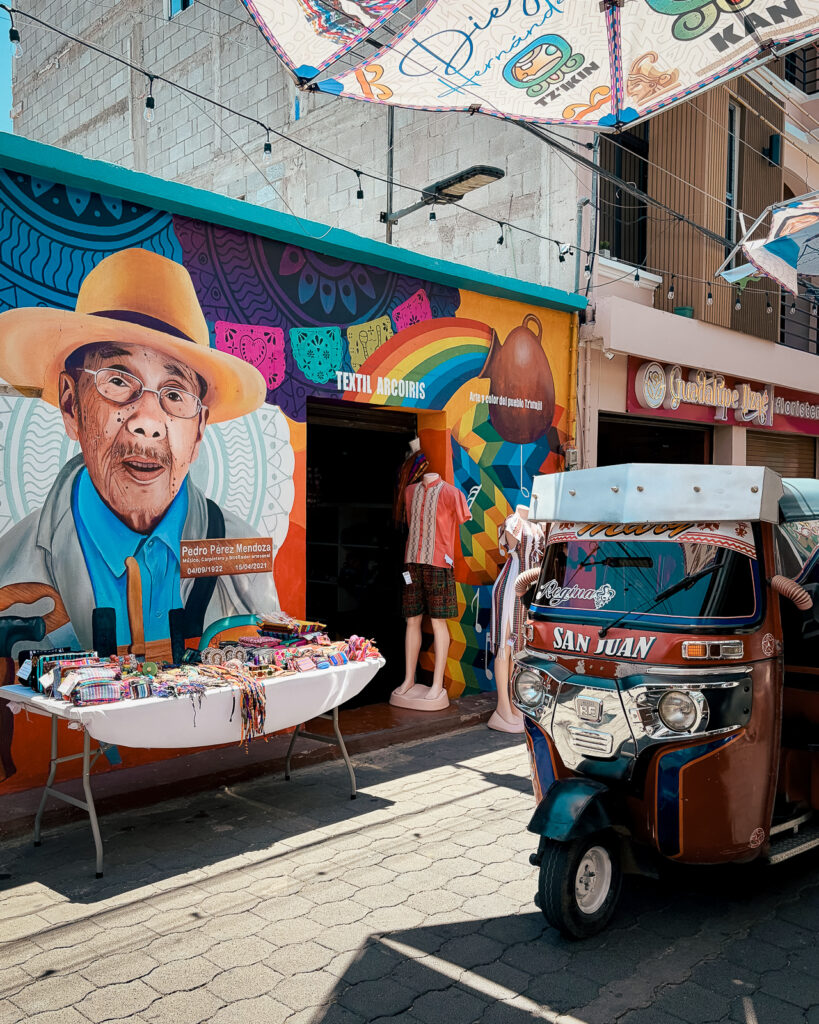
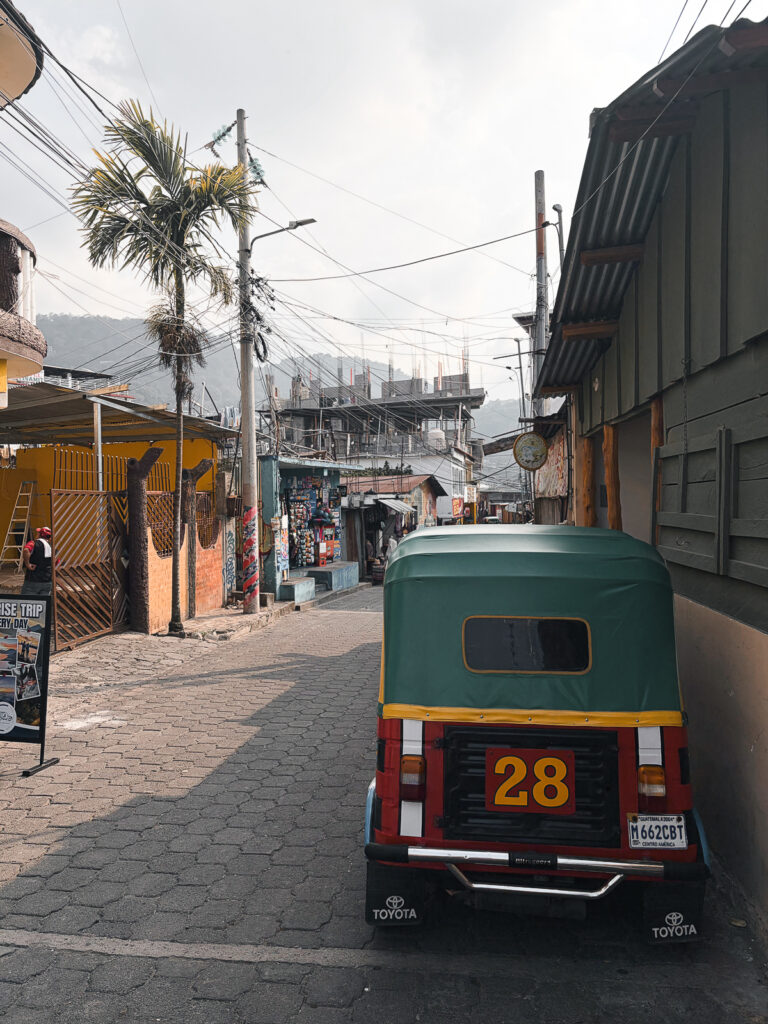
Tuk-tuks are the main form of transportation within the villages. It is possible to take a tuk-tuk between some villages, but lanchas are still the way to go.
You can take a tuk-tuk between San Pedro La Laguna and San Juan La Laguna if you prefer to skip the boat. The two villages are only about 15 minutes apart by road, making this a quick and fun ride.
Some of the villages are only accessible by tuk-tuks or private boats – Santa Catarina Palopó and San Antonio Palopó. If a private boat is not within your budget, then take a public boat to Panajachel, then transfer over to a tuk-tuk.
The Best Villages to Visit on Lake Atitlán
Panajachel — The Main Hub
Panajachel (affectionately called “Pana” by locals and travelers alike) is the largest town on the lake and the main point of entry for most visitors. Its main street, Calle Santander, is lined with souvenir shops, travel agencies, restaurants, and ATMs — everything you need to organize your trip.
While Pana itself is more town than village, it’s an excellent base for day-tripping to surrounding communities.
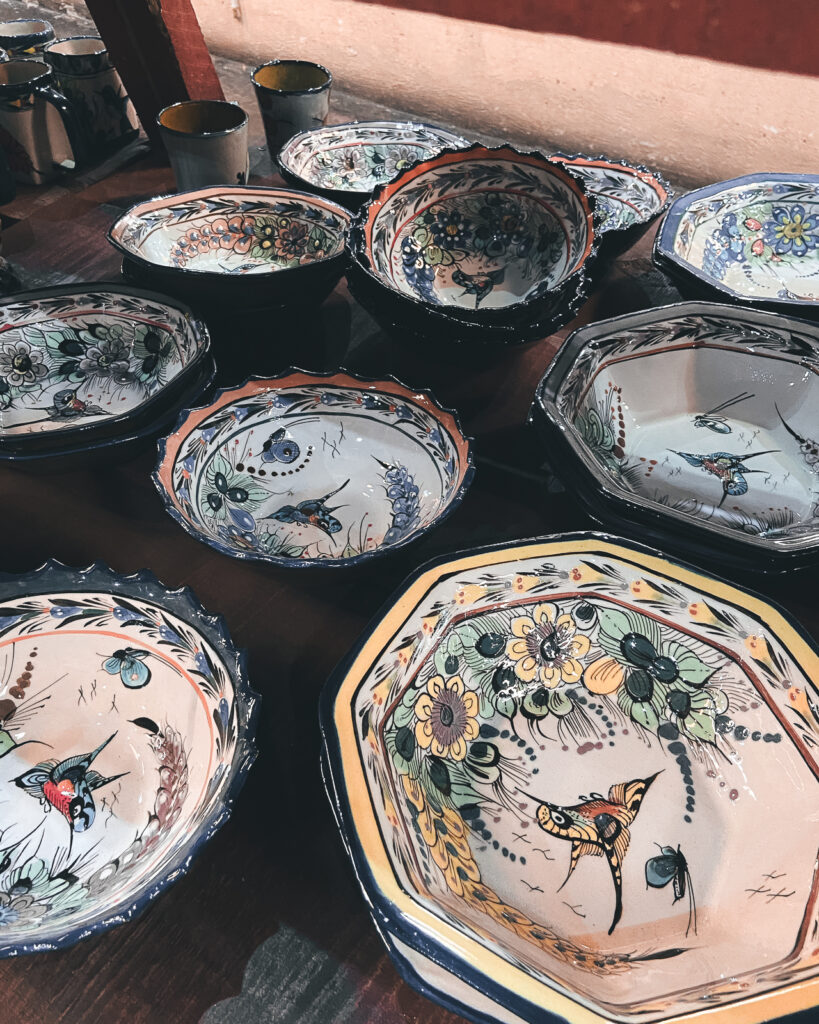
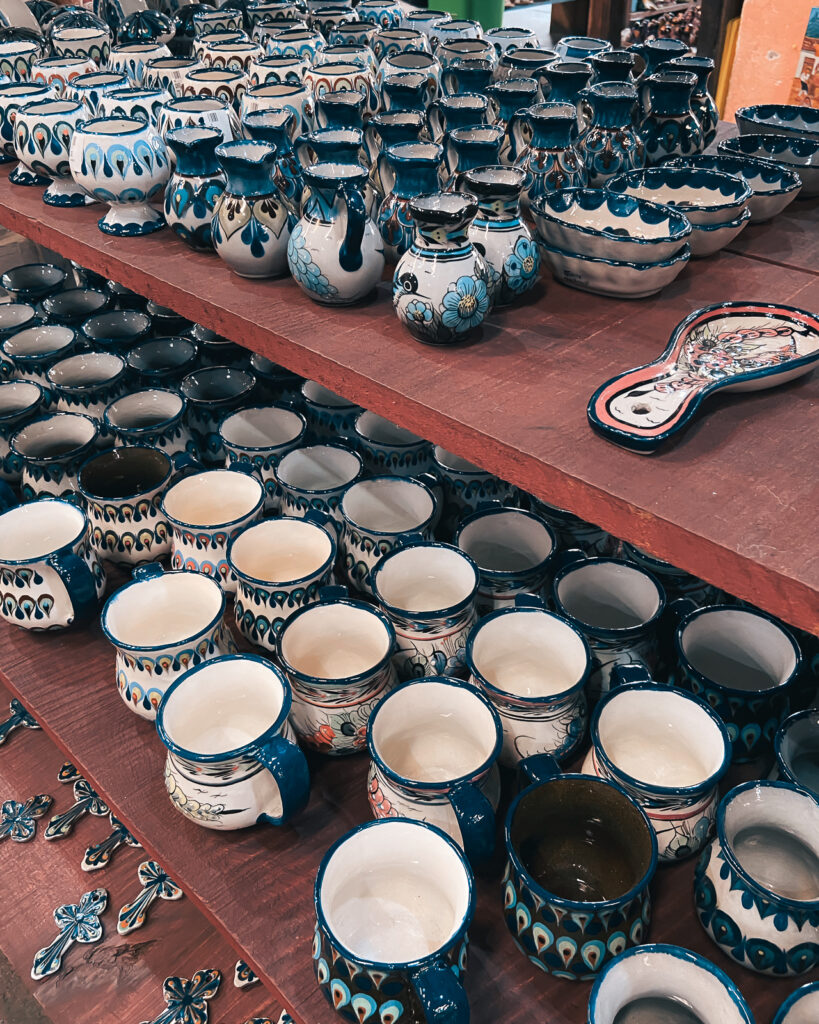
Things to do: Explore Calle Santander’s market stalls for souvenirs and beautiful ceramics, and walk the lakefront promenade at sunset.
San Pedro — Backpacker Vibes and Volcano Hikes
San Pedro is the largest village on the lake and perhaps the most well-known among backpackers and budget travelers. It’s a lively place that’s a mix of both Mayan traditions and laidback worn traveler culture. It has a good range of restaurants, bars, and guesthouses.
The town is split between an upper area near the main market that offers a more authentic experience with local food stalls and shops, while the lower lakeside section is where most of the tourist facilities are concentrated.
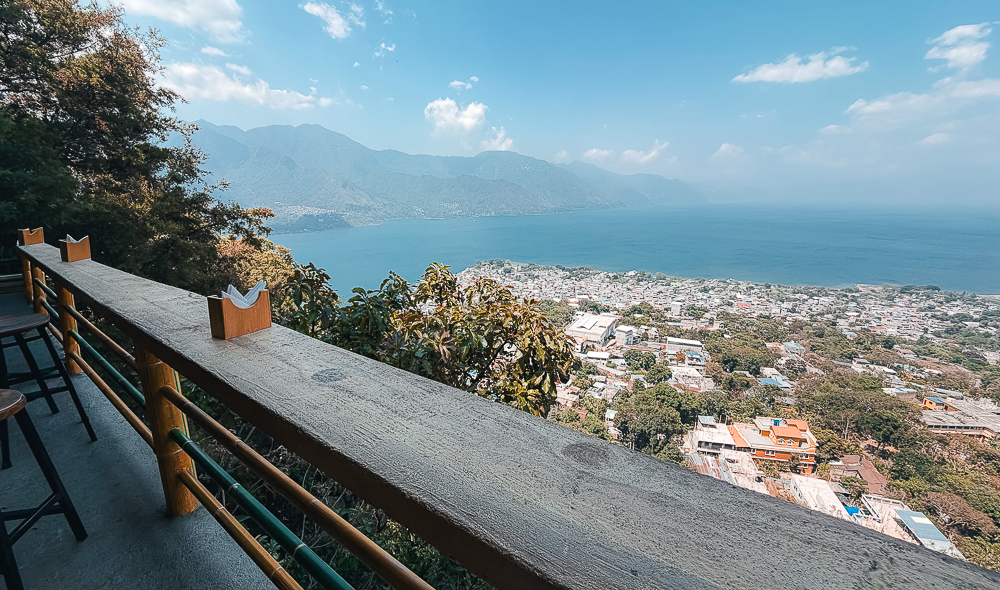
Don’t let the backpacker vibe discourage you from staying here. We chose to stay a bit outside of the town center and it’s a completely different atmosphere – quiet, beautiful, but still with tons of things to do.
Because I spent the majority of my time in San Pedro, I wrote a separate blog post on all the things to do in San Pedro here.
San Marcos — Yoga, Wellness, and a Beautiful Nature Reserve
San Marcos has become synonymous with yoga retreats, meditation centers, and a free-spirited atmosphere. It’s a small village with a good concentration of vegan restaurants and wellness spaces — if chakras and cacao ceremonies are your thing, you’ll feel right at home.
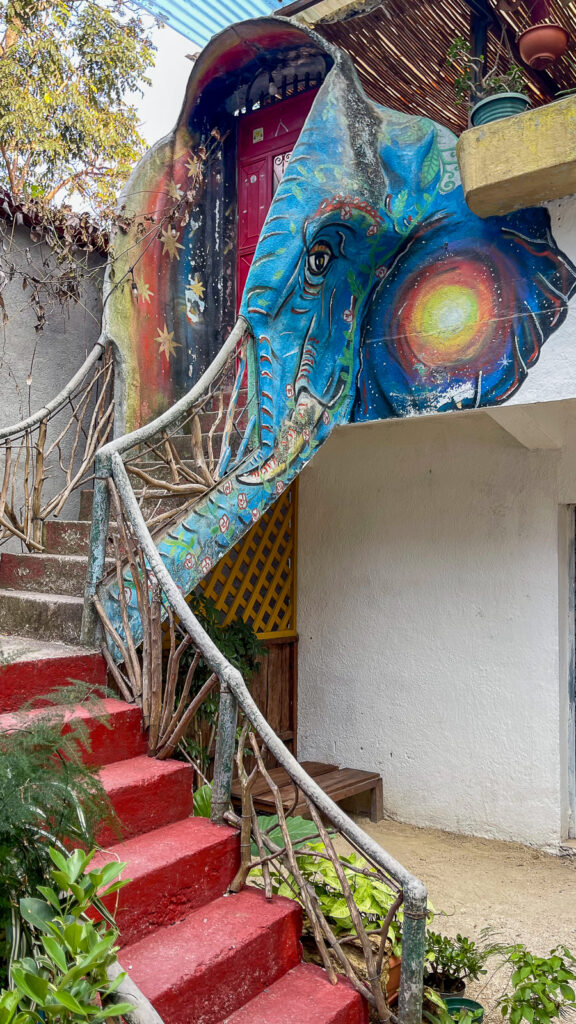
It’s worth noting that much of San Marcos’s town center is now owned and operated by foreigners, which made the village feel less authentically Guatemalan compared to some of its neighbors.
That said, the Cerro Tzankujil Nature Reserve is extraordinary and absolutely worth a visit.

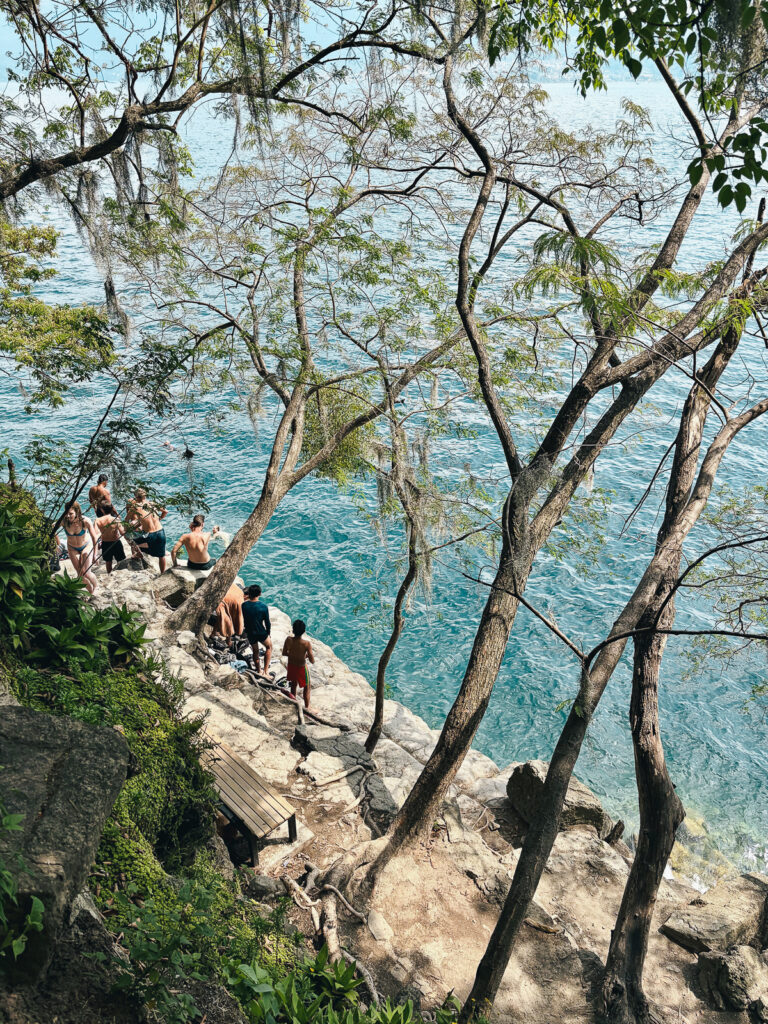
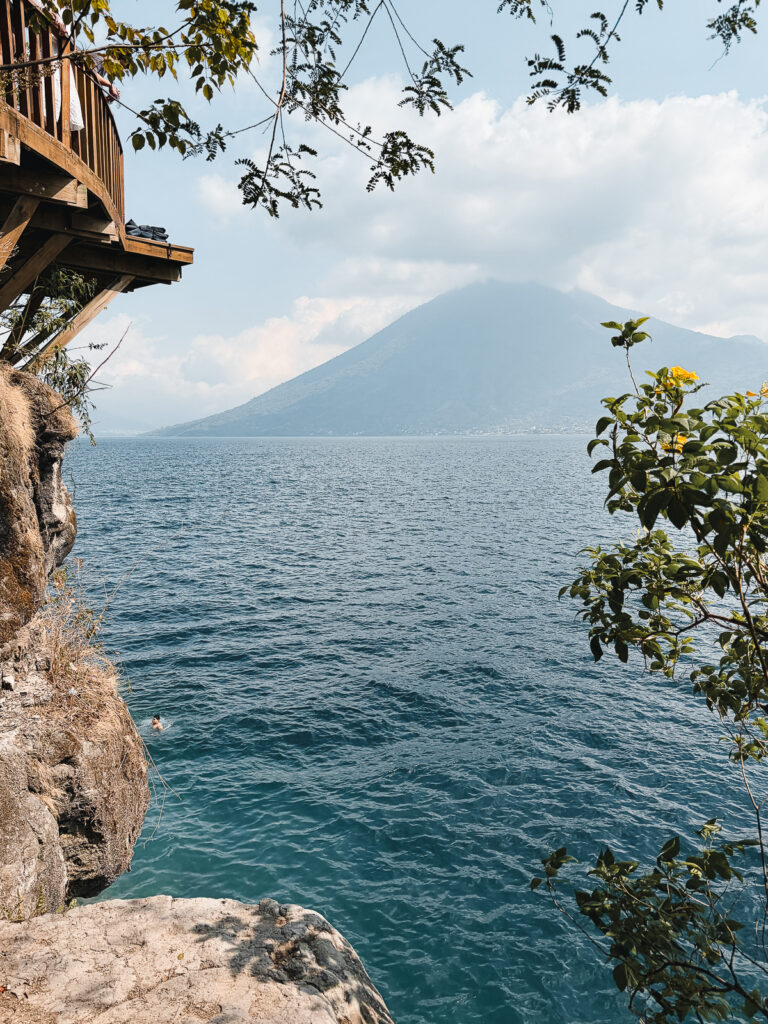
The reserve is a gorgeous stretch of rocky lakeside jungle with hiking trails, a lookout with panoramic volcano views, sunbathing platforms, and the cleanest swimming water on the lake. The reserve is also home to a 40-foot cliff jump — not for the faint-hearted. Swimming here is considered safe, making it one of the few spots on the lake where a dip is actually recommended.
San Juan La Laguna — Colorful, Authentic, and Artsy
San Juan is a gem — and for many visitors, the highlight of their entire trip to the lake. It’s still very touristy, but unlike San Marcos, San Juan has preserved its traditional Mayan culture while developing a thriving local arts scene.
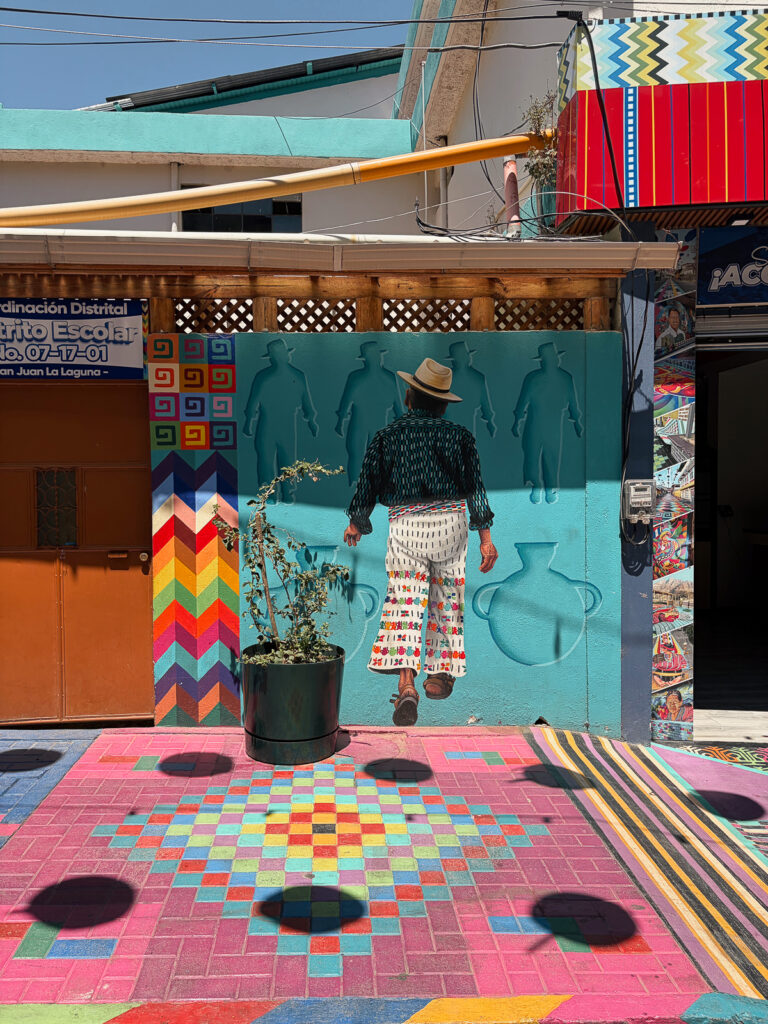
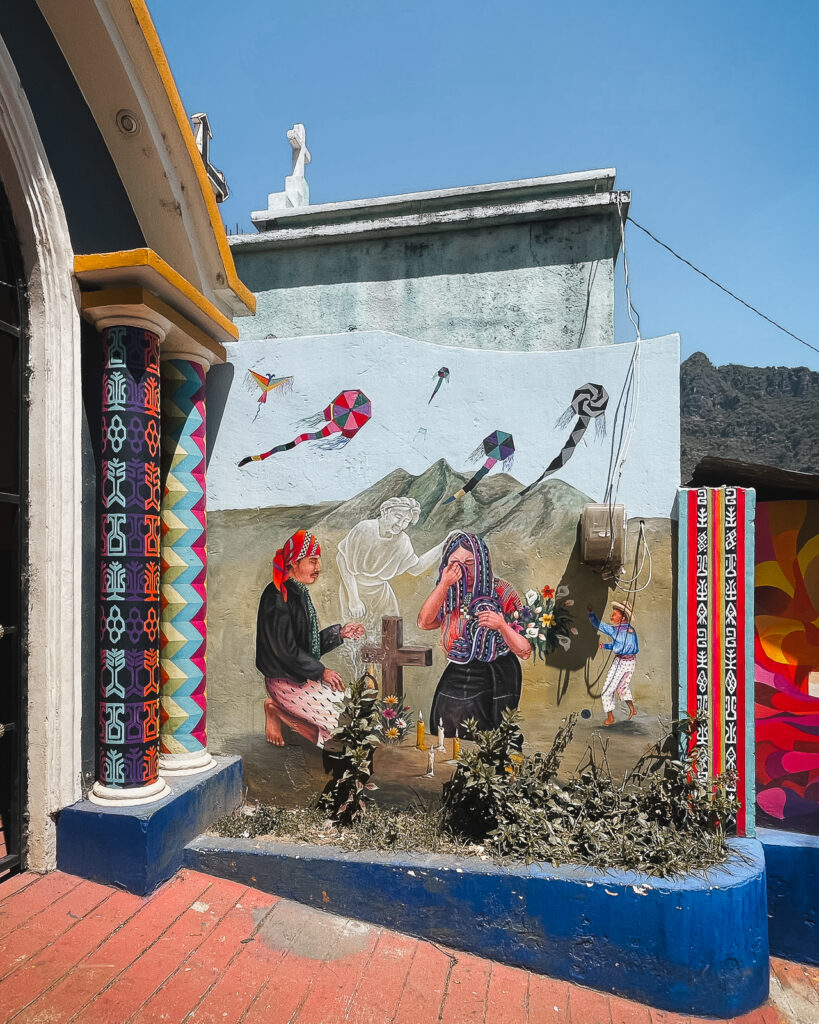
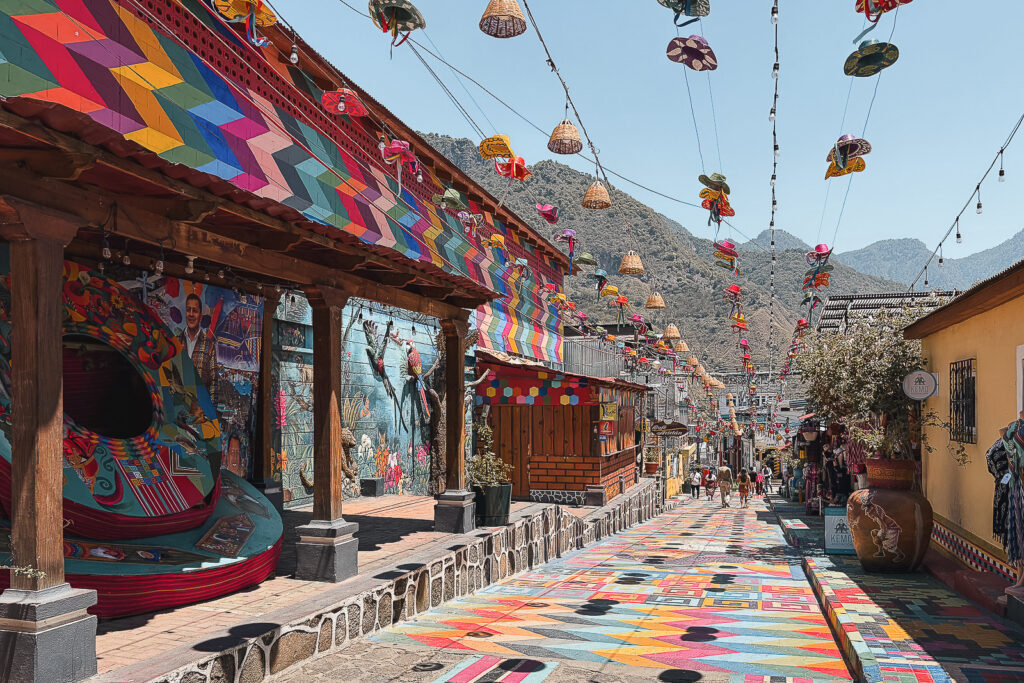
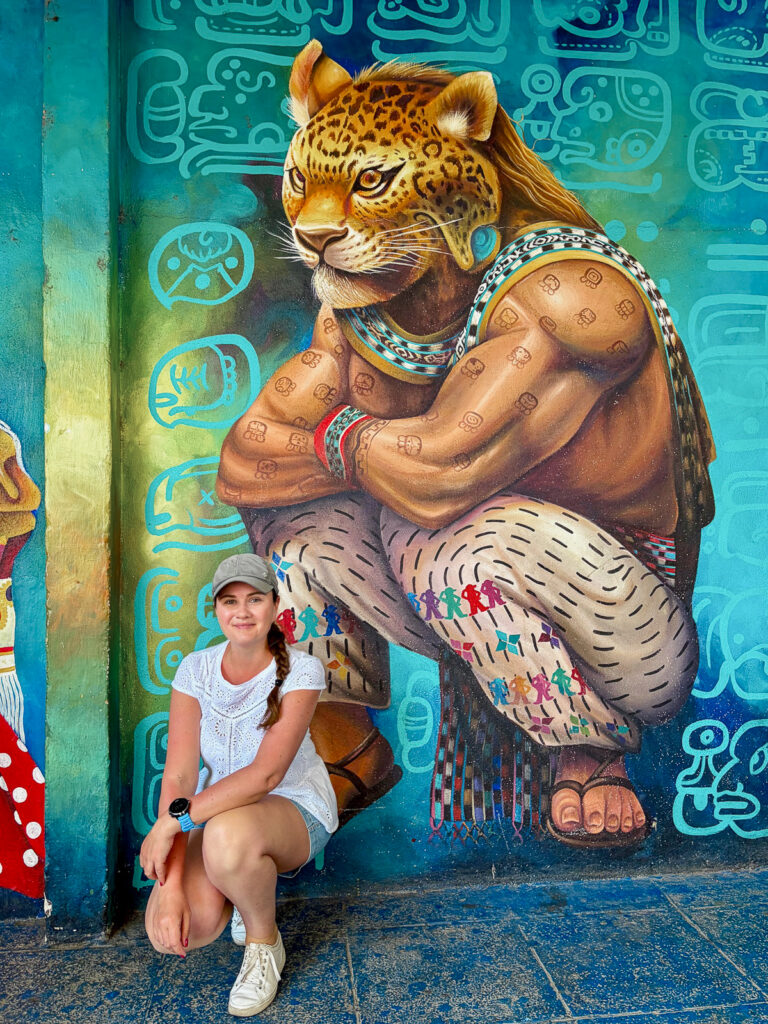
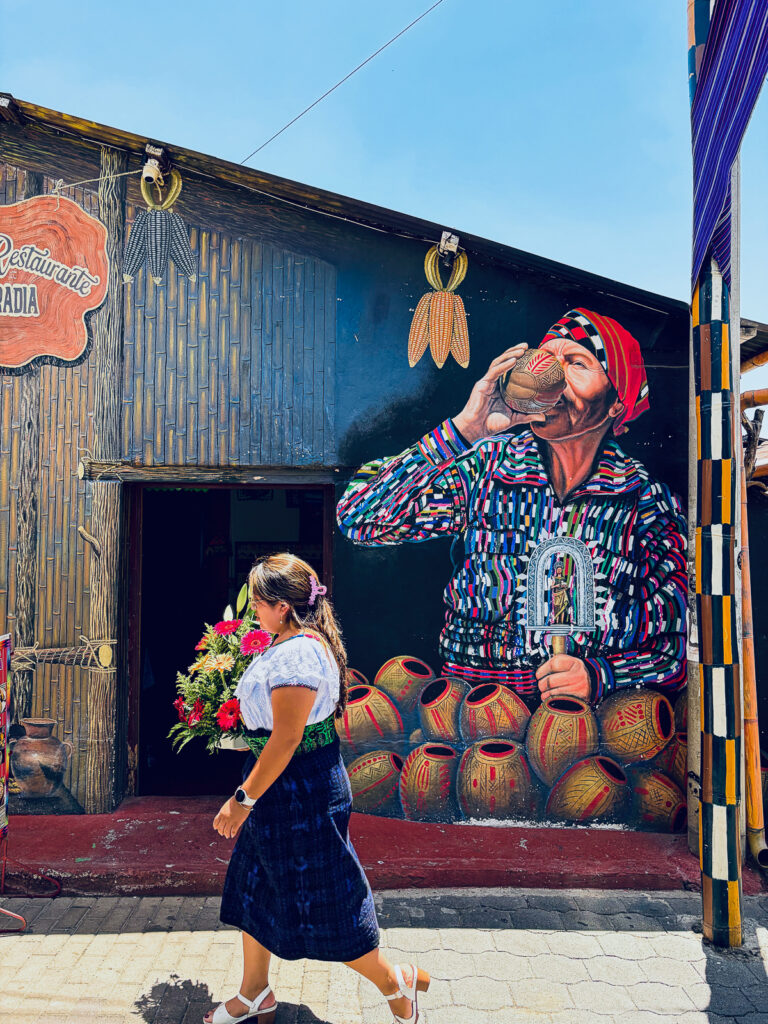
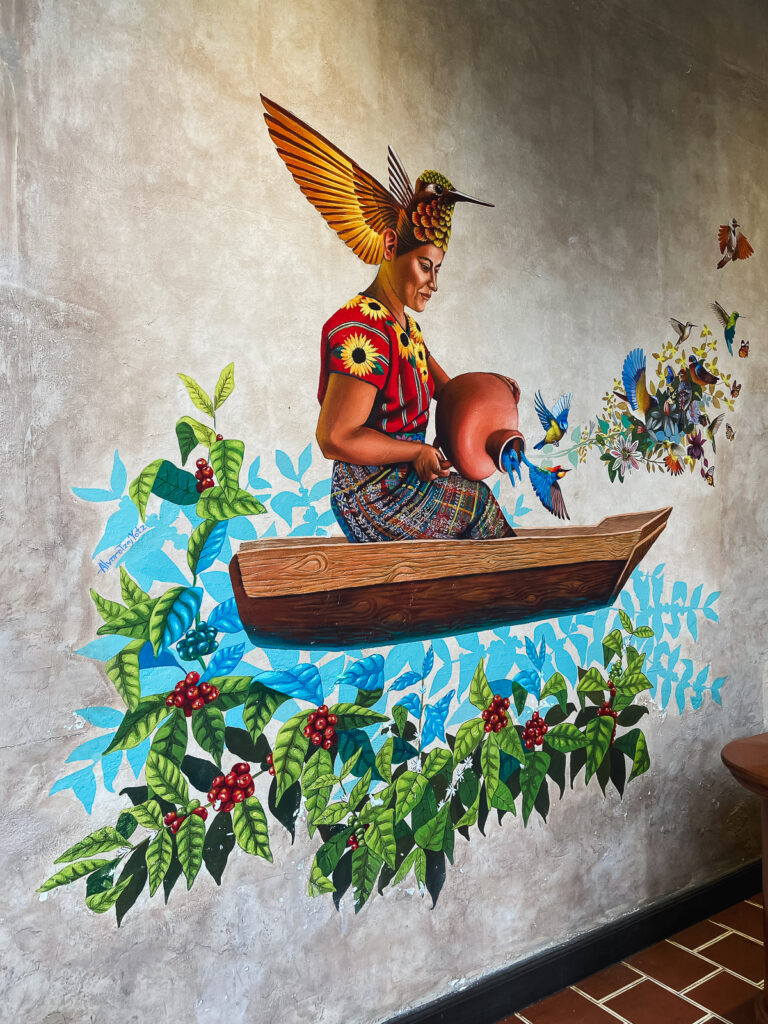
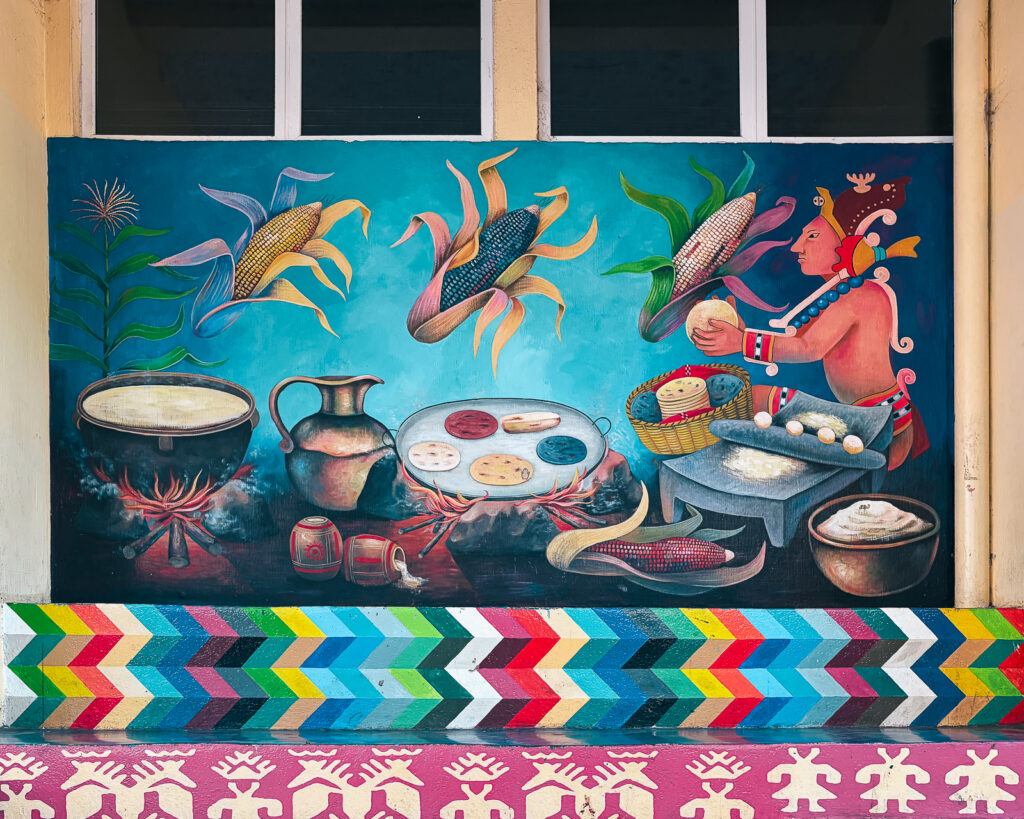
The village is a feast for the eyes: colorful murals all over town, and a string of local art galleries showcasing paintings by Tz’utujil Mayan artists, many of whom create vibrant works depicting local life, mythology, and nature. These are authentic pieces created by local families — not mass-produced souvenirs — and make for a meaningful memory to bring back home.
Wander the streets, take an art class with gallery owners, find a cute café for a locally grown cup of coffee (the surrounding hills produce excellent coffee beans), and photograph the murals. San Juan rewards slow exploration.
Jaibalito — Off the Beaten Path
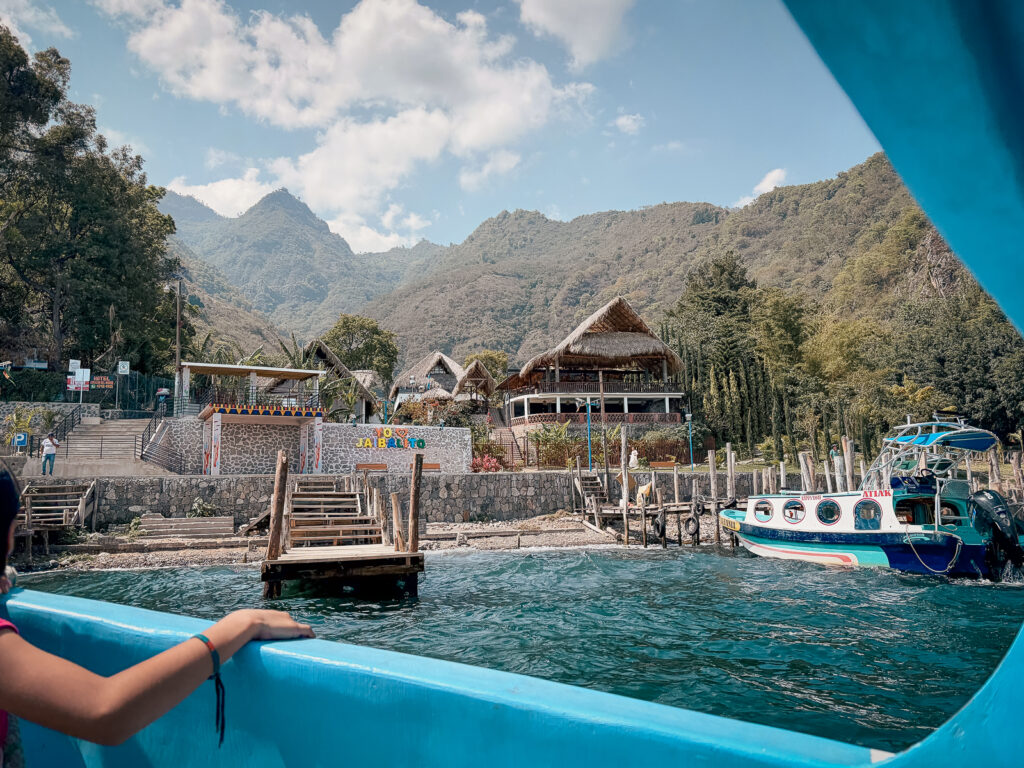
Jaibalito is one of the smallest villages on the lake and sees far fewer visitors than its more popular neighbors. Its steep, narrow paths and quiet atmosphere make it feel like a world apart. There’s not a huge amount of things to-do here — but that’s precisely the point. Spend half a day relaxing and taking in the scenery.
Pro Tip: Jaibalito is immediately adjacent to La Casa del Mundo, one of the most photographed hotels in Guatemala, and combining both in a single visit makes perfect sense.
La Casa del Mundo — A Lakeside Landmark
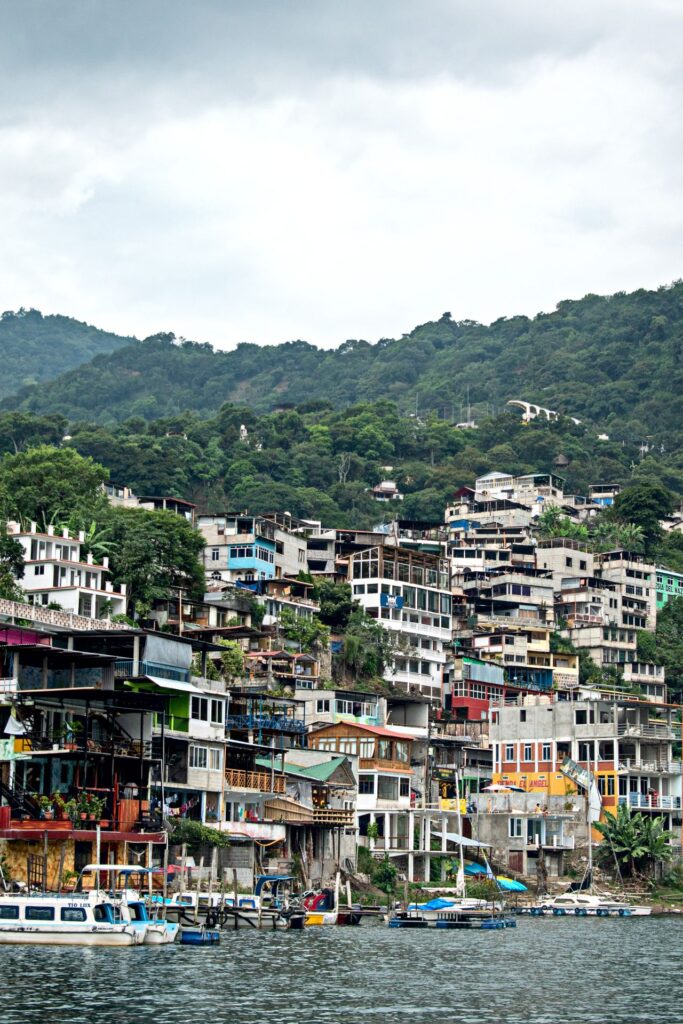
Though not a village itself, La Casa del Mundo is too special to leave off any Lake Atitlán itinerary. It’s such a gorgeous property that unlike some of the villages, it has its own stop on the boat route.
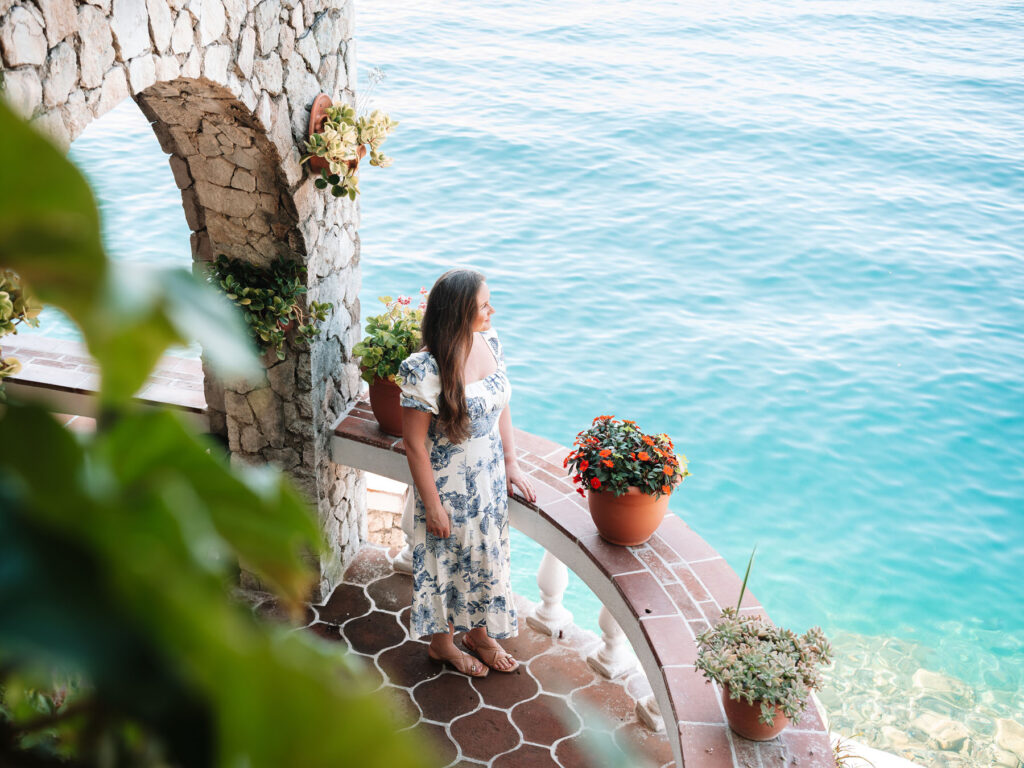
Built into the cliff face above the water, this iconic hotel looks like a postcard from Lake Como. It features terraced rooms, stunning gardens, and what may be the most scenic sunbathing spots — all with unobstructed lake and volcano views.
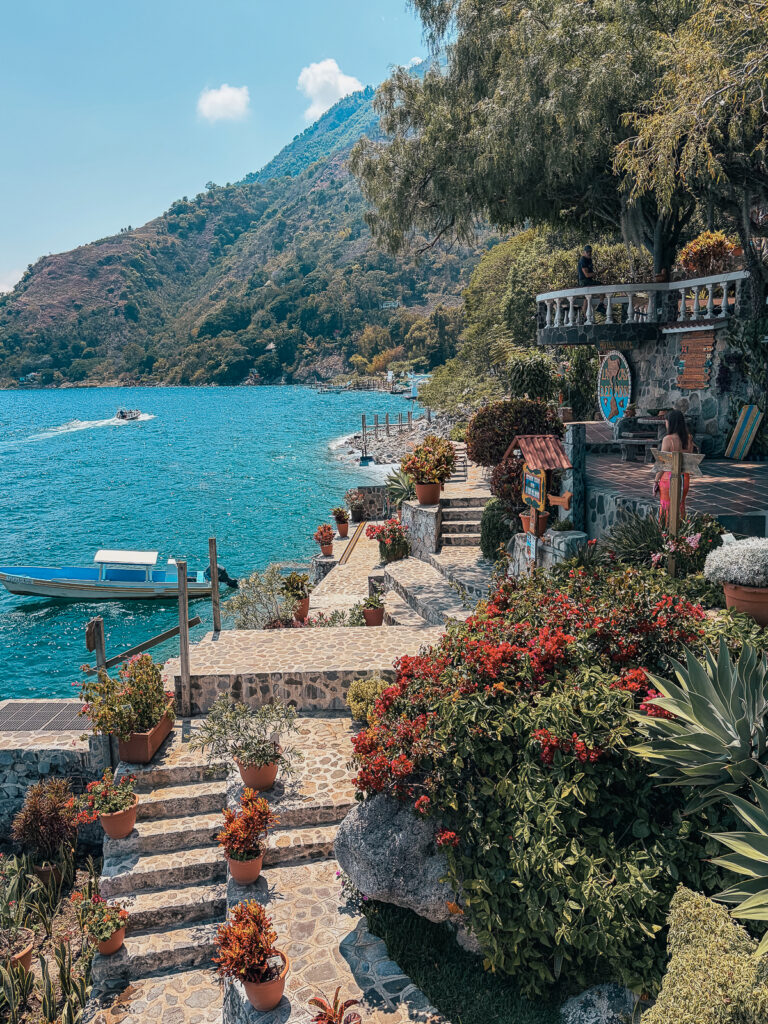

Pro Tip: While a general day pass is no longer available to non-guests, you can still experience this magical place: just make a reservation for breakfast or lunch, and you’ll have about 3 hours to wander the property and take in the views. It’s the kind of place that genuinely takes your breath away.
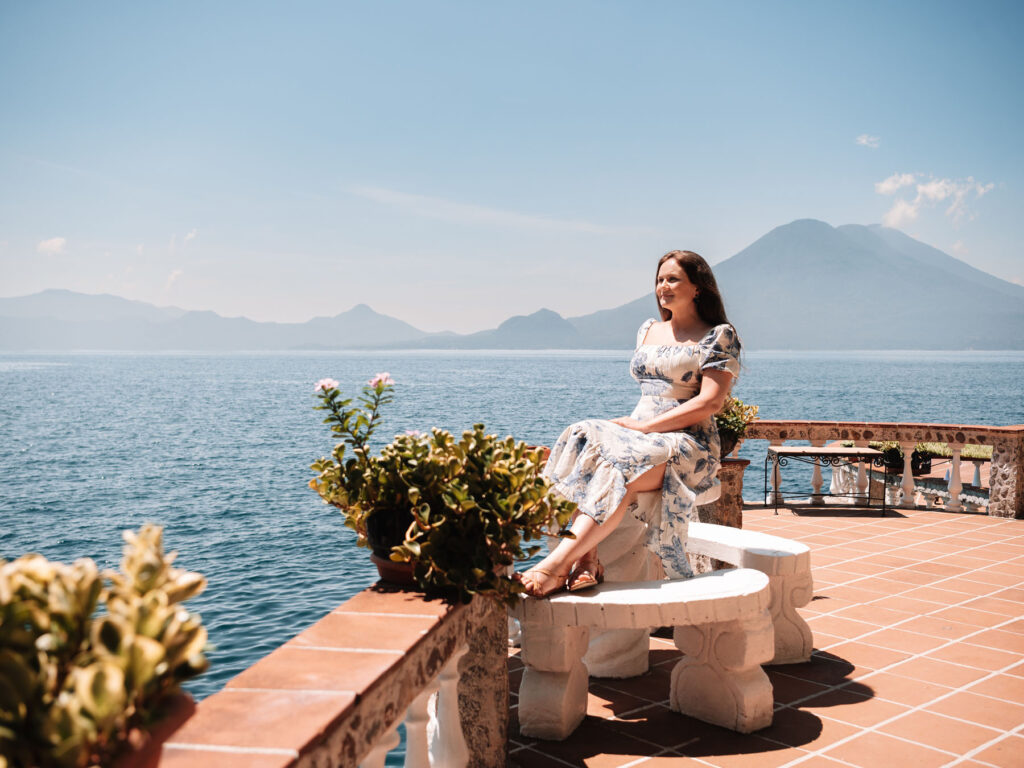
Santa Catarina Palopó — A Village Painted Blue
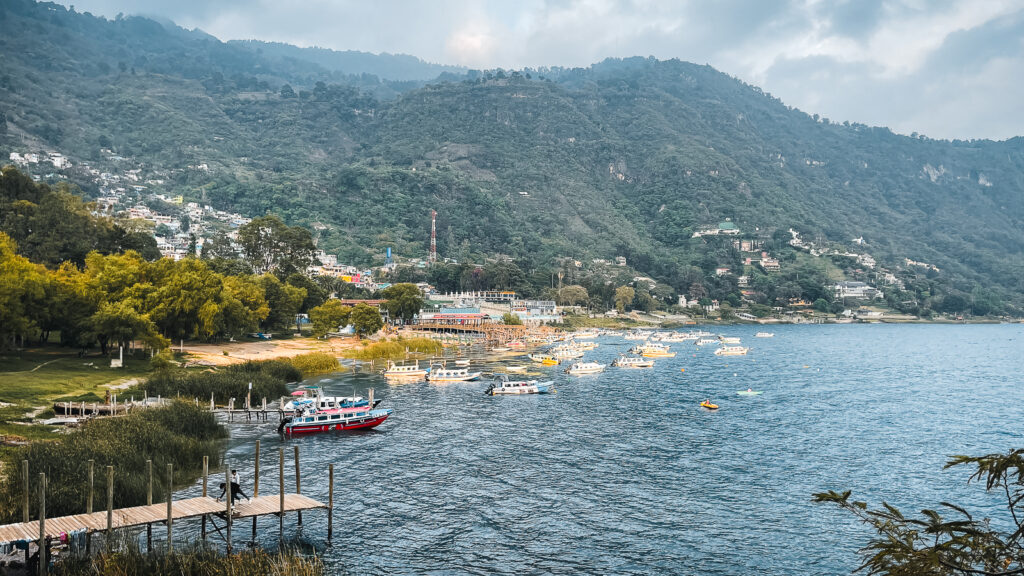
Santa Catarina Palopó is a lot less touristy than other villages and truly feels like you are stepping into the local life. It is easily reached by a tuk-tuk or taxi from Panajachel or a private boat from other villages.
The village became famous for its extraordinary community mural project, known as Pintando Santa Catarina (“Painting Santa Catarina”), in which homes were painted in coordinated patterns of cobalt blue, turquoise, and purple inspired by traditional Mayan huipil textiles. The effect is striking — like walking through a living piece of art.
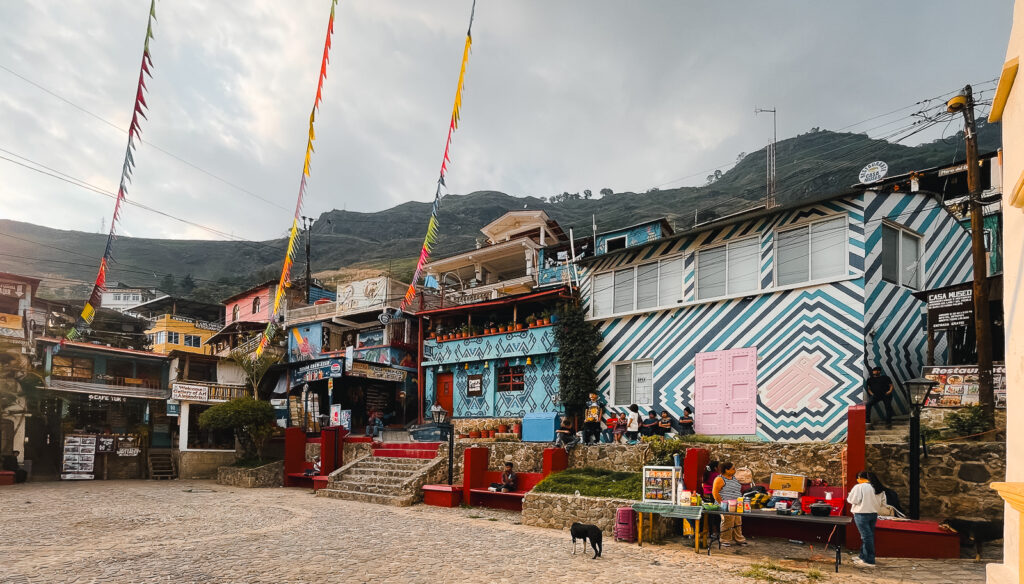
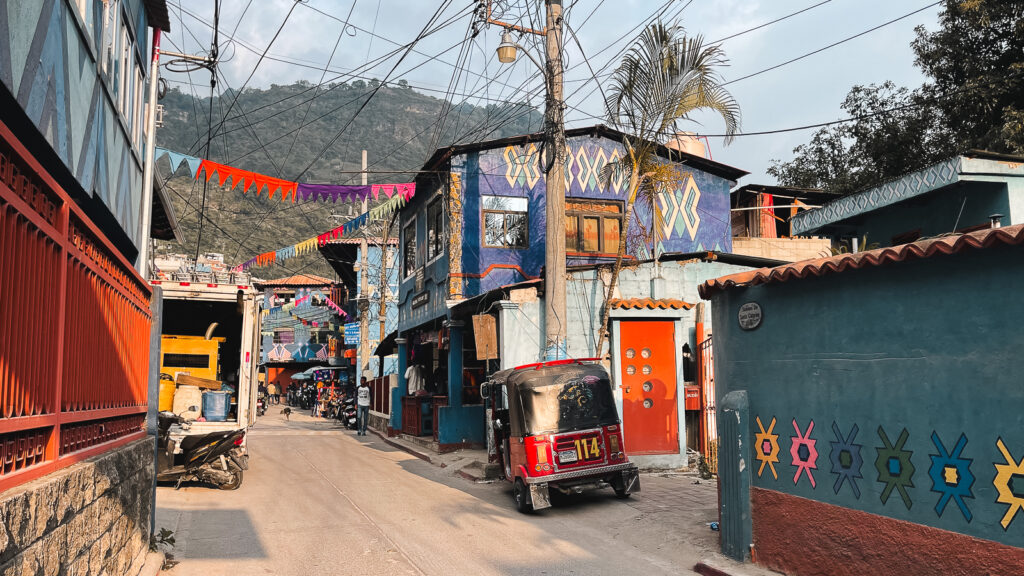
Beyond the murals, walk the lakefront promenade for beautiful volcano views, climb to the overlook for a bird’s-eye perspective of the painted village and lake below, and grab lunch by the lake.
San Antonio Palopó — Ceramics and Quiet Charm
Just a short distance beyond Santa Catarina sits San Antonio Palopó, a quieter and even less-visited village known primarily for its traditional ceramics and weaving. Local artisans produce handmade pottery using techniques passed down through generations. The village has a calm atmosphere and pairs well with a visit to Santa Catarina on the same day.
Santiago Atitlan — Culture, Tradition, and Local Life
Santiago Atitlan is the largest indigenous town on the lake and has a very different energy from the tourist-oriented villages. It’s a traditional Tz’utujil Mayan community, where many locals still wear handwoven traditional clothes and market days bring the whole town to life. Santiago is far less developed for tourists than Panajachel or San Pedro, but that’s a big part of its appeal.
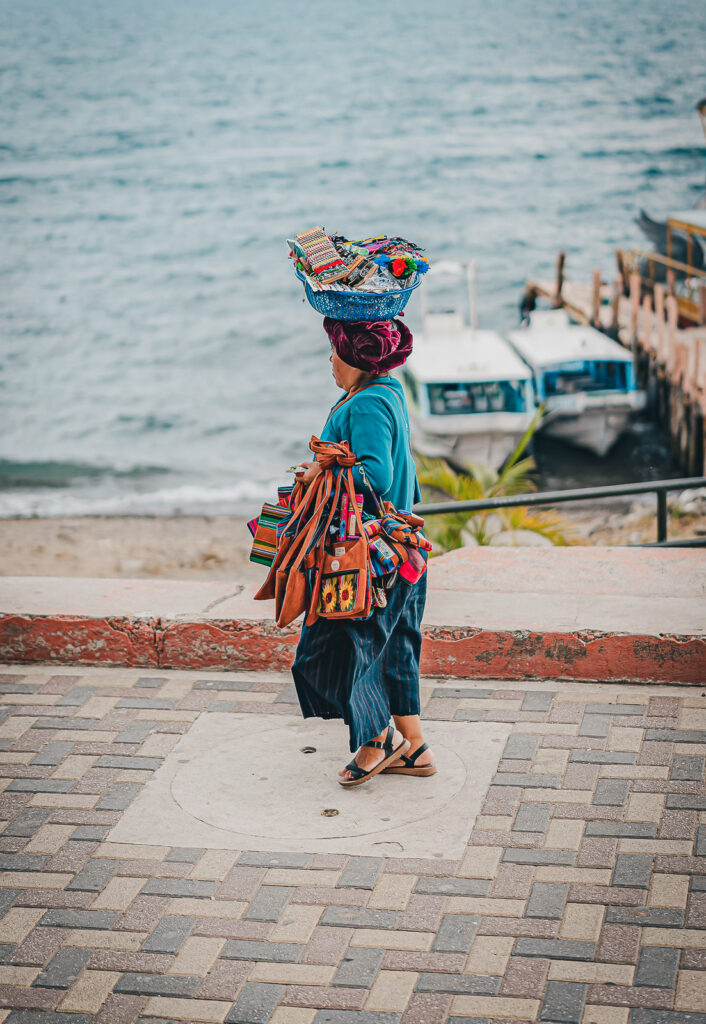
The town is home to the shrine of Maximón, a beloved folk saint who is moved from house to house each year and honored with offerings of tobacco, alcohol, and flowers — a fascinating balance of Mayan and Catholic traditions.
Things to do: Visit the Maximón shrine, explore the central market, and visit the local weaving cooperatives.
How Many Villages Can You Visit in One Day?
Realistically, you can visit 2 to 3 smaller villages in a single day if you start early in the morning and plan your boat times well. A popular combination is San Juan + San Pedro (connected by tuk-tuk), although San Pedro deserves more than a day on its own. Another one is Santa Catarina and San Antonio Palopó (both accessible by road from Panajachel).
Larger villages like Santiago Atitlan or Panajachel warrant a full day on their own if you want to explore properly. Don’t try to cram too many stops into one day — the real magic of Atitlan is in slowing down.
FAQ’s
Can you swim in Lake Atitlán?
Swimming is generally not recommended. The two cleanest and visually stunning places to swim are within the Cerro Tzankujil Nature Reserve in San Marcos and near La Casa del Mundo in Jaibalito.
How long should you spend in Lake Atitlán?
A minimum of 5 days gives you a good feel for the lake and allows you to explore without rushing.
Is Lake Atitlán safe?
Lake Atitlan is a very safe destination.
That said, you should not hike between villages or attempt the Indian Nose or the San Pedro Volcano hikes alone. There have been reported incidents of robbery on private land leading up to the summit.
Lake Atitlán is one of those rare places that genuinely lives up to the hype. Each village around its shores offers something distinct, from the backpacker energy of San Pedro to the quiet authenticity of San Juan, the painted streets of Santa Catarina, and the otherworldly beauty of La Casa del Mundo.
Take it slow, spend time with the locals, learn about their culture and resist the urge to rush. The lake will reward you for it.